Here’s how failing TfL can restore confidence in our graffiti-riddled Tube

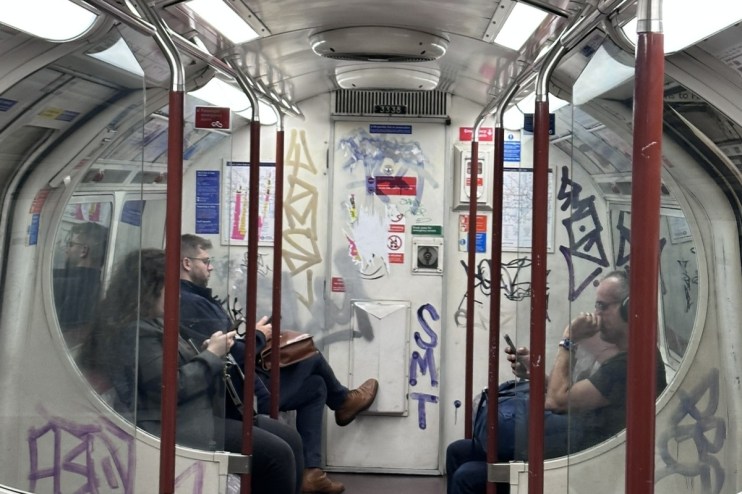
Sky-high pay and bonuses, PR gaffes, and a failure to tackle graffiti and fare dodging suggest that TfL is losing touch with its customers, writes James Ford
Last week was bad news week for Transport for London (TfL). Poor old Andy Lord, the beleaguered transport commissioner, started the week by explicitly denying that a lengthy delay in introducing the Piccadilly line’s long awaited £3bn fleet of new trains was because the trains were too big for the tunnels. This was followed by the publication of TfL’s annual accounts revealing a dramatic increase in top salaries at TfL, with Mr Lord’s own salary rising £115,000 (to £639,164) in just a year. Then, later in the week, Mr Lord used an appearance in front of the London Assembly to accuse the ‘graffiti vigilantes’ (as the small band of volunteers that have taken to cleaning trains on the Bakerloo line have been labelled) of spraying the graffiti themselves, just so they could clean it off. Whilst we might expect an ill-tempered, personal response from our notoriously thin-skinned Mayor, this was an unexpectedly testy statement from a senior public official.
It might be tempting to blame TfL’s communications team for chronic ineptitude in allowing all three of these embarrassing news stories to run in the same week. (Indeed, if any of the TfL press officers are amongst the 2,200 staff that now earn salaries of over £100k a year they are certainly overpaid and should probably consider their position). However, the problem here is not just poor news management. It arguably speaks to a bloated bureaucracy that has become either deaf to – or indifferent about – public opinion.
Falling customer satisfaction
Transport for London has been profoundly embarrassed by have-a-go heroes in recent weeks. First, Robert Jenrick’s efforts to confront flagrant fare dodgers on the tube went viral. Then videos began to surface of the ‘graffiti vigilantes’ revealing the parlous levels of cleanliness on the Bakerloo and Central lines. The ‘graffiti vigilantes’ have clearly connected with the public and media alike. The Daily Express went so far as to declare that “enterprising tube cleaning vigilantes symbolise why we must not give up on Britain” whilst The Telegraph, writing in hyperbolic terms, concluded that “London’s graffiti-riddled corpse is a warning of our apocalyptic future.”
The response from TfL to public concern about fare-dodging and the graffiti epidemic, however, has failed to either provide a practical solution or assuage public concern. Initially, TfL’s communications machine reached for the go-to tool in their PR playbook: they released an avalanche of statistics, trying to bamboozle Londoners into believing that TfL was actually delivering Stakhanovite-like levels of industry and success in fighting fare dodgers and vandals alike.
If, as reported, Londoners are set to see above-inflation fare raises every year until the end of the decade, then they will demand that their money is going to be used to address the issues that matter to them, not to pay bloated salaries. The steady erosion of customer satisfaction that has taken place since Sadiq Khan took office – from 86 per cent in 2016/17 to 78 per cent in 2022/23 – will have to be reversed.
Every one of the 78 TfL staff earning more than the Prime Minister should don overalls and spend a day cleaning graffiti off trains
The policy solution to tackle the apparent culture of failure at TfL seems obvious: a stronger link between pay and performance across TfL but particularly amongst the top ranks. (If TfL bosses think they will be more generously rewarded for their poor performance in the private sector, good luck to them). However, a technocratic solution such as this alone will not fix flagging public confidence in TfL. A more public act of contrition is required. And I have a modest proposal: every one of the 78 TfL staff earning more than the Prime Minister should don overalls and spend a day cleaning graffiti off trains. The rest of the 2,200 TfL staff on six-figure salaries should probably don stab vests and put in a shift as revenue protection officers tackling fare evasion. Unless TfL is able to demonstrate that it is on the side of put-upon Londoners, it will find it increasingly hard to retain public confidence or get a hearing when it has genuinely good news to share.
James Ford is a public affairs consultant and former advisor on transport policy to then mayor of London Boris Johnson