Neil Woodford: ‘I could not have been more transparent’

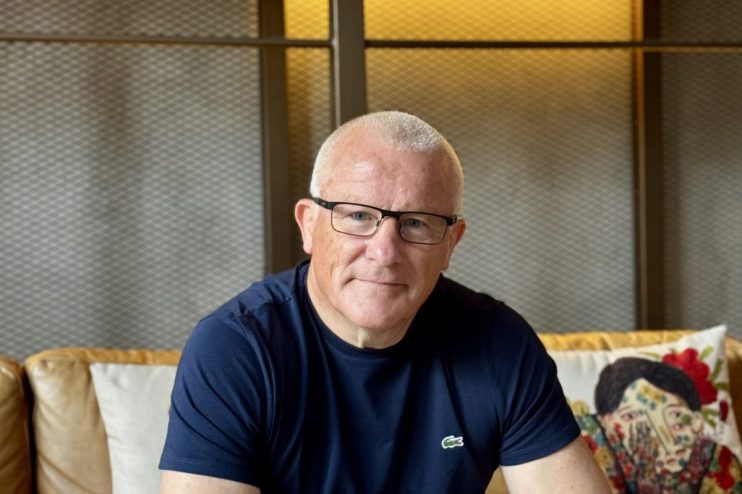
Neil Woodford has denied misleading investors over the contents of his collapsed investment fund, insisting that he “could not have been more transparent” to his thousands of retail shareholders.
Speaking exclusively to City AM, Woodford said he regularly published information on his fund’s portfolio and his investment strategy prior to its implosion, arguing that the fund’s fumbled liquidation was the true cause of investors losing out.
“Everybody who wanted to find out what the fund was, could see and understand that we were investing in unquoteds,” Woodford said, referring to companies not listed on the stock market.
“We could not have been more transparent about the strategy, what we were doing, how the fund was made up,” he added, noting that the fund published full portfolio breakdowns and monthly updates of holdings.
Woodford has consistently argued that the decision to suspend and ultimately liquidate the £10.2bn Woodford Equity Income Fund in 2019 — a downfall which left his reputation as one of the country’s best investors in tatters — was the responsibility of Link Fund Solutions.
As the fund’s authorised corporate director (ACD), Link had regulatory responsibilities for the management of the fund, overseeing and monitoring it in areas like liquidity risk.
However, critics suggested that the former manager took dangerously outsized positions in firms that were hard to exit from, and failed to communicate the risks to his thousands of amateur investors.
“He took a risk that his investors did not understand,” said Robert Marshall-Lee, CIO of Cusana Capital, in response to Woodford’s first interview with City AM.
Woodford and liquidation
Once feted as the UK’s answer to Warren Buffet, Neil Woodford’s fund attracted £1.6bn when it launched to investors in 2014. The eventual collapse prompted an investigation by the Financial Conduct Authority (FCA) and a warning notice against the former manager.
The FCA eventually accused him of having a “a defective and unreasonably narrow understanding of his responsibilities” in their report, adding that his investment firm “made unreasonable and inappropriate investment decisions”.
The watchdog also criticised Woodford’s actions that it claimed “materially increased the risk that [the fund] would need to be suspended,” and the process against the former manager is still ongoing.
While Woodford has addressed the conditions that led up to investors being blocked from withdrawing their cash, revealing that he found out Link intended to suspend only 15 minutes in advance, he has, until now, kept quiet on the later decision to shutter the fund and sell off its assets.
However, he has now claimed Link’s decision to liquidate the fund was responsible for investors losing their money.
“In my opinion, Link’s decision to liquidate crystallised consumer losses and delayed the return of investors’ capital,” he told City AM.
Link declined to comment when approached.
When the fund was suspended in May 2019, Woodford said that he was able to sell off more unquoted assets and move the cash into more liquid FTSE 100 and FTSE 250 stocks, which could be easily turned into cash.
Then, in September, Link issued the notice of liquidation, four months into the fund’s planned six-month suspension programme.
Woodford said that despite meeting Link’s requirements for making the fund more liquid, he was summoned to a meeting and informed that all of the fund’s assets would be sold, and he was out of a job.
“We weren’t really even given four months,” he added.
While the fund had been suspended in early June, Woodford claimed he had already commissioned an investment bank to sell the unquoted securities, but Link blocked the process.
“It would appear that they were contemplating handling the sale of the assets themselves, even at this early stage of the process,” he said.
However, Woodford added that Link lacked an “experienced fund manager,” further slowing down the process in an already tight time frame.
“We knew the buyers and the brokers to approach. Link had no expertise in this area,” he added.
Eventually, Link tasked BlackRock Advisors (UK) to dispose of the listed portion of the fund, while Park Hill Partners was appointed to assist in selling the “unlisted and certain highly illiquid assets”.
The unquoted portions of the portfolio were then sold off at discounted prices over the following years.
Woodford has claimed he was on track to meet the targets Link had set for him in the composition of the portfolio, and the fund would be back to business as usual at the end of the six month suspension.
“I even understand that Link’s head of risk confirmed, just a week before the decision to liquidate the fund, that the restructuring was on track and significant progress had been made,” he said.
Link declined to comment.
“It is impossible to determine what prompted Link to proceed with liquidation, and, as far as I am aware, this period has never been investigated,” said Woodford.
“I cannot help but wonder whether the FCA had discussions with Link during that time and imposed additional timeframes or alternative demands of which we were entirely unaware,” he added.
The FCA said it was not able to comment when asked about this speculation. Link declined to comment.