‘You can blame us’: The firm that sparked accountancy private equity gold rush


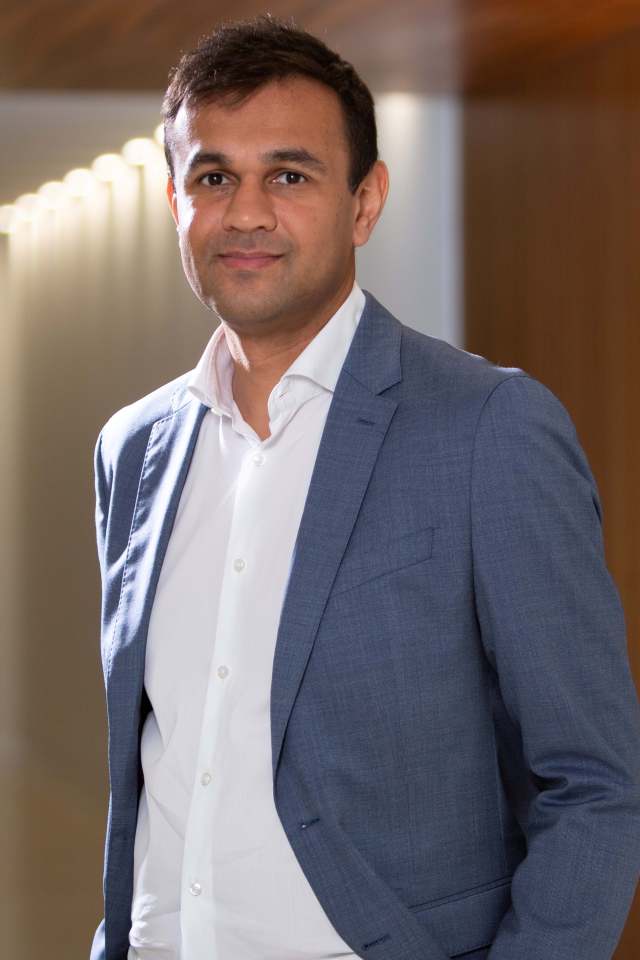
Blick Rothenberg’s chief executive, Nimesh Shah, told City AM the firm ‘killed’ the traditional partnership model a decade ago, and now stands as the blueprint that every mid-tier accountancy competitor is trying to emulate.
City-based Blick Rothenberg is widely recognised as the first major UK accountancy firm to receive private equity backing, after HgCapital invested in July 2016, a milestone that Shah describes to City AM as its “Super Bowl moment.”
Reflecting on the deal, Shah notes that many were “surprised” at the time. However, with the surge of private equity investments into UK accountancy firms in recent years, he remarks, “You can blame Blick Rothenberg for what’s been happening in the sector for the last 10 years; we started this.”
In recent years, private equity firms have made significant moves into notable mid-tier accountancy brands, including Apax’s £700m investment in Evelyn Partners and Grant Thornton’s partnership with private equity firm Cinven. Currently, 20 to 30 per cent of UK accounting firms have private equity backing, and an even greater proportion are open to accepting external capital when offered.
“In accountancy, the partnership [model] is long dead,” Shah says, noting the industry “clung onto it [too long]… because we don’t like change.”
“If you want to create value and create longevity in a business, then you should be running it like a corporate with proper corporate governance and thinking about the long term, because these businesses should be more long-term.”
Traditionally, accountancy firms, like most of the professional services sector, have operated as limited liability partnerships (LLPs). In this structure, members, known as equity partners, invest their own capital, assume the associated risks, and share in the profits.
But this model is under review due to the sheer amount of investment needed for technologies such as AI, and because external capital is easier to secure for the company’s future than trying to get ageing partners to agree to forego some of their profits
“At some point… [external capital] will be the normal business structure for accountancy firms”.
‘We have made mistakes’
Since the introduction of private equity funding, Shah says, Blick Rothenberg is now “six, seven times bigger in revenues than what it was 10 years ago, and half of that is inorganic growth.” According to Companies House, the firm reported a turnover of £83.62m for the financial year ending 30 June 2025, a nine per cent increase from the £76.72m generated in 2024.
But Shah notes things weren’t always smooth sailing at Blick Rothenberg. The firm “made a tonne of mistakes on M&A…not the M&A itself, but how we went about it”, Shah says, adding the firm was “naive about how hard M&A is”.
Blick Rothenberg officially began its acquisition spree in 2017, a year after HgCapital’s investment, with the purchase of boutique accountancy practice Shelley Stock Hutter. Since then, the firm has acquired Westleton Drake, Hazlems Fenton, Rees Pollock, Greenback Alan, and most recently, The VAT Consultancy.
“We should have done more… on the cultural and people integration”, Shah says. He adds that the firm is “really choosy” about the M&A it does.
“I’m not going off and spending investor money on M&A just for the sake of revenues and profits, because it can destroy the current business and the target business as well if it’s not culturally integrated in the right way,” he said.
Firms battle for cultural integrity
Despite the uptick in private equity in the sector, there are still hesitations due to the perceived culture that comes with external funders.
“You’ve also got to be careful who gets better [who you get as backers]… so we were very choosy about HgCapital; they’re really good investors,” Shah says.
“We’ve worked really hard to maintain the culture here once we’ve got bigger and whilst we’ve got external investment. That’s a red line for me – that we need to make sure we maintain culture.”
Shah goes on: “We will sack clients if they’re not nice to our people…clients should value what we do… I’m never rude to my builder because he does a great job, so there’s no reason why clients should be rude to us.”
However, Shah says the sector should embrace the change. AI looms as an existential threat, especially for the smaller firms in the industry.
“There will be a point pretty soon where one of these startup tech businesses will commoditise the actual accountancy side of accounting… a tech startup is successful at commoditising accounts in a £10‑a‑month type subscription model where you can just get your accounts and tax done automatically through a bank feed,” he said.