UK trials teen social media bans ahead of potential crackdown

Hundreds of teenagers across the UK are set to take part in a government-backed trial of social media restrictions, as ministers weigh whether to introduce a nationwide ban for under-16s.
The six-week pilot will see 300 teenagers aged between 13 and 17 split into four groups, testing different levels of access to apps such as TikTok, Snapchat and Instagram.
One group will have social media apps removed entirely, mirroring the impact of a full ban.
Others will face either a one-hour daily limit or a digital curfew blocking access between 9pm and 7am. A fourth group will continue using social media as normal to act as a comparison.
Families will be interviewed before and after the trial, with officials assessing the impact on sleep, schoolwork and family life, as well as how easy the restrictions are to enforce.
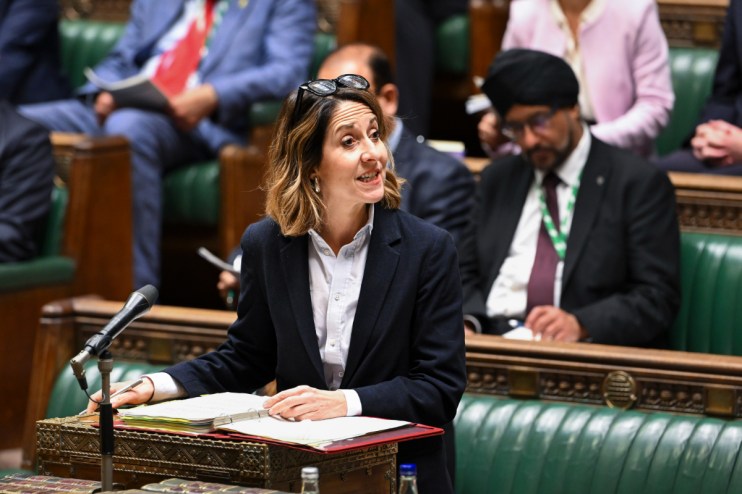
Technology secretary Liz Kendall said the scheme was designed to gather real-world evidence before any policy decisions are made.
“These pilots will give us the evidence we need to take the next steps, informed by the experiences of families themselves,” she told Times Radio on Wednesday.
The trial runs alongside a government consultation on whether the UK should follow Australia in banning social media for under-16s. That consultation, which closes on 26 May, has already received nearly 30,000 responses.
Evidence push ahead of outright ban
The pilot reflects growing political pressure to tighten rules around children’s use of social media, with countries including France and Spain also considering similar restrictions.
However, ministers have stopped short of committing to a full ban, amid concerns it could be ineffective or push young users towards less regulated parts of the internet.
Kendall acknowledged the debate, noting that some organisations warn bans could “go underground” and reduce accountability for tech firms, while parents and teachers often favour clearer, simpler rules.
“This is why we’re having this consultation, and I believe that we should be having this conversation”, she told Times Radio.
Child safety groups have broadly welcomed the government’s approach but say stronger action may still be needed.
Rani Govender, of the NSPCC, said ministers must be ready to act once the evidence is gathered, including forcing tech companies to build stronger protections into their platforms.
Meanwhile, the Molly Rose Foundation said it was “entirely right” to test policies before introducing sweeping restrictions.
Alongside the pilot, a separate large-scale academic study backed by the Wellcome Trust will track 4,000 pupils aged 12 to 15 to better understand how reduced social media use affects wellbeing, including anxiety, sleep and school attendance.