UK farmers hit by drought turn to insurance

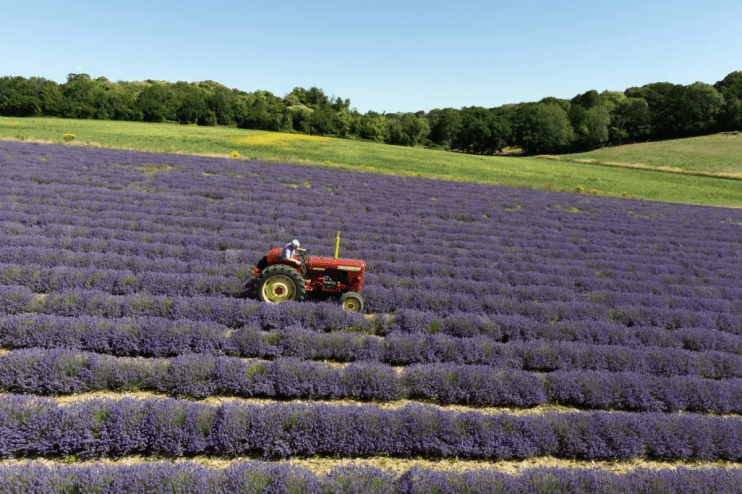
According to research by the Energy and Climate Intelligence Unit (ECIU), more than 80 per cent of farmers are worried about the “devastating” effect of the climate crisis on their farms.
In the UK, the crisis has had a particularly severe impact on the farming community this year. After the driest Spring in 69 years, the country has experienced a relatively hot Summer with temperatures reaching the high 30s in some parts.
Dealing with the weather is all part of farming, but increasingly unpredictable weather patterns are leading to substantial financial losses for farmers, losses they can ill afford.
To meet this challenge, the insurance industry has developed parametric coverage to be precise, which can provide financial relief following climate-related disasters.
Coverage is key
In the UK, parametric drought cover is purchased by a range of stakeholders, including farmers, explained Peter Steiner, Executive Director of Agriculture and Nature Parametrics at Howden.
He explained: “Parametric insurance is straightforward and data-driven. It pays out when a pre-agreed weather index (e.g., rainfall below a certain threshold) is triggered—regardless of the actual loss incurred.”
Steiner added that there is an “increasing appetite” for parametric solutions.
Kanika Anand, Divisional Director of Agriculture and Nature Parametrics at Howden, highlighted this approach offers several advantages, including the speed of payouts, which are typically made within days, and simplicity, as no loss adjusters are needed.
“This makes parametric insurance particularly attractive in scenarios where speed, clarity, and cost-efficiency are critical,” Anand added.
However, the more droughts the UK experiences, the more expensive these policies may become.
“When it comes to parametric insurance, pricing is primarily driven by historical data. A new dry year added to the time series could theoretically increase premiums, ” Steiner explained.
However, parametric structures offer flexibility.
Anand provides an example where the strike level can be adjusted to reflect the changing environment, allowing the probability of payout to remain consistent with previous years and helping to maintain stable premium levels despite evolving climate conditions.
The environmental issues affect farmers at a time when the Labour government tightened tax laws that spared farmland and family businesses from being liable to inheritance tax.
The Agricultural Property Relief (APR) and Business Property Relief (BPR), argued by the government, were abused by super-rich land and asset owners to get around paying the levy.
From April 2026, inheritance tax relief for business and agricultural assets will be capped at £1m.