Timekettle LiveTalk AI translation earbuds reviewed

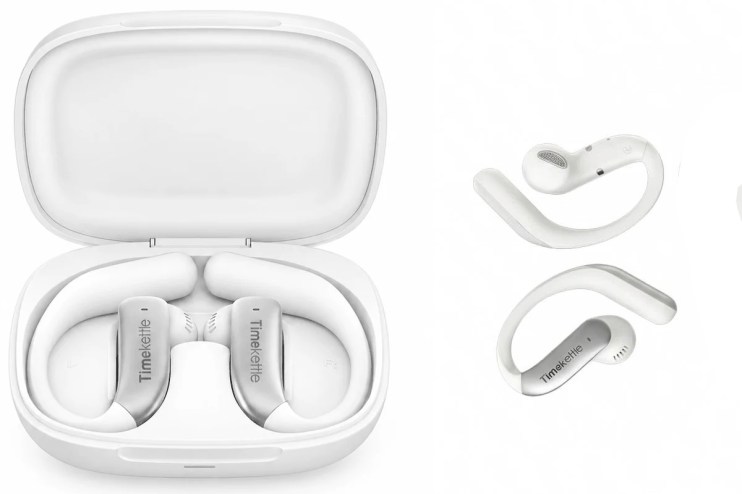
Timekettle LiveTalk | £129 | timekettle.co
There are certain technologies that feel innately futuristic, the stuff of science fiction, the kind of thing we terrestrial mortals probably shouldn’t have access to. Some of these, like video calls, are now mainstream. Others, like flying cars and robot butlers, are still some way off. And others walk a tightrope between these two poles. Live translation between languages fits into this category: it exists, but in a nascent enough form that it still feels like it shouldn’t.
It’s been around in some form for a few years but, as tends to be the case with these things, came into most people’s consciousness when Apple included it as a feature in its AirPods. And it works… kind of. Your AirPods have access to nine languages and translation is… rudimentary. It gets the job done, provided the job is getting directions to the piscine or ordering patatas bravas. It struggles with accents.
This is where the Timekettle LiveTalk comes in, promising to move us one step closer to the Babel Fish from The Hitchhiker’s Guide to the Galaxy. There’s something a retro about these earbuds, coming in a clamshell case and made from a white translucent plastic, which looks like how people probably imagined the future would look before it arrived. They feature a discreet earbud with a coil that wraps above your ear. They’re lightweight and relatively comfortable – I’m wearing them as I type this and can barely tell I have them in. They will function as regular earphones but you should absolutely not use them for this purpose, the sound being a bit like when you put earbuds inside a glass to try and make a caveman-style speaker.
The Timekettle LiveTalk tested
What they do much better is translation, for which they use AI to parse what you’re saying and translate it on the trot. The great thing about the LiveTalk is the breadth of languages included: 54 in total, with 108 accents catered for. I started off using the “One earbud shared” option with my friend Joe, one of City AM’s videographers, who has family in Hong Kong. It works like this: each of you puts in an earbud, selects the languages you want to translate (English and Cantonese) and… you just start talking.
To begin with, things did not go well: there’s a fairly long delay between the original speech and the translation – around five seconds – which takes a bit of getting used to. Once you adapt to this, things get better: translating to and from Cantonese is no mean feat so the translation is understandably pretty basic. But we managed to have a short conversation about what we did last night – Joe went to the pub and I… also went to the pub. It struggled to identify proper nouns, instead making ‘informed’ guesses, which were sometimes kind of close and other times hilariously far from the mark. Joe reckoned this might be down to his Hong Kong accent – I have no idea if Hong Kong is included in the 106 regional accents but this sounds plausible.
More successful was translating to and from Spanish. Another of our videographers, Joey, has family from Ecuador and he was surprised to see the LiveTalk has a specific option for Ecuadorian Spanish, where most translation software uses the broader “Latin American”. We were able to have a perfectly decent chat about the guests on City AM’s afternoon podcast, the preparation for which I had just interrupted. Again, the time delay takes a bit of getting used to but I can imagine using this when travelling in South America and getting by just fine.
Another option is to live translate a voice call, which also works well, with the same caveats; expect a delay. I’m yet to test the ‘live listening’ feature – put them in and it will translate whatever it picks up – but I’ll update this review next time I go abroad (I’m sceptical the AI could keep up with multiple inputs at once but I’m prepared to be proven wrong).
The Timekettle LiveTalk earbuds work better than I had expected and only slightly worse than I had hoped. This kind of accuracy, however, comes at a cost: you get 200 free minutes of translation a month but beyond that you have to pay: £9.99 a month gets you unlimited translation with lower tiers also available. If you travel often, upgrading feels like a no-brainer, at least until Apple’s version catches up (it’s currently free).
This kind of tech is still young and while £129 won’t exactly break the bank, it’s a not insignificant outlay for something that’s likely to improve exponentially over the coming years. But if you’re a regular traveller who needs translation that’s a cut above the more basic options on the market, these should absolutely be on your radar.
• For more information visit the website here