This must-book Kenya safari goes way beyond The Big Five

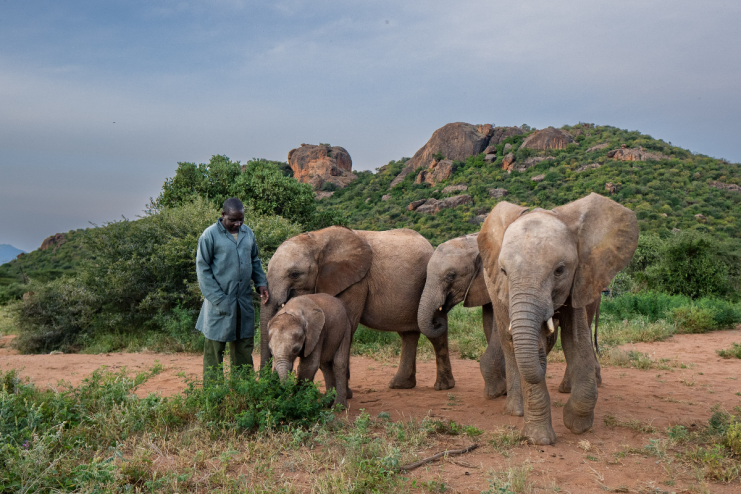
“Back in the 1990s when I was growing up here, it was bandit country. Poaching was rife, weapons were everywhere, and nobody was getting along,” Jeremy told me, staring into the glow of the post-safari campfire.
It is hard to imagine now. Jeremy Bastard, fourth-generation Kenyan and CEO of The Sarara Foundation, does not look like the stereotypical corporate leader. With sun-bleached hair, shorts, sandals and a crumpled shirt, he could be mistaken for a beach bar manager rather than a baby elephant rescuer and conservationist. Yet his family legacy, and the partnership he and his wife Katie have forged with the Samburu people, have helped transform this once-lawless region into one of Kenya’s most successful conservation success stories.
We were in Namunyak Community Conservancy, a remote stretch of land in northern Kenya’s Great Rift Valley. The conservancy was created in 1995 by the Samburu — semi-nomadic pastoralists who realised that conservation could offer more than protection for wildlife; it could uplift livelihoods.
When the conservancy began, many species were at risk from poaching, and human-wildlife conflict was common. So the Samburu partnered with Jeremy’s parents to develop an ecotourism model owned and run by the community. Since Jeremy and Katie took over in 2010, they have co-founded Reteti Elephant Sanctuary in 2016 and The Sarara Foundation in 2019, broadening that early vision into a comprehensive strategy linking wildlife protection to healthcare, education and income generation.
The Kenya safari acting as a blueprint for nature tourism
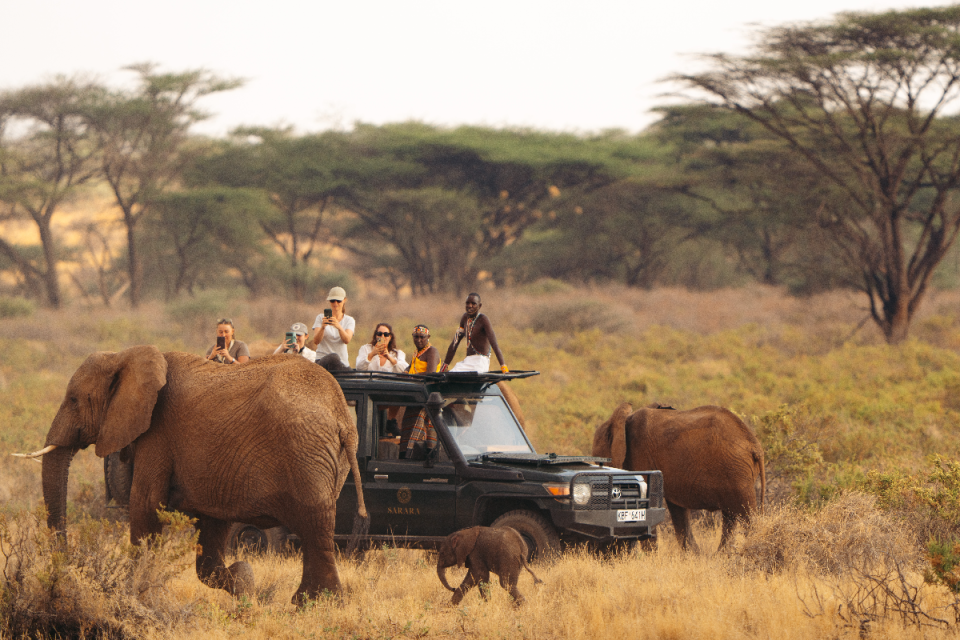
Today four Sarara safari properties welcome visitors — Reteti House, Sarara Treehouses, Sarara Camp and the mobile tented Sarara Wilderness camp — but this is not the usual safari formula. Forget glossy lodges where guests never encounter local life. At Sarara the Samburu are central. “We want you to see it all,” Robert, general manager, told me. “We are proud of our culture and lands – we want you to see them.”
We visited a village with permission and were asked not to photograph people as a mark of respect. There is no electricity or tapped water, and families sleep in huts of woven branches. I learned about Samburu social structure: a gerontocratic system where elders rule through councils held under fig trees; a polygamous tradition where wealth is measured in cattle.
A short walk from Reteti House is Reteti Elephant Sanctuary, where around forty orphaned calves thunder toward their keepers at feeding time. Watching them tumble into a muddy pool, trumpet and tussle, was joyous. Nearby, a two-month-old giraffe tottered on spindly legs and blinked with long lashes. There was nobody jostling for the best camera angle because we were the only visitors.
It’s heartening hearing stories about how the foundation helps the local women in particular. During the pandemic, formula milk for orphaned elephants, normally ordered by the pallet from Nairobi, became impossible to source – but from crisis came invention. The Milk to Market programme set up through The Sarara Foundation helped local Samburu women sell goat and camel milk to the sanctuary. These ‘Milk Mamas’ provided local, reliable milk for the sanctuary and acquired steady income in a society where arranged marriages are the norm and where women often lack independent earnings.
Surplus milk is processed into cheese, yoghurt and soap, giving the women a consistent income when the sanctuary is quieter. What began as a crisis solution evolved into something more powerful – a sustainable, empowering initiative. The Sarara Foundation also supports a mobile health clinic and a Montessori school that literally moves with the community, adapting to nomadic life. “For a sick elephant, everyone runs with the helicopter to help,” Katie said over lunch. “For a sick mother who has just given birth, there was nothing. That wasn’t right. You cannot do conservation successfully without caring for people. It’s been a family mission across generations.”
Their commitment shows in results: the foundation’s projects now employ more than four hundred Samburu, local clinics and schools operate consistently, and wildlife has rebounded. Elephant numbers in the wider conservancy are estimated at around six thousand, while Reticulated giraffe and Grévy’s zebra populations are recovering.
At Sarara Treehouses, over a delicious Ottolenghi-style lunch of grilled chicken and salad, Katie explained the problem with conventional marketing of safari in Kenya. “The ‘Big Five’ slogan concentrated tourism in a few parks and created over-tourism that is damaging and benefits very few people,” she said. “Our aim is to spread value – through jobs, training, local ownership and essential services.”
That ethos shone during a beading session with Samburu women at the lodge. Beadwork is central to Samburu identity: collars, bracelets and headdresses encode age, status and story. With a translator, we asked questions about each other’s lives and established that we British women are pretty useless. We laughed with humour and embarrassment when we summarised that we’d just die if left outside of our luxury lodge. After all, we can’t raise livestock and produce our own food, make fire, or milk goats, tasks the Samburu women do every day. We also got used to hearing that nobody knows their age. Dates don’t matter here, survival does.
At Sarara Camp where Katie and Jeremy live with their three young children, I learned to love showering outdoors beneath a sky strewn with stars, even as Boris, a large bull elephant, ambled through the scrub nearby. The infinity pool is carved into living rock and overlooks a waterhole where giraffes, warthogs and elephants fight for prime position. A highlight of the trip was a bush BBQ dinner set out on the dried river bed. We drove there in the silent electric Land Rover, and arrived at a sandy expanse with a fully laid out table, with a campfire and a bar. A group of giraffes lay sleeping not far away. With darkness, the milky way shone and we couldn’t have had a clearer view of the lunar eclipse.
Having met the human community and explored its culture, we were ready to see more wildlife. A 15-minute bush flight took us deeper into the wild to Sarara Wilderness, a mobile off-grid safari camp with tents larger than many London flats, complete with flushing toilets and hot showers. From the camp we took morning walks with an armed guard, following old animal tracks, or we went for traditional game drives into Samburu and Buffalo Springs National Reserves. In the reserves we saw other tourists for the first time on the trip, as well as prides of lions, huge herds of elephants, cheetah and leopard. These encounters were all the more special having felt that we had seen the full picture of life for everyone in the Namunyak Community Conservancy. Our safari experience felt more authentic, genuinely immersive and educational.
Sarara is a blueprint for what tourism can and should be: uplifting communities, protecting vulnerable species, and proving that conservation only works when it works for everyone.
Book this Kenya safari yourself
Rates per night start from £900 per person, including the £120 conservancy fee. Go to sarara.co for more information. British Airways flies to Nairobi from around £460 return.
Read more: A modern type of safari with Sri Lanka’s leopards and elephants
Read more: This Botswana safari offers these things others in Africa don’t