State handouts for oil are no way to help the poorest

If government steps in whenever there is a so-called crisis then people will stop saving for a rainy day in the false belief government will always be there to supply them with an umbrella, says Charles Amos
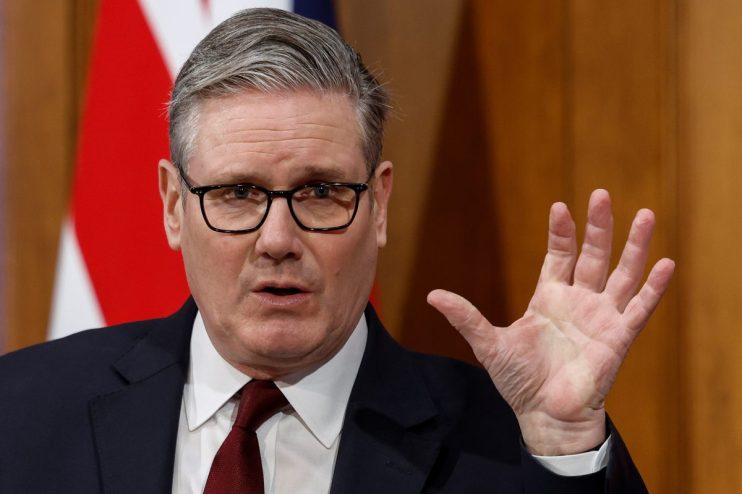
This week Keir Starmer announced a £53m support package for vulnerable people who use oil as their main source of heating. According to the Prime Minister, this is essential to meet people’s genuine needs. Yet Britain’s state, indebted to the tune of £2.8 trillion already, can hardly go on doling out money whenever any inconvenience comes along, especially when people should have really saved up for a rainy day like this themselves.
In Britain today about 1.5m households use oil as their main source of heating. These people are said to be severely affected by the rise in the price of brent crude from $73 a barrel before the Iran War to about $100 a barrel now. Heating oil has doubled in price over the past week. Starmer’s £53m support package is due to be distributed by local councils via the Crisis and Resilience Fund. It is said the money will go to those at immediate risk of losing hot water and heating.
The vast majority of people who will benefit from this fund do not need the money. If we look at the bottom ten per cent of households we find they spend 17 per cent of their budget on alcohol, tobacco, recreation, culture, hotels and restaurants. This equates to about £2,500 a year; the same group spends £723 on gas and other fuel, so, assuming oil heated households spend about the same as gas heated households, all they need to do is trim down their leisure spending a bit to finance any increase in oil prices, alongside modestly reducing down the temperature of their homes too. This is not a great hardship.
We’re in March and with an average temperature of eight degrees in the North, the cold is more than bearable with a thick duvet and a hot water bottle
Perhaps it is not the bottom ten per cent that are really at issue, but, instead, the very poorest percentiles. Maybe. Yet obvious solutions exist even for the truly poor. Put on an extra jumper, work more to increase your income or, simply, don’t turn the heating on. We’re in March and with an average temperature of eight degrees in the North, the cold is more than bearable with a thick duvet and a hot water bottle. Subsidising heating oil also stops people from finding alternative ways of keeping themselves warm: Log fires, proper curtains and electric blankets, are all very cheap ways of keeping the cold at bay.
Dependency
That may sound callous, but it is not kind to make people dependent on the state. If government steps in whenever there is a so-called crisis then people will stop saving for a rainy day in the false belief government will always be there to supply them with an umbrella. Some 25 per cent of Brits have just £200 or less in savings. This is not due to a lack of means. Again, even the poorest 10 per cent of households spend about £300 a year on holidays and takeaways.
No doubt many politicians will scoff at my advice for scrimping and saving. Yet with a national debt of £2.8 trillion, or, over £74,000 per taxpayer, we must ask whether it is justified to place yet another burden on tomorrow’s generation so some of us can live a slightly easier life today. How is the state borrowing £53m to finance people’s current heating any different – morally speaking – from a pensioner taking out a credit card in a child’s name, running up the bill for heating, then, when they’re old enough to pay, forcing them to do so at gun point? While a pensioner might justify indebting this child if the alternative was freezing to death, the child could reasonably argue that she could have simply used an electric blanket instead.
Overall, Starmer’s subsidy points to the sad decline in people’s attitudes to themselves and government. Instead of wishing to stand on their own two feet, independent and proud of it, many people are all too quick to put out their begging bowl. The productive class is plundered once again to finance the poor habits of the millions on benefits who’ve never saved a single penny for a rainy day. We’d all do well to remember the words of the Victorian philosopher, Herbet Spencer: “The ultimate result of shielding men from the effects of folly is to fill the world with fools”.
Charles Amos works in the haulage industry and writes The Musing Individualist Substackin his spare time