Show them the book: why politicians need to read more novels

Leading historian Dominic Sandbrook has said declining reading habits of our politicians tells you everything you need to know about why they’re so inadequate. William Atkinson couldn’t agree more…
Would Keir Starmer be a better Prime Minister if he went to bed with a good Trollope? That was the suggestion of Dominic Sandbrook – Britain’s most popular historian, top podcaster and leading Wolverhampton Wanderers aficionado – in a recent interview.
Promoting his new podcast about books – cannily entitled ‘The Book Club’ – he made the case that the decline in the reading habits of our politicians helped explain the inadequacy of our governance. Starmer once denied having a favourite book, or the ability to dream. Contrast that with Harold MacMillan who recommended going to bed with a copy of Cousin Henry or The Way We Live Now, and one can’t help but lament the decline.
The reading habits of Prime Ministers can be fascinating things. When later pressed by some school children, Starmer claimed to have been a fan of Roy of the Rovers, the 70s football comic. His predecessor preferred something a little racier, with Rishi Sunak being a tremendous fan of the late Jilly Cooper. While John Major joined MacMillan in loving a Trollope, Gordon Brown claimed his favourite work was the picture book The Snail and the Whale by Julia Donaldson. MacMillan also said he spent an hour a day reading Jane Austen – an impressive feat, but not quite as grand as William Gladstone, who, between redeeming prostitutes and trying to abolish income tax, possessed so many books that he had to cart them around in a wheelbarrow. You can now stay the night at his library in north Wales.
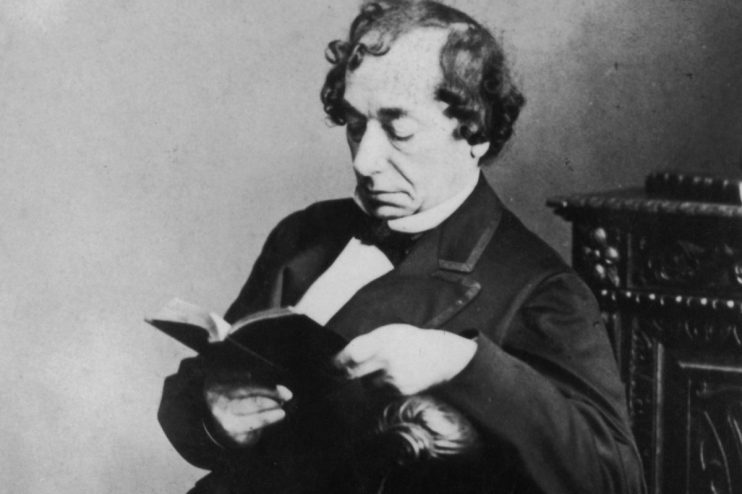
Three Prime Ministers have been novelists themselves: Benjamin Disraeli, Winston Churchill and Boris Johnson. The latter pair’s books were ill-disguised portraits of themselves as ambitious young politicians, with Johnson’s effort a strange psychological study of a tousle-haired young MP engulfed in scandal and incapable of seriousness. But while Disraeli certainly put himself front and centre in his various works, Sybil still stands out as the great under-rated work of Victorian literature, a classic of social manners and moral fervour that deserves to be known for more than the ‘two nations’ line often misquoted by Tory MPs.
Settle down with a Trollope
But the underlying charge of Sandbrook’s suggestion – that better-read PMs would be more successful ones – deserves analysing. Both MacMillan and Major may have settled down for a night with their Trollopes, but that didn’t prevent either of them from having their premierships overwhelmed by sex scandals, economic crises and European tergiversations.
As Sandbrook’s own magnificent books about Britain’s modern history chart better than anyone else’s, one of our most studious post-war Cabinets was also one of our most hopeless. Harold Wilson’s second government in the mid-1970s had a Chancellor in Denis Healey who claimed to read a book a day in his younger years, but that didn’t stop the pair of them presiding over 28 per cent inflation and 98 per cent income tax. By contrast, Margaret Thatcher’s critics often suggested she was uncultured, liable to pick a Frederick Forsyth over a Fitzgerald or Forster – but she still knew how to best the unions and generate prosperity.
Despite the snobs, Thatcher still looks like an intellectual titan compared to her current successor.
Despite the snobs, Thatcher still looks like an intellectual titan compared to her current successor. Being a scientist didn’t stop her being able to quote Rudyard Kipling from heart or telling interviewers she enjoyed a Dostoevsky. But she was a product of a very different age, where not only politicians but the public were expected to read as a matter of course – a world before Twitter, reality television, and brainrot Tiktoks, where politicians didn’t have to pretend to be airheads to bat away claims of elitism. If Starmer’s favourite book was War and Peace, or Bleak House, or Ulysses, one suspects he would be afraid to say so, lest illiterate ne’er-do-wells declare him to be out of touch. Better to stick to football, and an empty head.
One hopes that Sandbrook is successful in Making Reading Cool Again. But a lack of a literary hinterland is one of a myriad of deficits afflicting our current politicians. They’re not just down on novels, but on all forms of knowledge that one might consider essential.
Liz Truss, for example, couldn’t name Prime Ministers she admired beyond Margaret Thatcher and Winston Churchill. She may have only been in Downing Street 49 days, but that was surely time to at least notice the pictures of her predecessors lining the Number 10 steps. A survey of the 29-odd Labour MPs elected in 1906 revealed favourite works, alongside the Bible, were by John Ruskin, Charles Dickens, Thomas Carlyle and Henry George. Could you find 29 Labour MPs today who even know who those authors were, let alone who had read them? Or, being fair about my own depleted side, 29 Tories?
It’s to Britain’s detriment that our politicians are not more worldly-wise. That applies to intellectual curiosity as much as ex-employment
It’s a typical lament from those on the right of politics that far more Labour MPs will have worked at Save the Children than the City. But it’s to Britain’s detriment that our politicians are not more worldly-wise. That applies to intellectual curiosity as much as ex-employment. How many politicians have bothered to bone up on AI, gene-editing, nuclear fusion or half a dozen other scientific and technological advances reshaping our world? How many saw the war in Ukraine as a spur to learn about Russian history and foreign policy? How many can point to the Chagos Islands on a map, let alone make the case for Starmer’s bonkers deal?
Like Sandbrook, I find it a mark of shame that our current Prime Minister is so poorly read, and that we live in an age where loving books is almost embarrassing. But while getting our politicians to listen to his podcast and pick up a novel or three would be a tremendous start to reversing that decline, it will be no silver bullet for our all-consuming crisis of leadership.
William Atkinson is assistant content editor at The Spectator