Robert De Niro on $1.3billion hospitality empire: ‘I’m very protective of Nobu’

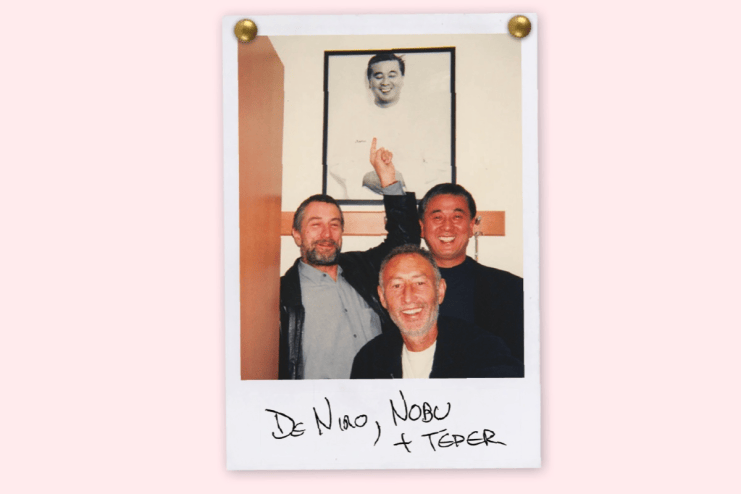
Goodfellas and Taxi Driver legend Robert De Niro talks exclusively to City AM The Magazine about his hospitality empire, which quietly occupies the 83-year-old New York-born actor in-between his film-making. Over the last 40 years, De Niro has been launching Nobu restaurants around the world, a Japanese brand he is fiercely protective of. He speaks to us about maintaining the quality at all costs, how restaurant work differs from the movies, and the concept of ‘ikigai’, which means never retiring
In an intimidatingly futuristic building made almost entirely of glass, I pass through a marble-clad lobby, up a flight of stairs and into an expensive-looking hotel suite. Here a handful of serious-looking people sit around a brightly lit boardroom table. Most of them are hospitality professionals: a general manager, a chief executive, a gaggle of publicists. One of them is the most famous actor in the world.
Robert De Niro looks at the ground, channelling all of his energy into standing up to shake my hand. He lifts slowly out of his chair but I ask him to, please, sit down, don’t get up on my account. He’s shrunk a little from his heyday, his shoulders more rounded, but that’s all that reveals his 83 years. And if he’s a little less formidable, it’s only physically. His vibe is still deadly: De Niro would rather spit than say a single word more than is necessary, or, worse, a word he didn’t mean.
Robert De Niro and the Nobu story
We’re at Nobu Portman Square hotel in Marylebone, part of the group the actor co-founded in the 1990s, a fact that still carries a sheen of unbelievability even after three decades. De Niro isn’t even the only octogenarian around this table. Also joining us is Nobu co-founder Meir Teper, the 83-year-old film producer who, like De Niro, side-hustles as a lifestyle tycoon.
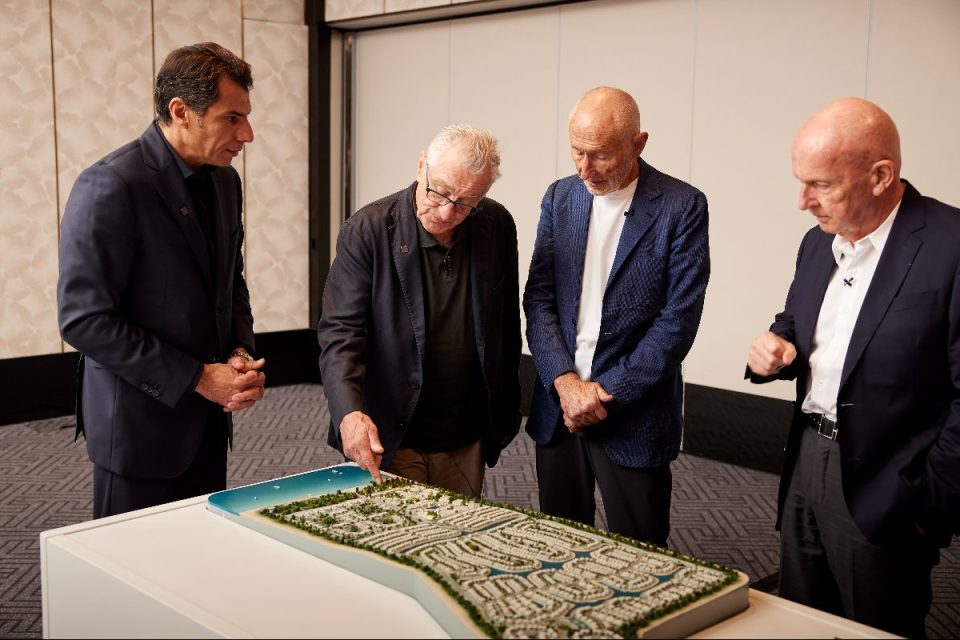
De Niro is here to discuss the three Nobu Hotel & Residences opening in Egypt, including a restaurant on the north coast that’s already started plating up sushi, and the phased launches over the next five years of resorts in Cairo and the coastline. Residences are also soon-to-launch in Manchester, as is Nobu’s first wellness club and countryside retreat, Nobu Woolfox, which will open next year on an estate near Rutland in the Midlands, rivalling luxury offerings in the Cotswolds. De Niro is coming for the wellness industry, too.
Nobu is an incredible success story. There are now 19 Nobu hotels and 55 restaurants serving namesake chef Nobu Matsuhisa’s Japanese-Peruvian cuisine. International openings are green-lit by De Niro himself, who is a kind of vibe checker for the brand. As Teper puts it: “We follow his vision.” The story goes that De Niro convinced chef Nobu to open a restaurant in Tribeca in New York in 1994; that flagship, still thriving, was the beginning of a global empire now estimated to be worth $1.3 billion (De Niro, Teper and Matsuhisa are understood to own 80 per cent; with the other 20 per cent held by private equity firm Blackstone).
He’ll say, ‘I don’t think we belong here’
By all accounts, De Niro has an instinct for destinations that will – and crucially, will not – work. Sometimes that instinct seems to border on the preternatural: when our sister publication spoke to him in 2025, he admitted he’d never been to Manchester and knew nothing about the city, despite having commissioned a Nobu Residences there. So how on earth does a man regarded as one of the best actors of his generation know what makes a good location for a Japanese restaurant? “I just say, ‘Where do I wanna go?’” De Niro tells me. He really does speak in that smash-em-up, gravelly, menacing tone. “Would I like to walk into that restaurant in that particular place?” He scrunches his face to make an impression of a first-time visitor. “That first sight, where it is, what part of the world… it’s important.”
His strategy clearly works: only five Nobu restaurants have closed in 30 years, which is especially impressive when you consider the hardships faced by the hospitality industry (in London alone half of restaurants shut within two years of their first service). Madonna once said you could tell if a city was going to be fun by whether it had a Nobu in it. In keeping with De Niro’s reputation for speaking his mind, he’ll happily draw a red line through potential new locations. “He’ll say: ‘I don’t think we belong here,’” says Teper. “I don’t want to name names, but it’s not like when somebody approaches us we just say ‘Okay let’s do it.’”
De Niro inspired by eating on location
When I ask De Niro what’s unique about the brand, he says it’s simple: the quality of the food and the location. There is no pandering to trends, no evolving ‘concept’. It’s just good sushi. It was British film director Roland Joffé who first introduced De Niro to the cooking of Nobu Matsuhisa in the late 1980s and it was love at first bite. At that point, chef Nobu had only one restaurant in Los Angeles. “Roland said, ‘Come to this restaurant, you’ll like it,’” remembers De Niro. “I was maybe an hour into eating and meeting Nobu and I said ‘If you ever want to open a restaurant in New York just let me know.’
“For me it was a no-brainer. It would work in New York. And here [in London], too. The Japanese restaurants I’d been to were all the same. Very good, but conservative, staid, nothing exciting. They didn’t pretend to be. But Nobu had another thing, the Latin from his time in Peru, that made it special. So that was it: I said: ‘This will work’. I’d opened a grill with Drew Nieporent, a local restaurateur in Tribeca, a year or two before I met Nobu and I put him and Drew together. It took a while to get it going, Nobu was apprehensive. I can’t remember all the details but finally it happened.”
The question is, why?
The partnership makes sense. While Nobu, 76, was brought up slicing fish and thinking about flavour, De Niro spent years travelling the world filming, developing an eagle eye for what makes a restaurant people want to hang out in.
The bigger question, though, is… why? Why does one of the most lauded actors in the world spend his time promoting expensive condos in Egypt when he’s already worth an estimated $500m? Especially when he might not even live to see them completed? And how does an 83-year-old factor business into his life when he has a three-year-old daughter, who in a recent interview, through tears, he described as the “pure joy” in his life? “She has a very sweet kind of way of looking at you,” De Niro told AARP. “And just taking you in… They just look at you and take it in. I want to be around for as long as I can, to enjoy it, to enjoy her.” He lives with his girlfriend, 46-year-old martial arts instructor and dancer Tiffany Chen, and his youngest daughter in a 100 acre Hudson Valley property that boasts its own ski slope. He has seven children altogether with four women; the oldest, Drena, is 55.
Maintain the quality. Period. It’s that simple.
I suggest it’s unusual for someone of his age to be working at all, let alone as the co-founder of an international hospitality empire. De Niro nods deeply and puts up no defence. Does he find something here he can’t in Hollywood? Like, is the public-facing world of film sets and red carpets passé compared to the rigour of the luxury restaurant world? Just for a second, I experience old-school De Niro: He tenses his facial muscles to pull that characteristically strained expression, as if he’s just sucked on a lemon. “No, that’s different,” he says, in combat mode. “It’s just a different thing. I enjoy it and feel very protective of it because I’m part of the creative… We all want to make sure we maintain the quality and everything. That’s it. That’s the key. You’ve got to be careful with that stuff.”
What happens if the quality isn’t maintained? “We were talking about this the other day – someone was saying, ‘Why have you got to spend that?’. But somebody will visit and notice that’s something a little… off. And then maybe they notice something else and then something else, and all of a sudden it’s not the same restaurant. Then people start to say, ‘Nah I don’t wanna go there.’ The only thing you can do is maintain the quality. Period. It’s that simple.”
Nobu offers a sense of control
His acting roles have, of course, changed with age: he’s unlikely to play a character as iconic as Travis Bickle today. Perhaps the Nobu empire offers De Niro a sense of control, speculates PR guru Mark Borkowski, who has worked with Michael Jackson, Prince and Macaulay Culkin. “The parts inevitably narrow: patriarch, mob elder, grandfather. Nobu reverses the power relationship,” he says. “Here, De Niro says ‘Yes’. He chooses where to appear, when to appear and what bears his name. The business makes acting optional, and perhaps at his age optional is the only kind of work worth doing. In a curious way, it is still the same job he has always done: turn up somewhere beautifully lit, hit the mark, say very little and allow everyone else to project meaning onto him. The difference is that now he owns a piece of the room.”
Nobu has undoubtedly had a good run, but it isn’t what it once was. In the noughties, the Park Lane restaurant – the second in the world to open after Tribeca – was a celeb magnet, the number one destination for actors on the junket circuit. It’s part of the same building that housed the Met Bar, once the city’s coolest watering hole; 20 years ago, that 50 metre stretch of real estate was the most coveted in London. But the creatives have moved on: now the majority of the visitors to Nobu’s London restaurants appear to be international.
Robert De Niro: movies not to miss
Today the brand is courted not by the coolest cities in the world, but the ones that wish to replicate the aura of the coolest cities in the world. It is a brand synonymous with ‘placemaking’, helping to establish burgeoning destinations like the Egyptian coast that are keen to welcome moneyed Western visitors. “People are constantly asking us to be in their place to give them a certain cachet or credibility,” De Niro says in a press conference following our interview.
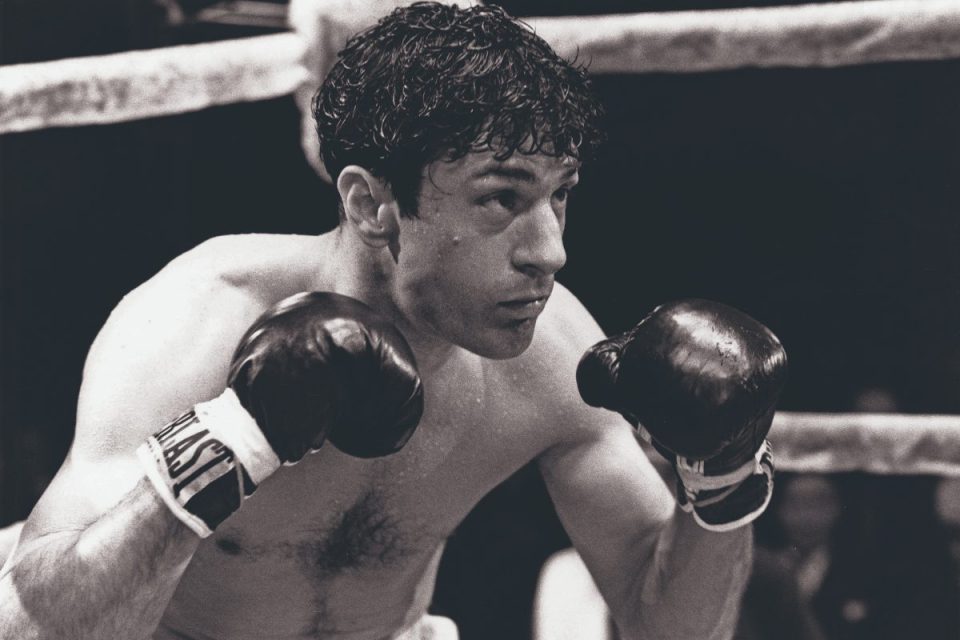
You could, at a stretch, liken the trajectory of Nobu to De Niro’s film career. He was an unstoppable heavyweight during the 1980s and 1990s, when his collaborations with Martin Scorsese on Goodfellas, Taxi Driver, Raging Bull and Casino made him the most in-demand actor in Hollywood. But his post-2000s career has been more hit-and-miss: his latest straight-to-Netflix thriller The Whisper Man was slated by critics (the Guardian accused him of “sleepwalking” through the movie). His 2025 mob film The Alto Knights also landed badly. His first TV lead, in Netflix thriller Zero Day, in which he played a former US president, received mixed reviews. The last clear hit was 2023’s Killers of the Flower Moon, in which De Niro played an ageing cattle rancher orchestrating a series of murders of Osage tribe members; it is no coincidence the project reunited him with Scorsese for the first time since The Irishman in 2019.
Early 70s breakout
Born in Manhattan in 1943 and raised in Greenwich Village, De Niro’s parents Virginia Admiral and Robert De Niro Senior were prominent abstract expressionist painters and poets (they separated when De Niro was two and his dad came out as gay). Initially a shy child, he starred in a school production of The Wizard of Oz aged 10, which helped develop his confidence. He dropped out of high school aged 16 to study acting and took his first paid role that same year in a production of Chekhov’s The Bear. Delivering food and doing extra work to bring in money while auditioning and landing bit part roles, he secured his breakout in Mean Streets in 1973, the first of ten films he made with Scorsese, who grew up in the same New York neighbourhood as De Niro. His role as ‘Johnny Boy’ Civello was a meteoric success, both critically and at the box office, establishing De Niro’s reputation for depicting violent men.
The year Robert De Niro met Nobu
His method acting style would go on to be filtered through a raft of intense, highly physical roles before he softened a little in the late-1990s, shifting towards more comedic parts, such as retired CIA counterintelligence officer Jacky Byrnes in Meet the Parents.
Two significant turning points happened in 1988: De Niro met chef Nobu, and that same year the actor first pushed away from action and into light comedy with the release of Midnight Run (Nobu took six years to come around to opening a restaurant called ‘Nobu’, which eventually launched in 1994).
Two weeks after my interview, I book into the restaurant at Nobu Portman Square. It feels slightly less exciting entering the imposing glass building this time, but only a bit: it really is a stunning place. I order chef Nobu’s signature omakase menu, on which many of the dishes haven’t changed since the 1990s, including the superlative black cod miso that he popularised during the restaurant’s heyday. House music plays as I eat my way through salmon tartare with caviar and a tiny Japanese wakamomo peach. The glamorous, moody interior is softened by floor-to-ceiling views of the trees outside. If there’s anything to criticise, it is the service, which is not at the level you’d expect.
Can I remind you he is 83?
The brand’s impending push into the wellness space feels on-the-nose, given the age of the men behind it. What does wellness look like to a man like De Niro, especially given conversations surrounding longevity? He’s explaining that he’s keen to visit the site in Rutland but hasn’t been yet, when an agitated PR runs in from the other room to close down this topic of conversation. My questions have been heavily vetted and I’ve been instructed to speak only about the Egyptian hotel launches. Time for my final question, she says, despite there still being a quarter of my interview left. The question doesn’t appear to bother De Niro, though. After I finish recording, instead of bolting, he walks past the publicists to shake my hand and tell me to “take care”.
Unlike stars half his age, who tend to disappear into waiting Mercs to the airport, De Niro goes from our interview to a conference to talk about the Nobu projects in Egypt. Then he had a cocktail reception. Then, in the evening, he has dinner with 30 or 40 journalists and industry figures. In the foyer before the conference, property writers more used to penning dry business-to-business stories could barely contain their excitement at a chance to spot such a huge star. When it comes to promoting a brand, this level of commitment is practically unheard of. Can I remind you that he is 83?
Staying active into old age embodies a Japanese concept called ‘ikigai’, which chef Nobu himself practices. At 77, some years he still travels for 10 months out of the twelve. Perhaps De Niro’s dedication to Nobu – meeting journalists, architects and business people, scoping out new developments – is his way of keeping the lights on.