Renault 5 E-Tech 2026 long-term review – third report

It happened again yesterday. Twice now, while navigating the Surrey suburbs, I’ve had a cheery wave from a fellow Renault 5 driver heading in the opposite direction. This kind of car-based camaraderie was the norm when I drove an original Mini, and I know folk with classic Land Rovers do the same. I’ve never experienced it in an EV before, though.
On the one hand, it’s nice to feel part of the unofficial Renault 5 owners’ club. On the other, with Renault’s UK sales up by 19 percent last month and the R5 amidst the top 10 best-selling EVs, all this smiling and waving could soon become exhausting.
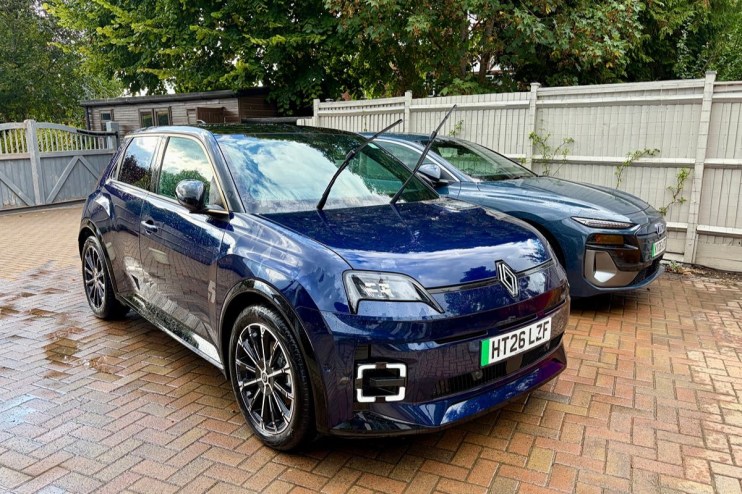
While it hasn’t become ubiquitous quite yet, the Renault is an easy car to spot – chiefly because many are painted near-fluorescent Pop Green or the equally dazzling Pop Yellow. Mine is a more subtle Midnight Blue, which is deep and lustrous when washed, but also serves as the perfect canvas to display dust. During the recent heatwave, it was impossible to keep the car looking clean.
Tribute to the Clio Williams
Speaking of style, Renault has just introduced gold wheels as an option for higher-spec Techno+ and Iconic+ 5 models. When combined with Midnight Blue paint (as pictured above) the result clearly evokes the 1990s Clio Williams, making these 18-inch rims instantly desirable to anyone who remembers the cars of that era.
(As an aside, I was lucky enough to drive Clio Williams number 0001 – originally owned by Frank Williams himself – for our Retro Road Test some years ago. A forerunner to the many brilliant Renault Sport Clios, from 172 to 200 Cup, it remains one of my all-time favourite hot hatchbacks.)
Besides gold rims, the other new cosmetic options for the R5 are a star-patterned roof, grey roofline stripes and Flame Red paint. The latter is similar to the Rebel Red hue on the closely related Nissan Micra, which is built in the same factory in France. Again, I think it suits the Renault really well.
New battery for entry-level R5
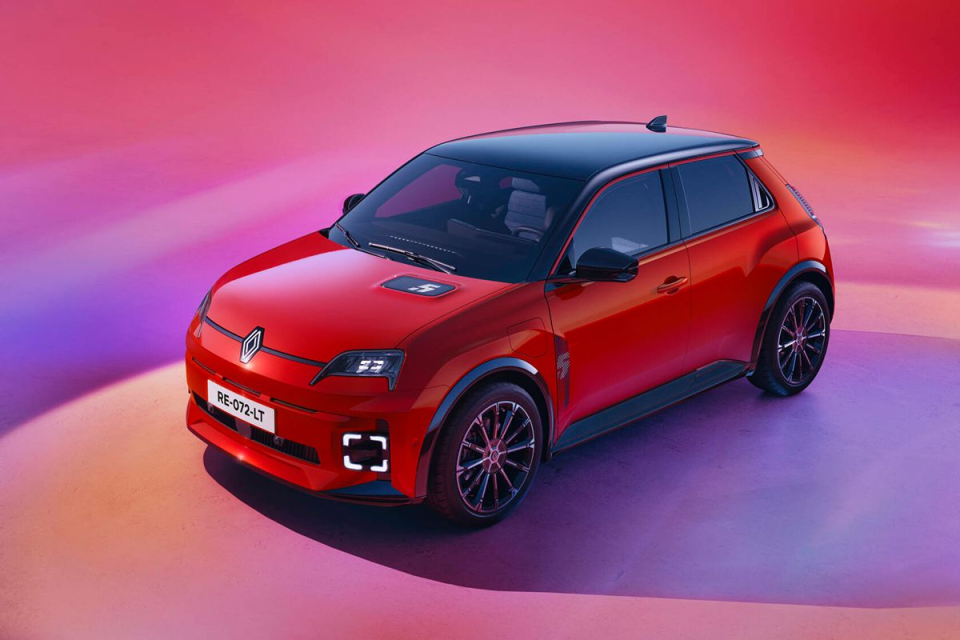
Onto more technical matters, the mid-life update extracts a little more range from the larger 52kWh battery fitted to Techno+ and Iconic+ cars – up from 252 miles to 267 miles.
Notably, Renault is also replacing the 40kWh battery found in the entry-level 5 Evolution with a 36.5kWh lithium-iron-phosphate battery from the new Twingo. It has a slightly shorter range (190 miles) and charges more slowly (80kW), but could cost less to buy when it arrives in the UK. The current starting price for an R5 is £21,495.
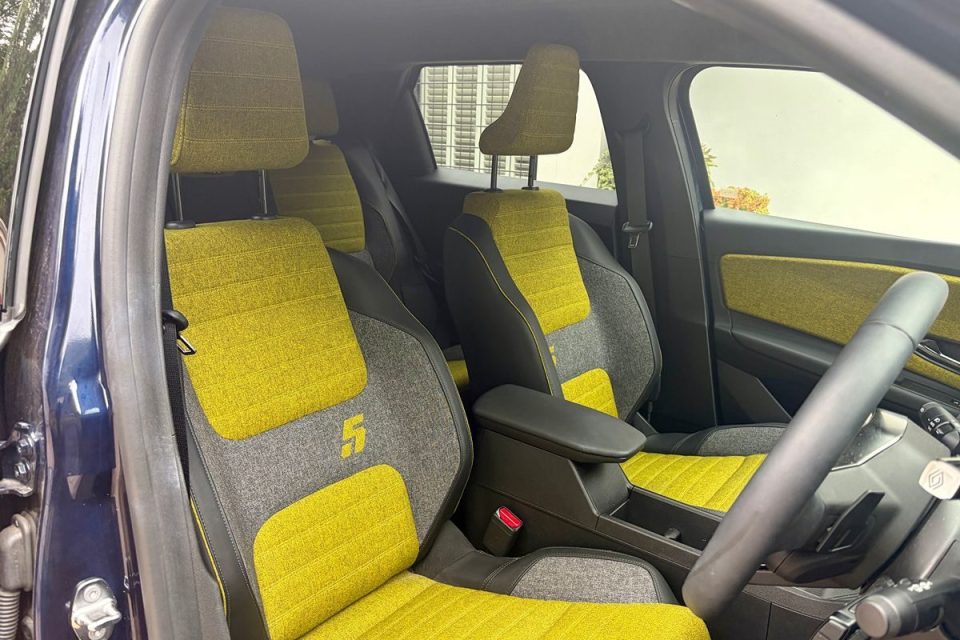
Inside, the yellow seats in Iconic+ cars like mine, which I rather like, will henceforth be blue and grey instead. There’s also a more powerful wireless phone charger and the Multi-Sense button on the steering wheel has disappeared. Instead, the car will switch between Comfort, Eco, Sport and Individual modes automatically, depending on your driving style. You can still change drive mode manually using the touchscreen, however.
Renault 5 running costs
Back to my long-termer, its combination of zippy performance and deft dynamics mean that, three months in, I am still enjoying every journey. Renault opted to fit the 5 with a multi-link rear axle, which costs a few hundred euros more per vehicle than a simple torsion beam, but the results are worth it. Turn-in feels eager and there’s plenty of feedback through the squared-off steering wheel, while damping is taut but calmly controlled.
I’ve never witnessed the official range figure of 252 miles, even after charging the Renault to 100 percent in temperate weather, but a full fillup provides a displayed (and pretty realistic) 215-220 miles, with average consumption of 4.4 miles per kWh so far.
Using Eon Next’s cheaper overnight electricity at home, priced at 6.9p per kWh, that equates to just 1.5p per mile – something no petrol or diesel car can compete with. What a shame that public EV chargers are typically at least 10 times more expensive.
Space: the R5’s final frontier
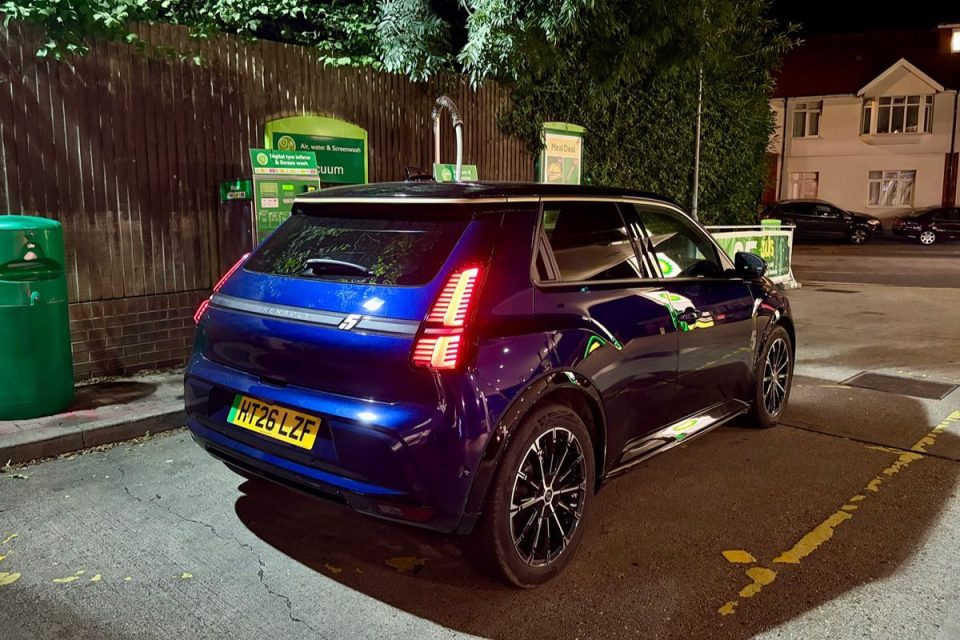
Aside from the R5’s occasional reluctance to connect my phone using Apple CarPlay, I’ve experienced no niggles so far. Nothing has fallen off, nor have any damning flaws come to light.
It isn’t perfect, of course. The voice-activated ‘Hey Reno’ AI assistant, powered by ChatGPT, is often eager to involve himself in conversations, regardless of whether you have actually summoned him or not. And some of the cheaper, harder plastics on the centre console have already begun to look scuffed.
My only real gripe with the Renault 5, though, given it serves as our all-purpose family car, is the lack of space inside. Lanky teenagers have grumbled about the limited rear legroom, while the boot holds a modest 326 litres.
Still, if you need more carrying capacity, be it for passengers or luggage, that is where the SUV-shaped Renault 4 comes in. I must try to drive one soon.
Tim Pitt writes for Motoring Research