Remember that controversial ‘woke’ Jaguar? We drove it…

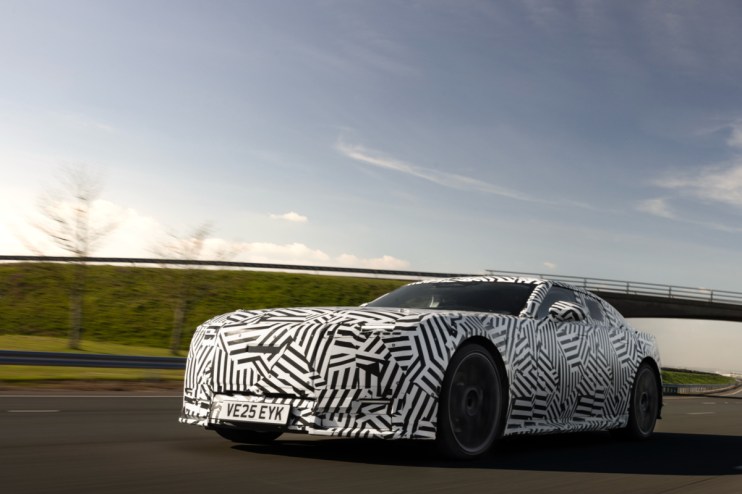
The controversial woke Jaguar Type 00 concept car has become the Jaguar GT prototype – and we’ve driven it. Can this luxurious EV recapture the spirit of Jaguar?
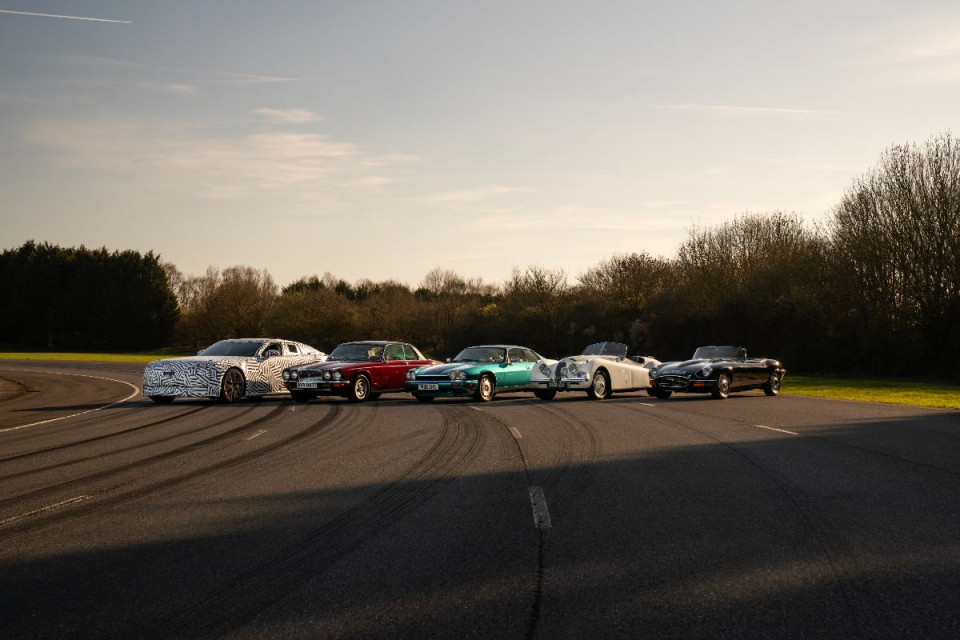
Heritage is something Jaguar has considered from the earliest stages of its rebirth. Once the design of the first new car, an electric GT previewed by the Type 00 Concept, was fixed, attention shifted to making it feel like a Jaguar. And what better way than to benchmark some of the greatest hits from your back catalogue?
The Jaguar team, including chief engineer Jon Darlington, engineering director Matt Becker and MD Rawdon Glover, duly spent a day driving them all: E-Type, XJ, XJ-C – a who’s who of Jaguar heritage. The aim was to discover the spirit of Jaguar, so it could be distilled into the marque’s new electric cars.
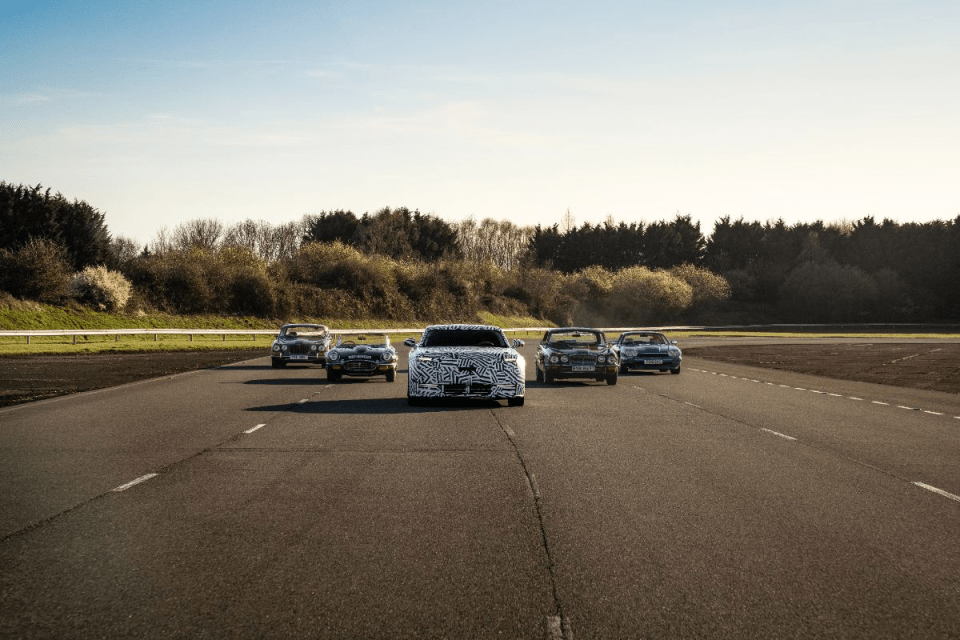
Now I’m doing the same. I start with a Series 3 E-Type. With its V12 and automatic transmission, this is often called the least-loved E-Type, but not today. Boy, it’s still quick, with a purring surge to three-figure speeds. The spectacle of looking across that long, long bonnet is still quite something, although I dread to think how much fuel it’s gulping.
Then I sample a Series 1 XJ, with a straight-six engine that had previously powered Jaguar to multiple Le Mans victories. It’s hard to believe this was a car originally launched in 1968, it’s comfortable, refined and totally together. No wonder everyone raved about it at the time.
However, the best of the classics was the raffish Jaguar XJ-C. Complete with the E-Type’s V12 engine, this was a short-lived pillarless two-door coupe version of the XJ, sold for just two years from 1975. Achingly beautiful, it perfectly encapsulates the essence of XJ, while its interior is brimful of retro charm.
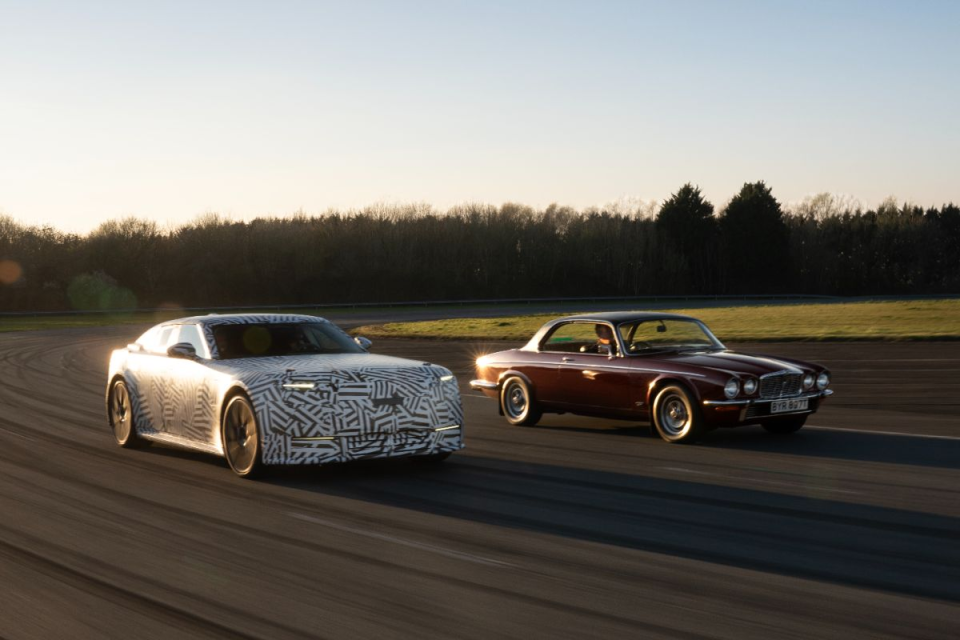
I found it divine to drive. The engine is sonorous, the ride is luxurious, the steering, cruising, cornering… all speak of a perfectly honed 1970s luxury GT. I love the way it gently rolls into a corner, then settles authoritatively. Steering it through the sinuous handling course, quickly and effortlessly, is a joy. Want a car that captures the essence of classic Jaguar? This is it.
Interestingly, I also drive a Series 1 E-Type, again using the straight-six engine. This is a really early ‘flat floor’ car (with outside bonnet latches, Jaguar geeks), complete with a four-speed manual gearbox. Compared to the others, it feels much more raw, with a decidedly firmer ride, plus more rolling roughness and general call for effort.
It’s still fun through corners but, dare I say, it’s the least Jag-like of the four. Certainly, it’s the one that feels its age, while the others deny theirs. There’s a certain Jaguarness to capture, and this arguably isn’t it (well, maybe not until they launch the hot version).
Driving the Jaguar GT
And just like that, it’s time to drive the heavily camouflaged, fully electric new Jaguar GT. This is one of 150 prototypes, which you may already have seen trawling up and down the M40. Even under the disguise, it’s clear the dramatic Type 00 proportions have been carried through to production: long bonnet, coupe-like roof, angular lines, shallow windows. It’s going to look like nothing else on the road.
It’s set to be pretty special to drive, too. Three electric motors will serve up more than 1,000hp, controlled by air suspension, active dampers, rear-wheel steering and more. The focus won’t be on supercar performance and intensity, I’m told, but on traditional Jaguar ride quality and elegance.
I get in, settle into a surprisingly low-set, almost bucket-like seat. The rear of the chair is mounted low, within the chassis, to give a sense of sitting ‘in’ rather than ‘on’ the car, a feeling reinforced by the shallow side windows. The dashboard is fully concealed for now, save for a digital driver’s display, with the drama coming instead from the architecture. The view forward through the shallow and steeply raked windscreen is unlike any car I’ve driven.
For a 1,000hp EV, it glides away with remarkable elegance. There’s no surging forward, no sense of straining at the leash. It wafts in complete silence, rolling on beautifully cushioned suspension with supreme poise. There’s a bit of getting used to the long nose, but quick, precise (yet not snatchy) steering helps here. Despite its size and power, the new Jaguar GT feels altogether unintimidating.
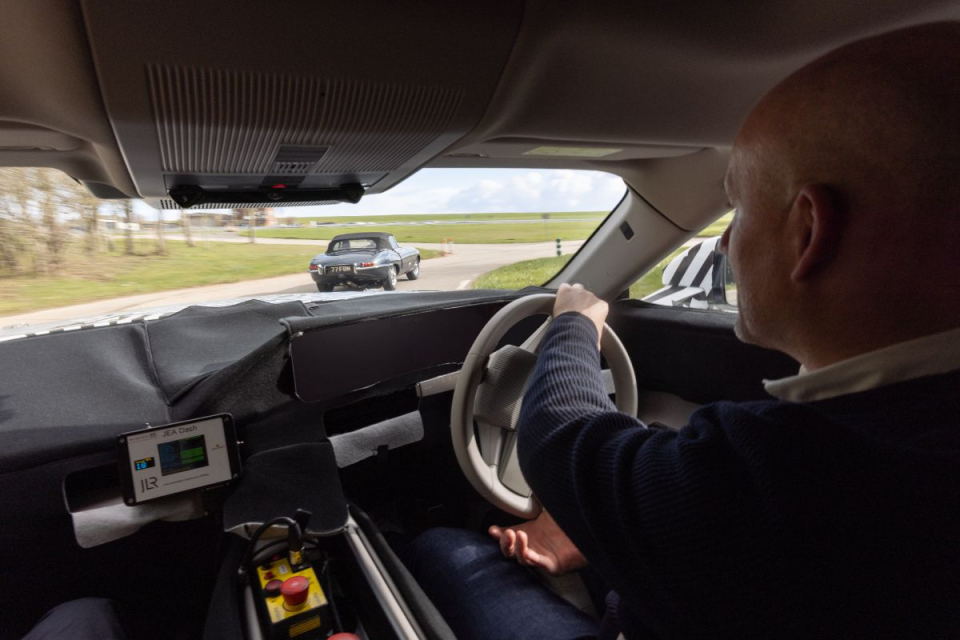
All that power gives it plenty of authority on the high-speed circuit. At any velocity, it gathers pace without effort, and the suspension has the authority to handle it even at 120mph and beyond. Going fast is effortless, yet it doesn’t feel remote or disconnected. There’s a calmness to it all, but a crisp responsiveness as well. It’s engaging without being overwhelming.
I’ve only got two laps before switching to the handling course. Other impressions? Really low noise levels, which will get even lower when the active noise cancelling system is engaged. It feels really stable when gliding through the high-speed bend at the end of the straight; there’s a trace of lean, like in the XJ-C, as it settles into the corner, then it tracks around as if on rails. I also love the clarity of the driver’s display, which I can just spy through the camouflage.
Two more switchback laps, then. This section is deliberately broken, so the JLR engineers can tailor ride quality. The GT will only offer 23-inch wheels (they’re so big, they account for 55 percent of the car’s overall height), with all the risks to ride quality that such large rims bring.
While it’s fantastically composed on those smooth surfaces, there’s a trace more patter on the rougher sections than earlier. It certainly isn’t harsh, crashy or rough, but you’re aware of those ample-sized wheels beneath. How much of this is down to what I’m hearing rather than feeling, though? The engineers admitted the active noise will remove the faint rattle noises I heard. Will this deliver the sense of a ‘magic carpet’ ride, no matter what the road surface? It will be tantalising to find out.
For such a big car, it’s unexpectedly agile in the slow stuff, aided by rear-wheel steering. You wouldn’t expect it to completely disguise its size and weight, but the accomplished dynamism seems in keeping with the other Jaguars I drove. A Porsche Taycan – one of its direct rivals – is firmer and more alert, but in terms of sophisticated yet charismatic charm, the Jaguar GT’s character is clear.
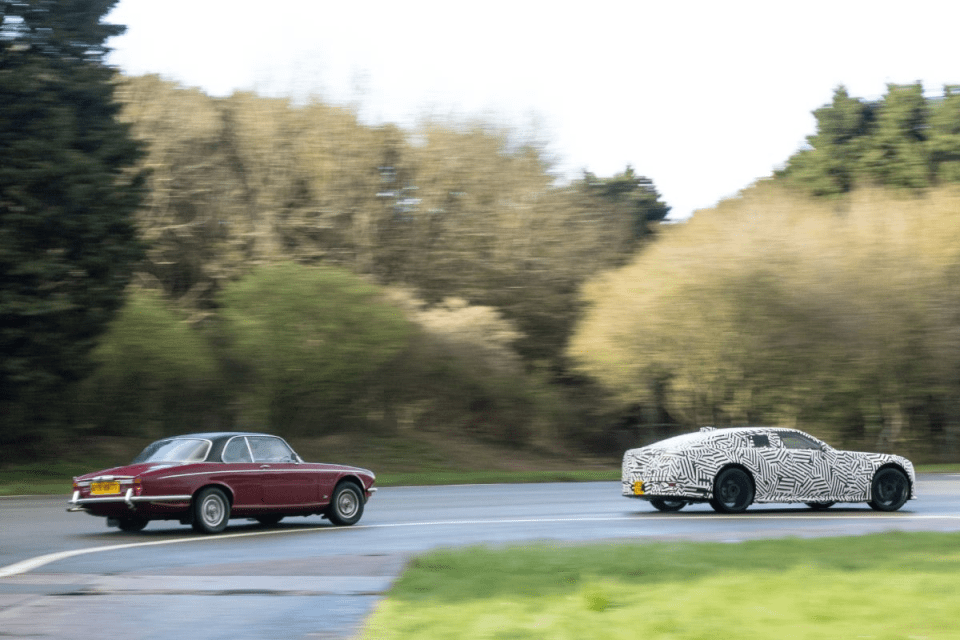
Jaguar reckons it’s closer in spirit to the XJ-C. I’d agree. They have the same signature suspension profile, the same sense of effortlessness, the same low-input tactility and responsiveness. Does that mean the new GT recaptures the spirit of Jaguar? On this first (and admittedly limited) evidence, yes.
It’s different to a Taycan, different to a BMW or Mercedes-Benz, different to a Bentley. It builds on the best of the Jaguars we loved, rather than the more modern ones we didn’t. And it uses electrification to enhance its character, rather than detract from it. This is a first taste that has left me hungry for more.
What next for the GT?
Earlier, we’d been briefed about the Jaguar GT so far. Just weeks after the highly controversial Jaguar rebrand landed on social media, it was revealed in Miami. Since then, development has continued, including prototypes testing all around the world.
The production car will be publicly revealed in September 2026, with orders opening shortly after. Customer deliveries? Expect them in the first half of 2027. The future of Jaguar is almost here; it’s both electric and authentic.
• Richard Aucock writes for Motoring Research