Rachel Reeves is acting like the mayor in Jaws – and small businesses are suffering

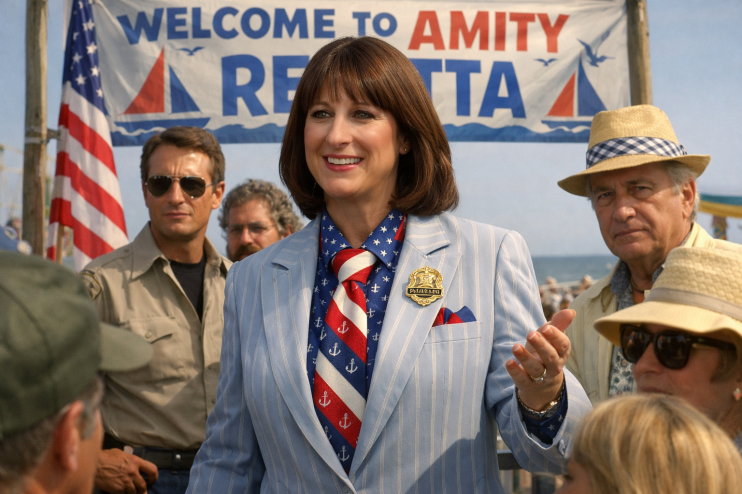
The FTSE may be at an all-time high, but Reeves should not pretend all is calm when the waters are extremely choppy for small businesses, says Andrew Griffith
Embattled ministers love good news to boast about on social media or in a TV studio, and this government’s most embattled minister, Rachel Reeves, is no exception. Last week she and her cadre of flunkies leapt at the opportunity to celebrate a new FTSE all-time high. If that sounds a little like the mayor in Jaws celebrating the initial departure of the titular shark, it’s because that’s exactly what Reeves is doing.
A surge in the FTSE100 is welcome; it’s a boon to savers and pensioners who have been under attack by this government and good news for the mostly global quoted companies who have seen their stock literally rise. Still, it has less to do with Reeves’s two calamitous, tax rising budgets than it does with global hopes of interest rate cuts, the performance of a few key players like Rolls Royce and the buoyancy of the global economy.
Most of all a number on a computer in Whitehall or the City does little to assuage the fears of countless non-quoted businesses across the UK. It’s the 5.6m small businesses employing 13m people whom this government seem intent on forgetting.
Even the most blinkered Labour backbenchers have now woken up to the reality 2026 Britain finds itself in. The worst graduate job market in a generation. Unemployment over five per cent for the first time since lockdown. Growth flat.
The latest Institute of Directors economic confidence index saw numbers remain at or near pandemic lows, with headcount expectations, investment intentions and overall figures all firmly negative. Similarly, a survey by wealth manager Rathbones saw one in eight SME bosses considering leaving the UK, no surprise after family businesses were hit with a punitive and ideological tax that stops them being handed down to the next generation.
Galling
It’s particularly galling then that Reeves so far refuses to do the one thing this government now has ample experience of and U-turn on business rates to save our high streets.
I am often asked why, and how, the Conservatives would do any better. It’s a fair question after 14 years in government. I deplore the sort of intrigue and personality obsession we saw with last week’s defection. I left business in 2019 and crossed the rubicon as a means to an end. That end being to radically reset Whitehall’s attitude towards business – particular small businesses – in order to reboot Britain’s economic growth and unleash an entrepreneurial revolution in this country. Change is the goal. Just as we are seeking to change the country, we mustn’t forget that parties do change too, and they tend to do so after big defeats like the one we suffered in 2024.
Remember the despondency of the 1970s Conservatives under Edward Heath was followed by one of the biggest shifts in the history of democratic politics. The big bang, the end of capital controls, privatisation, the sale of council houses and a resurgence in growth. It was a change created by fresh and principled leadership, a strong team of lieutenants and teamwork. And it didn’t happen overnight.
The Conservative Party’s policies are already changing. We’ve got a proper plan that will get Britain working again and off welfare, we’ve committed to reversing Labour’s trade union and family business death tax changes. We’ve set out how we will cut taxes and debt by slashing government spending. And as well as repealing the Net Zero Act to give cheaper energy, I recently set out how we will scrap thousands of pages of environmental ‘green tape’ reporting rules.
As a former FTSE100 CFO, I know that numbers can go up as well as down. Much the same is true for polls and parties. There is unfortunately a way to go until the nation can vote to change this socialist government. But in the meantime, I wonder if Reeves and her Treasury team will be quite as willing to take responsibility when the next round of negative economic figures hit the papers. I won’t hold my breath.
Andrew Griffith is shadow secretary of state for business and trade