The Crime Lord: Peter Capaldi on the manosphere, London and rocking out with his band as he approaches 70

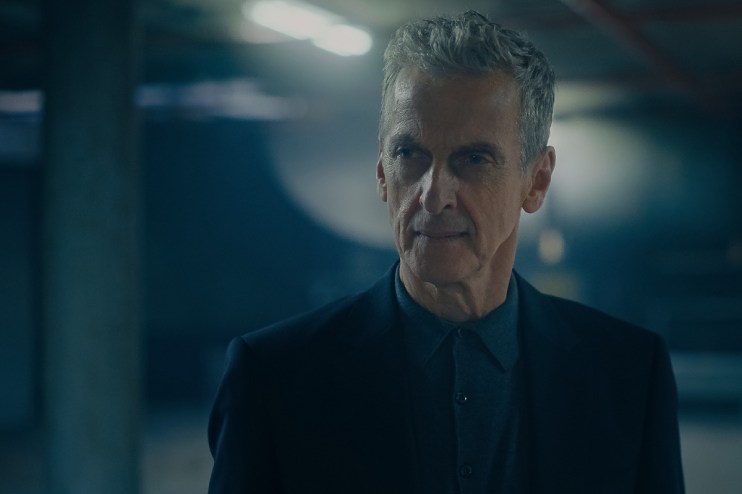
From Malcolm Tucker to Doctor Who, Peter Capaldi is one of the finest actors of his generation. Steve Dinneen speaks to him about masculinity, being a punk and why he can’t get enough of London
Peter Capaldi has just finished a two-week tour with his band and he says he’s “knackered”. He does look a bit tired – but then he has one of those faces, world-weary but with a glint in his eye that suggests he might have been up to no good.
It was his first time playing gigs since he was 19 – almost 50 years ago – when he was the frontman for Glasgow punk rock outfit The Dreamboys. His tour included dates in Newcastle, Leeds, Manchester and Edinburgh, ending at London’s famous 100 Club: not bad for a 67-year-old who’s been off the circuit for longer than most of his audience have been alive. His most rock ‘n’ roll moment? “Staying up after midnight – I’m usually in bed by 10 o’clock!”
He admires a David Byrne print on the wall behind me, saying the Glaswegian singer is one of his biggest influences, alongside David Bowie and The Sex Pistols. While he’s at pains to impress upon me that the band is not a “new career”, he admits it’s been a lot of fun, especially driving through the night on his tour bus, exchanging “war stories” with the band.
Wearing an oversized tan jumper, Capaldi is a natural raconteur, his stretched Glaswegian vowels giving every sentence the cadence of a great revelation. He gesticulates extravagantly to emphasise his points and often sweeps his mane of grey hair up into an Eraserhead quiff. He lives in London but he’s speaking to me from an upmarket hotel in the countryside where he’s been filming a new show.
He’s here to promote Apple TV+’s British crime drama Criminal Record, written by Paul Rutman and produced by Capaldi’s wife Elaine Collins, which will begin its second season later this month. He plays a detective in the Metropolitan Police whose shady past is dredged up by a young officer played by Cush Jumbo. With its all-star cast and sky-high production values, the show clearly benefits from Apple’s deep pockets but it’s refreshingly free of that streaming sheen, instead capturing the squalor and grime of Hackney housing estates and grim police stations where you can almost smell the Brut aftershave and cigarette smoke.
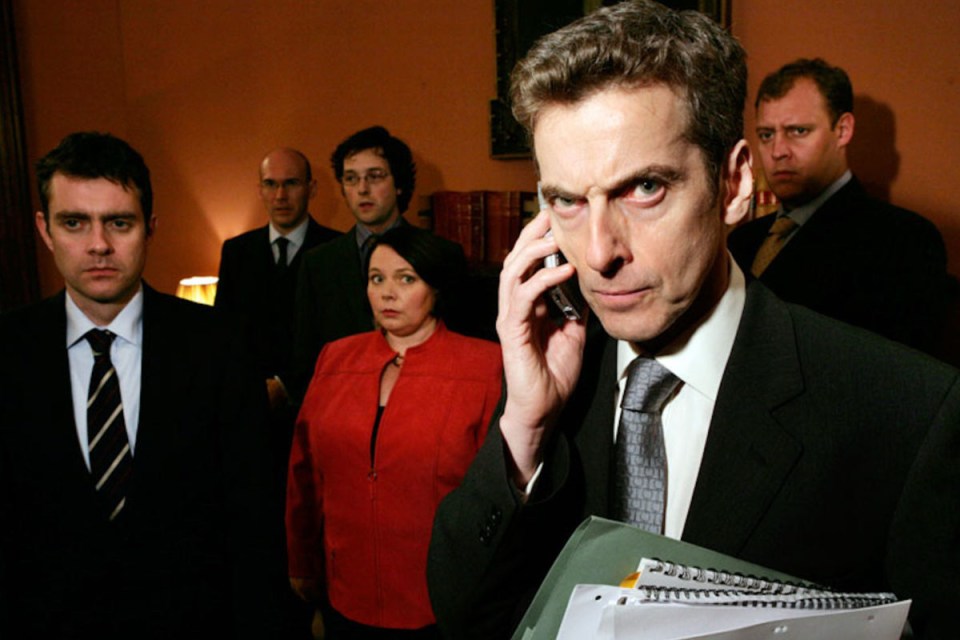
The series explores many of the issues du jour – from police corruption to the rising influence of the far right and the epidemic of violence against women – but it never feels like a bingo card; it unfurls slowly and deliberately, anchored by an ensemble cast that includes Shaun Dooley and Zoë Wanamaker. Even opposite actors of that calibre, Capaldi stands apart. He exudes that menacing, slightly reptilian energy that made him famous as Malcolm Tucker in The Thick of It but there’s also a vulnerability to him, a hint that this man’s life could have taken a different direction.
Peter Capaldi: ‘The world is so worrying right now’
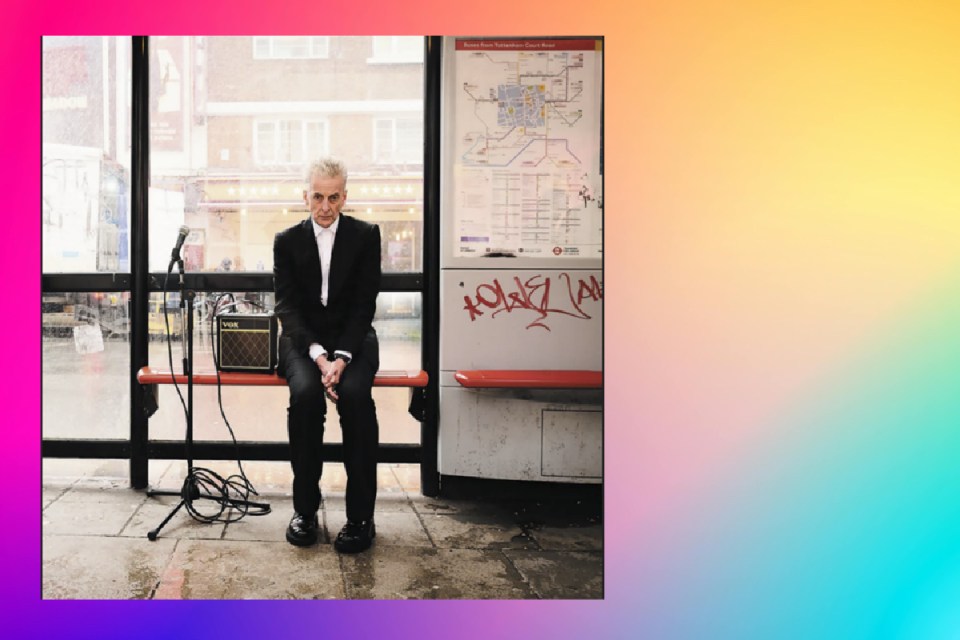
Capaldi tells me bringing London to life was key to making it work. “When I was younger there was a string of really great London thrillers, including The Long Good Friday and Mona Lisa, which both starred Bob Hoskins. They showed London as a place that was alive. It wasn’t just a background. Mona Lisa came out when I first came to London and it looks exactly like the way I remember Soho. I was trying to get a photograph taken recently for the cover of an album I did and we went to Soho to try and find a scuzzy corner to take some pictures. We couldn’t find one! We couldn’t even find a seedy doorway!” (They eventually settled for the shot on the cover of this magazine.)
Criminal Record, which Capaldi describes as “London noir”, was shot on location as much as possible, occasionally leading to brushes with the locals: “The great thing in London is that people don’t care about you and they get very impatient when you’re filming. That’s actually a good thing: it keeps your feet on the ground.”
Given the success of the show – Apple doesn’t release viewing figures but sources say it’s been a ratings hit – I wonder if he was always planning to make a second season?
“If life has taught us anything, it’s that anything can happen. The original idea was for me to die at the end of the first season but Apple said, ‘No, you can’t die’.”
Season two pushes further into the themes that permeate the first, exploring how the toxic online ‘manosphere’ can bleed into real life.
“The world is so worrying at the moment,” he says, suddenly serious. “I’m particularly fretful about the amount of violence against women, which I don’t understand. I don’t see how men can pursue an idea of masculinity in which they use their strength to hurt women. I don’t understand where this has come from. These ideas of ‘strength’ and ‘masculinity’ are adolescent. They’re not what strength or masculinity really are, which is about care, compassion and having the strength to choose difficult routes. Violence and aggression are easy.”
But aggression is something Capaldi plays so well, from the pantomime villainry of Tucker to the darkness at the core of Criminal Record’s DCI Hegarty. Is he the kind of actor for whom playing these roles takes an emotional toll?
“No,” he says with a vulpine smile. “Absolutely not. It’s a great privilege to be able to play people who are troubled in that way. I never carry that home with me.”
You’d be forgiven for assuming Capaldi has lived a charmed life. Most actors never land a role that comes to define not only a career but a moment in time: Capaldi got two. Blazing onto screens in 2005 in a cloud of expletives, The Thick of It’s terrifying political spin doctor Malcolm Tucker is one of the most memorable characters of his generation, not only reinvigorating British comedy but creating a new vernacular for real-life politics.
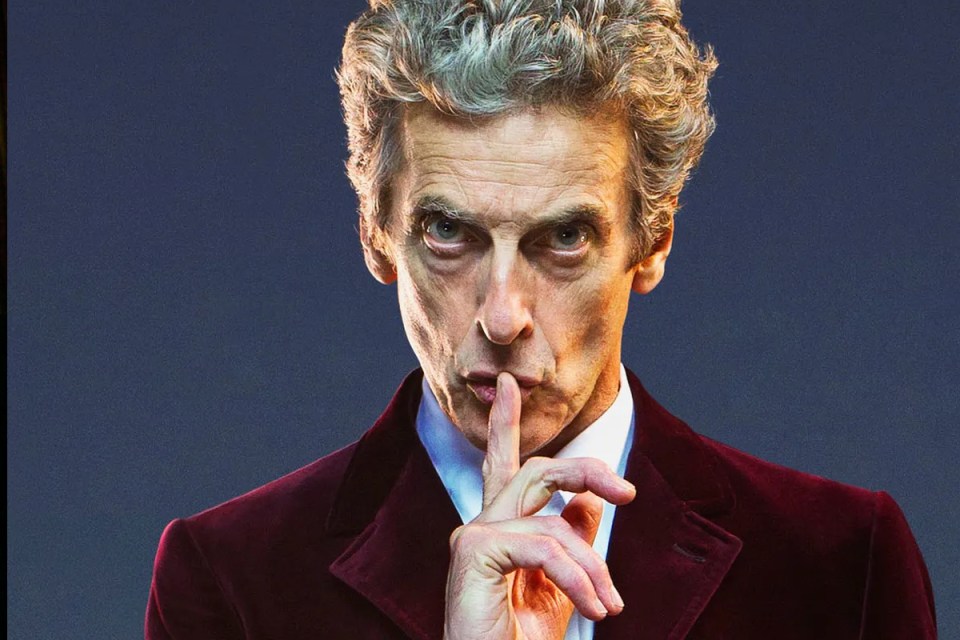
Then in 2014 Capaldi was unveiled as the new Doctor Who, a dream role for an actor who once wrote into the Radio Times as a boy to applaud its coverage of the show. He took The Doctor in a brave new direction, imbuing him with a spiky energy that set him apart from the more cuddly portrayals by Matt Smith and David Tennant. Capaldi seemed to arrive on our screens fully formed, inhabiting a string of smart, angry, troubled men. But he says it wasn’t always so.
“The young me would be surprised to hear you say I play intelligent people, because I didn’t feel I was that kind of actor. I didn’t think I could do Shakespeare or Chekhov. I thought all that was for ‘proper actors’. When I was young I tended to play more geeky, clownish sorts. Then somewhere along the line, something happened. I guess I got older, life beat me up a bit, things didn’t go the way I expected. That changes you – you have a new layer of stuff to play. It all changed with Malcolm Tucker. He was such a clever and dark character but also funny and witty. It changed people’s perception of me but it also changed my concept of my capabilities.”
Will Malcolm Tucker ever return?
I realise as I’m asking my next question that I’m straying from the territory of interviewer into fan-boy, but… will he ever reprise the character? A final turn for Tucker in a world where politics is madder than ever?
“There was a period in the UK when politics was so terrible that I thought making fun of it wasn’t funny. Now, I think it’s so terrible that we should just throw everything we have at it. But I feel like it’s a young man’s game. I don’t want to be an old bloke with white hair pretending I’m still relevant, running around with young people – although I guess I don’t mind standing on stage with my electric guitar…”
We’re speaking a couple of days after the Oscars and I point out that Paul Thomas Anderson has finally joined Capaldi in the ranks of winners. A little known fact: in 1993 Capaldi picked up the Academy Award for Best Live Action Short Film for Franz Kafka’s It’s a Wonderful Life, a comedy he wrote and directed, starring Richard E Grant (it’s well worth 22 minutes and 44 seconds of your life).
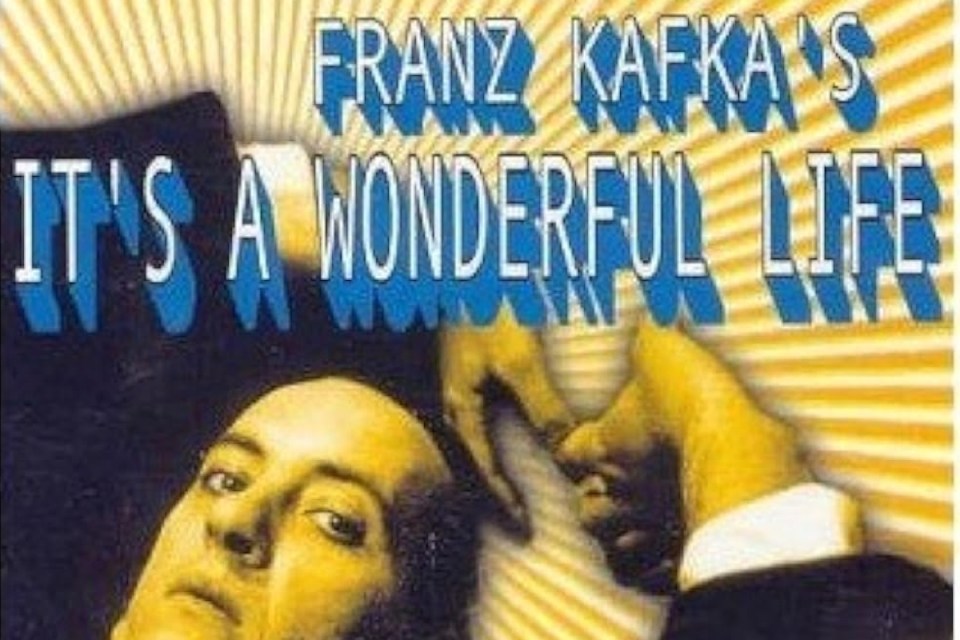
Winning the statue means Capaldi gets to vote for the winners each year, although he didn’t pick PTA’s eventual victor One Battle After Another, instead going for Train Dreams, an elegiac story about the life of a railway worker in the Pacific Northwest in the early 20th century. “I was an art student,” he smiles. “When you’re an art student, you get a free pass. You get to be arty.”
On that note, does he agree with Timothee Chalamet that opera and ballet are artforms on life support – and that someone needs to pull the plug? “No, that’s just a silly remark and quite boring,” he says. “Anyone who has an artistic thing in them, they should be encouraged, and there should be a path of some description to get there. I’m very conscious of the fact that there aren’t enough working class kids acting today, even fewer than in previous generations. I didn’t really know how to get into acting, other than I just sort of wanted to be on the telly and thought ‘I’ll follow any chink of light that might lead to that’. But I feel as if a lot of these doors are closed now. When I speak to young actors, I try to tell them it’s about keeping the flame alive, the belief that you can do this.”
That fire is clearly still alive for Capaldi: approaching the twilight of his career, he’s producing some of his best work. He says Criminal Record could run and run, “so long as people stay interested”, and if that means more Capaldi on our screens, I’m here for it. Part of me, though, is holding out hope for a final f***ing hurrah for Malcolm Tucker.
• Criminal Record Season 2, starring Peter Capaldi, is streaming on Apple TV+ from 22 April