George Osborne: I got gig with Sam Altman by cold-calling OpenAI

For most people, the hunt for a plum job is a torturous process involving cover letters, CVs and several rounds of interviews.
But if you’re a former chancellor of the exchequer it seems all you need to do, is cold-call human resources and you can land a top role at one of the world’s fastest-growing businesses.
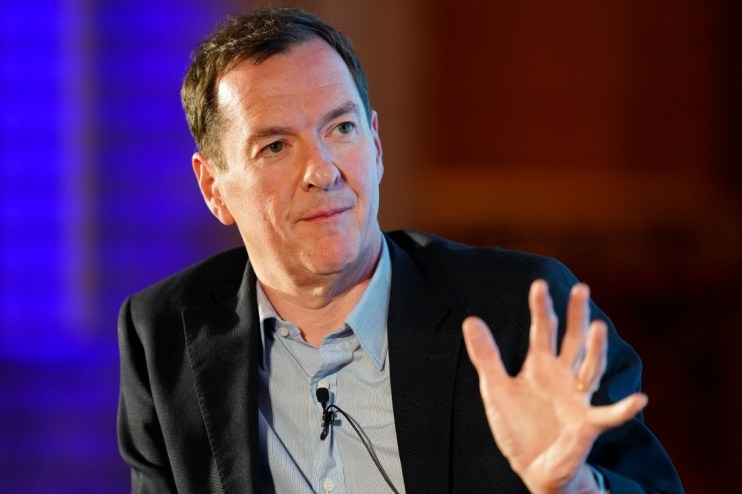
Speaking at a fringe event at the World Economic Forum, George Osborne revealed he was given his new job at OpenAI after offering his services to the company out of the blue.
“It was quite straightforward, actually,” he said to a question on how he landed his role at Sam Altman’s artificial intelligence juggernaut. “I thought, ‘What is the most interesting company in the world at this moment, in the most interesting technological space?’ and the answer was OpenAI.
“And I did something that is quite unusual these days, but I would thoroughly recommend: I went and knocked on the front door.”
In December Osborne was put in charge of leading OpenAI’s ‘Countries Initiative’, a new division devoted to making sure artificial intelligence models are founded on democratic principles.
The podcast host surrendered roles at Evercore – which he inherited after the trading giant snapped up boutique investment bank Robey Warshaw – and the cryptocurrency exchange Coinbase, to work at the firm behind ChatGPT. He has also held roles at the British Museum, asset management giant Blackrock and the Evening Standard since leaving politics in 2017.
OpenAI issues ‘code red’
Announcing his latest move, Osborne hailed Altman and OpenAI’s chief operating officer Brad Lightcap as “exceptionally impressive leaders” who care “deeply about their mission to ensure the power of AI is developed responsibly”.
The former Chancellor joined OpenAI in December, after being widely tipped as a contender to take up the empty chair role at HSBC. His appointment came shortly after Altman issued a ‘code red’ warning to ChatGPT staff amid fears the AI platform was losing ground to rivals in the arms race to build out the fledgling technology.
Google’s share price rose some 65 per cent over 2025, as investors added to bets on its large language models (LLM) was charging ahead of the likes of OpenAI. Altman’s firm has also unnerved analysts with its ambitious capital expenditure forecasts, which estimate the company will need to spend $1.4 trillion in the next eight years on computing power, chips and infrastructure.
Osborne said his first few weeks at the company, which he spent in San Francisco, were a “breath of fresh air” in a world in which “there is a bit of gloom and pessimism around”.
“The optimism of the people I am working with, the sort of absolute can-do attitude,” he added. We are forging the future here, and it’s incredibly positive and exciting, and that, you know, gets you up the morning.”
David Cameron’s right-hand man made the remarks at an event hosted by OpenAI. He added that his time as chancellor involved meeting a lot of firms whose work “would touch upon what the government does”.
“But it’s often one part of government, or one part of society,” he added. “I think what is fascinating about this technology is it just touches on so many different aspects of society, and government.”