‘Nobody’s getting a free pass’: Starmer warns Big Tech as social media ban looms

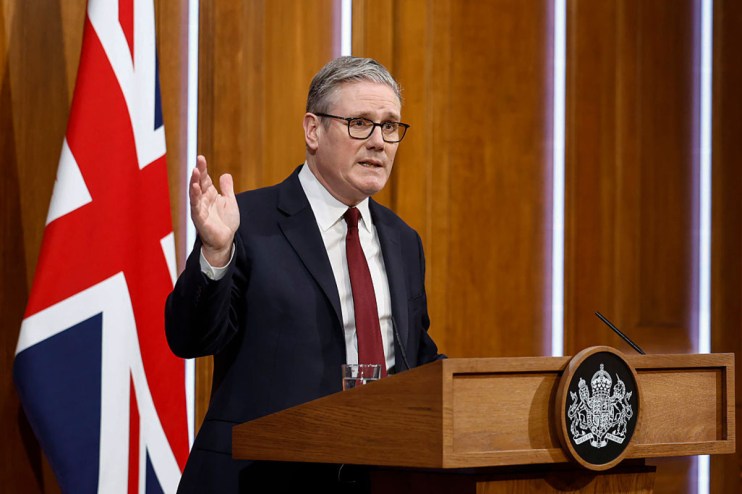
Keir Starmer has warned tech firms they face government intervention if they fail to protect children online, as pressure mounts for tougher restrictions on social media access for under-16s.
Opening London Tech Week on Monday, the prime minister used a speech focused on artificial intelligence, economic growth and Britain’s tech ambitions to deliver a stark message to Silicon Valley giants and social media platforms.
“The pace of change cannot be an excuse for harm,” Starmer told attendees, investors and executives gathered at Olympia London. “Where technology poses a threat to our people, to our children, we will act quickly and firmly.”
His words come amid growing expectations ministers are preparing a major package of online safety measures, with reports suggesting the government is examining restrictions on “high-risk” social media platforms alongside curbs on addictive features such as autoplay and infinite scrolling.
Starmer pointed to the rise of AI-generated abuse and deepfakes, warning companies that ministers were prepared to step in where platforms fail to police themselves.
“Earlier this year, tools allowed their tools to be used to create disgusting, explicit AI images,” he said.”
“We took them on. And all tech companies should know: if they fall short on their responsibility to keep people safe, we will act with the same decisiveness.”
‘Tech should adapt to the needs of society’
The prime minister also singled out the issue of children sharing intimate images online, describing it as a problem that had been tolerated for too long.
“One issue is the ability for children with phones to send and receive nude images,” he said “For too long people have been told that is simply the price of modern tech, that nothing can be done, that government is powerless, that parents just have to accept it.”
“I reject that completely because tech should adapt to the needs of society, not the other way around.”
Starmer called on tech companies operating in Britain to introduce controls preventing children from sending and receiving sexually explicit images, adding that legislation would follow if firms failed to act voluntarily.
“These are some of the most innovative companies in the world and I believe they can solve it,” he said. “But if they choose not to, then we will act and we will change the law.”
Earlier this year ministers announced plans requiring platforms to remove non-consensual intimate images within 48 hours or face fines worth up to ten per cent of global turnover, while AI chatbots and image-generation tools are also expected to face closer scrutiny under the Online Safety Act.
Pressure grows on blanket ban
The prime minister’s comments came as London mayor Sadiq Khan showed a significant hardening of his own position on children’s social media use.
Khan said he now supported preventing under-16s from accessing social media until platforms can demonstrate they are safe.
“I’ve changed my position now,” Khan told City AM. “I’m in favour now of stopping young people having access to social media. Why? To protect them.”
The mayor argued that regulation had failed to keep pace with technological change and accused platforms of failing to address harmful content and recommendation systems.
“I think there’s a lot of misinformation, disinformation that the big tech companies aren’t taking seriously,” he said. “I think there’s lots of algorithms that monetise poison that aren’t being taken seriously. I think governments have got to step in.”
Drawing comparisons with other regulated industries, Khan said tech firms should be required to prove their products are safe before allowing access to children.
“We wouldn’t allow food to be sold unless it’s safe. We wouldn’t allow pharmaceuticals to be sold unless it’s safe,” he said. “I think the big tech companies need to show it’s safe. It’s not safe.”
Follow Australia’s social media ban?
His comments put him among a growing group of politicians backing stronger restrictions following Australia’s decision to introduce a social media ban for under-16s last year.
The issue has climbed rapidly up the political agenda after months of campaigning by bereaved families and children’s safety groups, while ministers have been examining evidence on the impact of social media on mental health, online exploitation and harmful content.
Government reports have indicated that any eventual UK approach is likely to stop short of an immediate blanket ban, with officials instead considering a range of measures including age limits, or feature restrictions.
Throughout his speech, the prime minister repeatedly argued that technological progress and stronger safeguards should go hand in hand.
Presenting what he called a “third path” between overregulation and laissez-faire approaches, Starmer said Britain must embrace innovation while ensuring its benefits are felt across society.
“The real question is whether we shape this change or allow it to shape us,” he said.