Badenoch’s inheritance tax gamble

The Midday Market report is a new newsletter from City AM, giving you fresh analysis on the biggest stories in the City straight into your inbox every lunchtime. Today, Ali Lyon chews over Kemi Badenoch’s Tory conference inheritance tax overhaul, and what it might mean for the UK’s irrational tax system. Sign up to the City AM News Updates newsletter here.
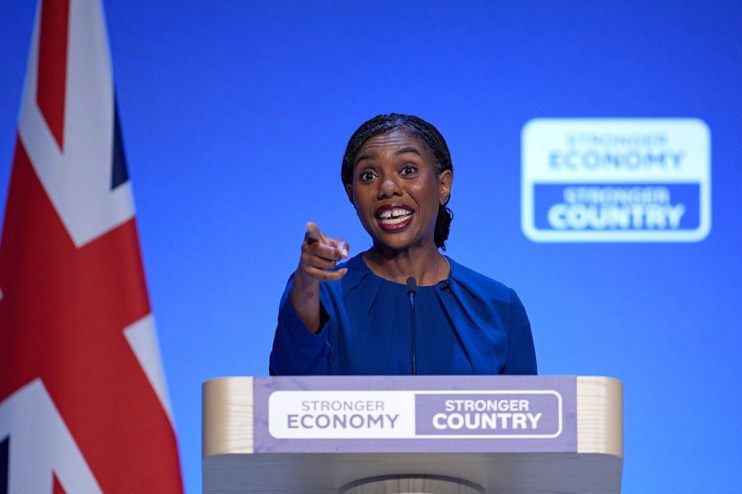
Can I invite you to cast your mind back to this time last year, when an embattled Kemi Badenoch – under threat from circling leadership hopefuls – stepped into the main auditorium at the Conservatives’ annual conference and gave her maiden speech as party leader.
You may recall that expectations among the chattering political classes were low. With the party languishing in the polls, then-Conservative frontbencher Robert Jenrick and former leadership hopeful James Cleverly were rumoured to be sharpening their knives waiting to pounce on any bum notes. The stakes could hardly have been higher.
In the end, though, a swaggering Badenoch swatted away that speculation over her position with aplomb, and left the Tory jamboree firmly on the front foot in the eyes of her party faithful. One of the main reasons for her doing so was an eye-catching promise to abolish stamp duty on homes – a pernicious tax that economists of almost all creeds despise.
Among tough competition, the levy, bolted on to house purchases at a rate of between two and 12 per cent, is held up as one of the most illogical and economically ruinous in HMRC’s armoury. It gums up the property market, stopping workers from taking jobs in parts of the country where they would earn more money and be more productive. And – crucially – it prevents empty-nesters from downsizing into a home more suited to a life without their little angels leaving the lights on and raiding the fridge.
In pledging to abolish it, the Conservatives had united economists and political commentators in a moment of rare agreement. Here was a party willing to grasp the nettle on property tax reform, and go for growth.
Inheritance tax overhaul could leave hot property even hotter
This year, with her position as leader far more assured, Badenoch attempted a similar ruse, and put another mightily unpopular levy on the scrap heap.
At the climax of her similarly well-received speech yesterday, the Tory leader promised that – if elected – her party would scrap all inheritance tax on ‘family homes’.
Passing on your home to your family, she argued, “is one of the most human instincts of all”. They are where we watch “our children take their first steps” and gather “every Christmas”, she said. Forcing a family to sell that home – and those memories – to foot a big inheritance tax bill was unconservative and, thus, for the chop.
It was, undoubtedly, a canny piece of political manoeuvring. Inheritance tax regularly tops the list of UK voters’ most hated levies. And, as the charts (courtesy of tax national treasure Dan Neidle) above and below make clear, those that stand to benefit most from the overhaul sit either in the Tory base or who in pockets of affluent London most likely to feel betrayed by Labour’s consecutive tax raids.
That, however, is where this newsletter’s praise for the hijinx ends. For where last year’s stamp duty promise managed to earn economic plaudits as well as political ones, this inheritance shake-up has only done the latter. Among their core objections, is the enormously distortive effect it will have on the UK’s moribund property market.
Remember, the stamp duty pledge was in part so well received because it would help couples downsize, freeing up the property market and encouraging transactions. This does the complete opposite. It encourages tax-savvy grannies to hold onto their homes – or even upsize in a world of no stamp duty – to minimise their inheritance tax exposure.
“If you want an IHT cut, this is just about the worst way to do it,” says London School of Economics tax guru, Andy Summers, branding it “perfectly calibrated to prevent downsizing and further gum up the housing market”.
Evelyn Partners’ Ian Dyall adds that it could even have the unintended consequence of “adding to upward pressure on prices” in a pocket of the property market where supply is already constrained.
The Conservative Party press release renounced inheritance tax as “morally wrong and a form of double taxation to take assets that people have purchased with money that attracted tax. But does this half-baked shake-up risk leaving our illogical, dysfunctional tax system even worse than it already is?
To the country’s army of tax lawyers, economists and financial planners, the answer to that question is, unequivocally, yes.