Miami heat: Why climate could be key in 40C England v Norway World Cup quarter-final

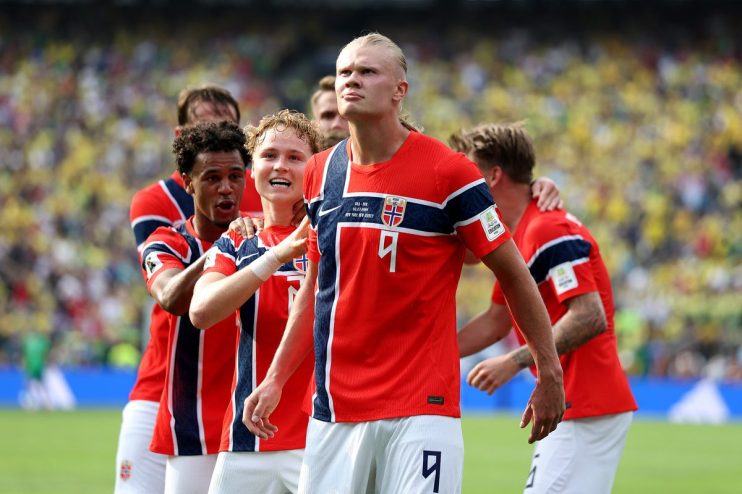
Athletes from Norway are the masters of staying elite in the heat, but their football team hasn’t had the chance to test that theory ahead of their World Cup clash with England in sweltering Florida on Saturday.
Out of the frying pan and into the fire. If England’s World Cup last-16 clash was about resilience in the cauldron of the Azteca Stadium, then their quarter-final against Norway in Miami is set to test their ability to take the heat in a more literal sense.
Saturday’s game, which kicks off at 5pm local time and 10pm in the UK, was already expected to be the hottest and most humid of the four quarter-finals and the latest forecasts are predicting the on-field temperature to feel like 105F, or 40.6C.
“The conditions will be far warmer and more humid than many European players are accustomed to, potentially increasing fatigue, hydration demands and recovery challenges throughout the match,” US forecaster AccuWeather said on Friday.
This will be no surprise to England, of course. But results at this World Cup have largely backed up pre-tournament predictions compiled by university researchers that teams with matches in the toughest conditions would struggle.
Of the five teams identified as facing the most strenuous heat environments, four have already bowed out: Uruguay, Colombia, Czech Republic and Uzbekistan. The exception is France, whose ice-cold attacking flair has proven heat-resistant.
And England arrive in Miami, via their World Cup base in Kansas City, still feeling the effects of a titanic clash in Mexico City on Sunday night in which they had to repel the co-hosts with a man disadvantage for 40 minutes following Jarell Quansah’s red card.
England head coach Thomas Tuchel said a “heroic performance and heroic result” had left him “exhausted”. Despite giving the squad two days off, there have been fitness concerns over Declan Rice and Marc Guehi. Harry Kane’s voice has at least returned.
Norway: World leaders in being elite in heat
Norway might, at first glance, seem even less suited to swapping their chilly temperate climate for sweltering Florida. But that would be to disregard their athletes’ world-leading reputation as masters of sustaining elite performance even in extreme heat.
Triathlete Kristian Blummenfelt, the first man to hold the Ironman, Olympic and world titles simultaneously, is perhaps the best-known exponent of what has become known as the “Norwegian Method”.
It combines targeted heat training with race- or match-day cooling strategies to prevent athletes from entering “Heat Zone 3”, in which performance is substantially compromised. Its architect is Olav Aleksander Bu, who also trains cyclist Torstein Træen, briefly leader of the current Tour de France.
Heat training essentially makes athletes better at coping with exercising in high temperatures, but also increases blood volume – an advantage in any weather. Cooling hacks include ice vests before events and minimal or no sunscreen, which impairs sweating.
Erling Haaland and his Norway teammates have not yet had to face extreme heat, having played all but one of their games in the cooler climes of Boston and New Jersey. The exception was their last-32 win over Ivory Coast in an air-conditioned stadium in Dallas.
It was with precisely this scenario in mind that Tuchel eschewed traditional pre-tournament friendlies on home soil and instead took England for a training camp in Florida that included warm-up games against New Zealand and Costa Rica.
“We are not used to being in this kind of heat and humidity. There will be a lot of challenges in this World Cup. The heat is one of them, but we are prepared. We know the individual reaction of players and we have cooling strategies in place,” he said in June.
“It will be tough. It will hopefully be a long World Cup. It will be a lot of travelling, a lot of adversity, from the heat, humidity. But that’s the task for us – to stay calm, stay patient and adapt to the circumstances. That’s just what it takes to go through the tournament.”