Josh O’Connor shines in Golden Boy, a boxing epic at the Almeida

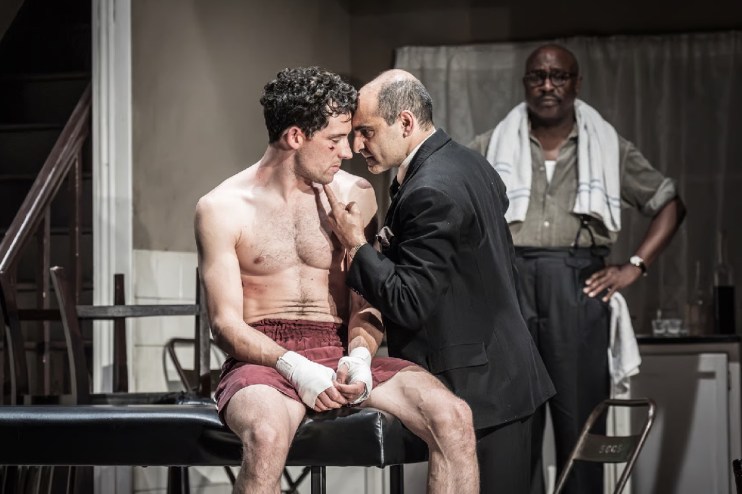
Golden Boy | Almeida | ★★★★★
Boxing – and fighting more generally – has always made for thrilling pop culture. Raging Bull, Rocky, The Fighter, The Wrestler, The Smashing Machine: there is something inherently dramatic about stepping into the ring: two people, cordoned off from the world, engaged in a violent battle of wills. One will triumph, the other will limp off the stage. It’s the human experience condensed, a bloody snapshot of the savage garden in which we exist.
In Clifford Odets’ 1937 play Golden Boy, the brutality and the glory of the boxing ring is played off against the quieter, collective glory of a career as a violinist. Hollywood star Josh O’Connor, best known for his role in tennis movie Challengers (which perhaps owes some debt to this play), plays Joe Bonaparte, a thoughtful musician moonlighting in New York’s underground boxing clubs. He has talent in both fields, but, as Odet is keen to stress, this is a zero-sum game: box aggressively and his hands will be useless for the violin; save his hands, and he’ll never make it as a fighter.
Josh O’Conner is sublime in Golden Boy
It’s an incredibly stylish production. The space – which effortlessly segues between Joe’s family home, the office of his ne’er-do-well manager, and the boxing arena – is dominated by a huge, shuttered window, behind which lies… a strings section. As Joe is torn between the violin and fighting he casts the shutters open to hear the music, or forces them closed to block it out. The orchestra itself is wonderful, haunting the protagonist even when they are locked out of sight. It’s unusual that you could strip a play of all its actors and still have a lovely evening.
Golden Boy is also incredibly well put together, especially when we finally get to experience the visceral thrill of a big fight. Here a punchbag lowers from the ceiling, which the two fighters circle, landing their blows against the leather. The bag also has a twist: there’s a camera inside, with live footage beamed across the stage. Incorporating live video into theatre is hardly revolutionary in 2026 but this is a neat way of integrating a device that’s at risk of becoming passe.
Set against the backdrop of a New York economy reeling after the Great Depression, there are echoes of Tennessee Williams in Odet’s play, especially in the doomed love between Joe and his manager’s hard-drinking wife Lorna (a wonderfully sad performance by Hayley Squires). The text does, perhaps, lack some of Williams’ nuance: Odets makes it clear which is the ‘correct’ choice between boxing and music, just as Joe’s union rep brother, whose collective struggle is contrasted with Joe’s personal one, is eventually shown to be the more fulfilled of the two. I’m not sure this point needs to be underscored quite so heavily.
But it’s a brilliant production, a coming together of exceptional performances and confident, stylish direction, one of this year’s undeniable theatrical events. Tickets to see this will be as rare as front row seats at a prize fight.