Warning for John Healey as key fiscal target missed

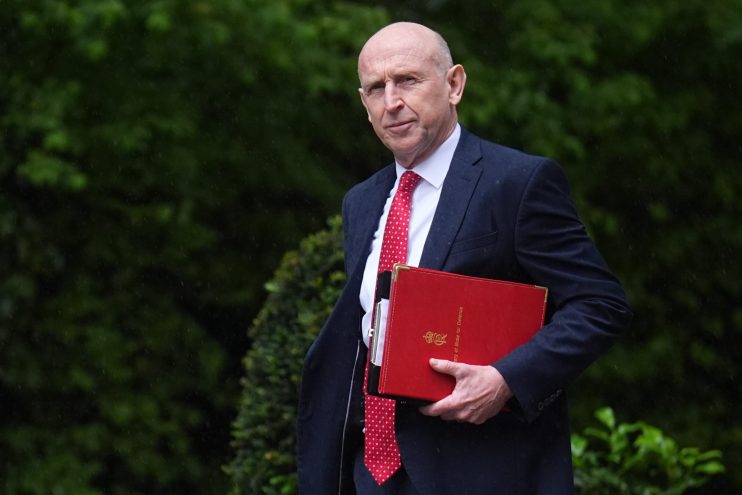
A key fiscal target has been missed on John Healey’s first morning as Chancellor, in a reminder of the poor state of public finances.
Official data on Tuesday showed that the current budget deficit, which is critical to the current fiscal rules, surpassed forecasts set by the Office for Budget Responsibility (OBR).
The Office for National Statistics (ONS) said borrowing used to fund day-to-day public sector spending was £11.8bn in June, around £1.3bn above where the OBR had estimated it would be. Fiscal rules to be maintained by Healey say that the current budget must be in surplus over a rolling three-year window.
Government borrowing was slightly lower than expected in the month at £16bn though total borrowing in the current financial year had now been brought to £57.6bn.
Public sector debt was higher than the same point last year at 94.9 per cent of GDP. The total sum owed to lenders is now just over £10bn away from the £3 trillion mark.
Figures on public finances reflect Healey’s difficult in-tray just as defence spending pressures and demands made by Burnham to give “breathing space” on the cost of living come to bite.
Healey may take a closer look at heavy debt interest costs, which hit £11.8bn in June, the fourth highest sum for the month on record. This has come as a result of volatility in bond markets over recent months as traders have priced in the dangers of a Burnham government turning to fund expenditure through further borrowing.
Healey’s defence focus
The new Chancellor is widely expected to prioritise an uplift in defence spending after he resigned as defence secretary under Sir Keir Starmer’s government due to a lack of funding for the military.
In particular, Healey may come under fire if he fails to raise defence spending to three per cent of GDP by 2030 as it was the chief reason he quit Starmer’s government.
He may also come under pressure to ease taxes for low-income workers and finding cash to fund plans to assume further “control” over utility companies.
After being appointed Chancellor, Healey said: “The Prime Minister and I have talked about how we will work in lockstep to meet the fiscal rules with a buffer against uncertainty and how we’ll make life more affordable for working people right across the UK.”
“Fiscal control is the first duty of any Chancellor. It is mine. And fiscal credibility is the bedrock for economic stability and for national security, and you heard the Prime Minister this afternoon say, in this more dangerous world, we will meet our commitments on defence to our international allies.”
Sir Mel Stride, the shadow Chancellor, said the figures show that Labour had “maxed out the nation’s credit card”.
WPI Strategy economist Martin Beck said the central challenge for Burnham’s government was preventing the cost of financing borrowing from ballooning.
Beck said: “The political pressure will be to use any improvement in the borrowing figures to fund new commitments. The fiscal pressure will be to preserve that improvement as a buffer against higher debt interest and future economic shocks.”