| Updated:
Japan’s economy stalls in July as spending falls

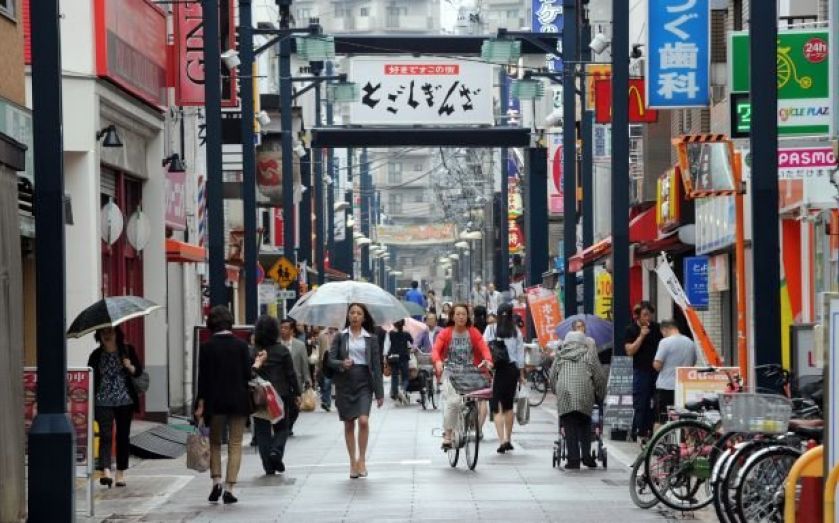
Have Japanese Prime Minister Shinzo Abe's "three arrows" have missed their target? Japan's economy stagnated in July, as household spending dropped and wages fell.
According to official data released this morning, inflation remained unchanged compared to June, while the consumer price index rose by 3.3 per cent.
The increase was largely the result of a two per cent rise in sales tax introduced in April. This, according to ABC news, has sapped much of the steam from the world's third largest economy.
The world's third largest economy suffered deflation for nearly two decades, and reforms introduced by Abe – known as "Abenomics" – have been aimed at boosting inflation to encourage consumer spending.
Retail sales rose by 0.5 per cent in July compared to a year earlier, indicating some improvement. But overall, April's tax hike seems to have had a negative impact on the economy by hurting purchasing power; between April and June, the economy contracted by 1.7 per cent.
"Basically price trends in Japan have been stabilising," Martin Schulz from the Fujitsu Research Institute in Tokyo said during an interview with the BBC.
"We had this big shock in April, when the sales tax hike was increasing costs for consumers by 3%, and real incomes were diving down as well.”