It’s not the oil price, it’s the government response that matters

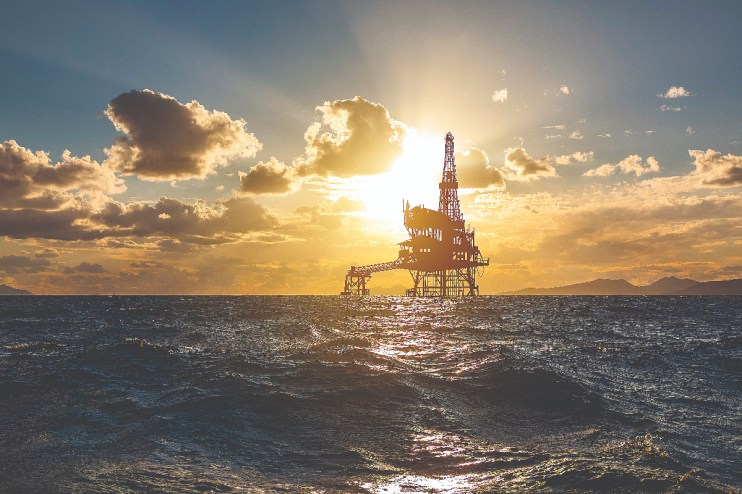
Like most commodities, oil has fluctuated in price very substantially over time with regrettable effects on household incomes. But the biggest mistake would be to try to protect living standards as a whole when the country has been made worse off, says Paul Ormerod
Shock, horror, the oil price is over $100 a barrel. The end of the world is nigh. So, at least, one might conclude from many of the stories in the media since the opening of recent hostilities against Iran.
But, like most commodities, oil has fluctuated in price very substantially over time.
Over the past 50 years or so, there have been several major spikes in the price of oil. The first was in 1973/74, when the OPEC cartel started to flex its muscles. Since the Second World War, the nominal price of oil had essentially moved within the range of $2.50 to $4 a barrel. The average for 1974 was nearly $10.
There was a further surge in 1979/80 following the shock of the revolution in Iran with the deposing of the Shah and the installation of the mullahs.
After a long period of relative quiescence after a fall in the late 1980s due to oversupply, the price rose very sharply from the early 2000s to the financial crisis in late 2008 as the world economy boomed and demand for commodities rose. And of course there was another big increase in world energy prices following the onset of the conflict between Russia and Ukraine.
Despite all this, the world economy has continued to move ahead over the decades.
Lessons from 1973
Perhaps the increase with the deepest consequences was the very first one in 1973/74.
The world had enjoyed decades of relatively cheap oil, averaging roughly $30 a barrel in the prices of today since the end of the Second World War. But this episode signalled a major shift. In the five decades since, despite large fluctuations, the comparable average has been around $70.
The move to a regime of higher energy prices had a crucial long-term consequence. It gave a strong incentive not just to economise on energy consumption in the short run, but to gradually shift the capital stock to more energy efficient machines and buildings.
Since the Second World War the amount of energy needed to produce a unit of GDP in America had fallen by no more than a few per cent by 1973. Since then, it has more than halved
Since the Second World War the amount of energy needed to produce a unit of GDP in America had fallen by no more than a few per cent by 1973. Since then, it has more than halved.
The immediate impact was certainly disruptive. In 1974 and 1975, GDP fell by just over one per cent in America and Germany and two per cent in the UK.
But these were not major recessions by historical standards. And the impact was short-lived.
By 1976, all three economies were larger than they had been in 1973, even if only just so in the UK. America and Germany were growing strongly.
Inflation rose sharply everywhere, but the experience was very different in different countries.
An increase in the price of all transfers national income from oil consuming countries to oil producing ones. Living standards have to fall. The German labour force understood this and did not pursue the self-defeating route of trying to offset the shock by higher money wages. Inflation stayed in single figures and was firmly under control by the late 1970s.
In contrast, in the UK the RMT, a rail union, turned down an offer of 27.5 per cent on the grounds that it was inadequate. Inflation rose above 20 per cent and it took 20 years to squeeze it out of the system.
The lessons from the first major oil price shock in the 1970s are clear. There was a negative impact on GDP, but it was short lived and modest. The real danger is the risk from a wage price spiral if workers attempt the futile task of trying to protect living standards when the country as a whole has been made worse off.
Paul Ormerod is an Honorary Professor at the Alliance Business School at the University of Manchester. You can follow him on Instagram @profpaulormerod