Healey told tax rises for fiscal remedy are ‘not required’

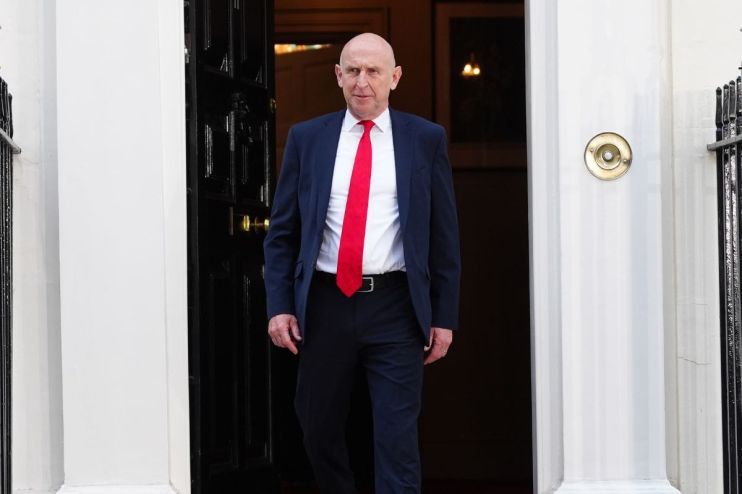
Chancellor John Healey does not have to raise taxes to offer the UK economy “immediate remedial action” at the Budget, a top City economist has said.
Panmure Liberum economist Simon French, who formerly worked at the Treasury, said the fiscal outlook for the government would be “broadly in the same position” as in the beginning of 2026.
In a note shared with traders, French said Healey remained “hemmed in” by commitments to Labour’s manifesto and the current fiscal rules while the size of the fiscal headroom is unlikely to have been hit heavily by the energy price shock from the Iran war.
“The best that can be said for market participants fearing a damaging fiscal squeeze in October is that there is no smoking gun here flagging a large deterioration in fiscal headroom since March,” he wrote.
“Immediate remedial action just to retain the policy status quo is, in our view, not likely to be required.”
A number of factors made upcoming forecasts less gloomy than previously thought, French argued.
Growth has been “modestly better” than economists expected as net migration trends, unreliable labour market data and could altogether clip about £5bn from the fiscal buffer, which is currently set at £22.7bn by the Office for Budget Responsibility (OBR).
Higher equity prices could partly offset the costs of a jump in gilt yields, which push up projected government borrowing costs, according to the report.
Tax rises to fund Burnham’s ‘£39bn policies’
The analysis on critical judgments to be made by the OBR at the Budget suggests that the economic outlook could be more positive than previously thought.
The OBR warned earlier this year that it had under-estimated government borrowing levels after the 2022 energy price shock caused by Russia’s full-scale invasion of Ukraine, suggesting that it could provide a bleaker forecast for UK public finances this time round.
Economists widely agree that further trade disruption across the Strait of Hormuz, which could hold up production of a fifth of the world’s oil and gas supply, could put the UK economy under threat. Analysts at EY said disruption extending into the middle of next year could send the UK economy into a recession.
Some optimism over a pick-up in productivity has been highlighted by researchers at Morgan Stanley, who said that it had become “more likely” that the private sector was enjoying a “longer lasting” upswing in output per hour. LSE academics who advised Rachel Reeves have argued annualised productivity growth is running at 1.6 per cent from the third quarter of 2024 to the present day.
But French said Healey remained likely to push for sweeping changes given the upcoming Budget would be the first under Andy Burnham’s premiership, whose “ambitions” go beyond “muddling through from fiscal event to fiscal event”.
Publicly-stated ambitions to raise defence spending to three per cent of GDP by 2030, increasing the income tax personal allowance and boosting funding for social care could cost £39bn a year more, according to Panmure Liberum.
French added that only an expansion of national insurance to savings and investments, a replacement of the inheritance tax regime, lowering the pension tax relief to a flat rate or reforming property taxes could deliver substantial tax receipt gains that would credibly fund “radical” policies.
“It is our base case that this Budget will be rhetorically more radical than it will be (or can be) financially,” he said.