Google DeepMind’s London AI drug spinout eyes $50bn valuation

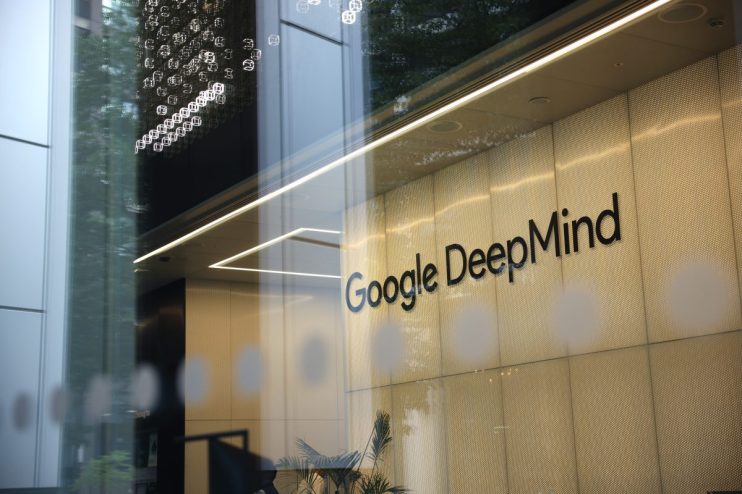
London-based AI drug discovery firm, Isomorphic Labs, is reportedly seeking a valuation of up to $50bn (£37bn) in fresh funding talks, just five months after raising $2.1bn from investors.
The Google DeepMind spinout, led by Nobel Prize-winning scientist Sir Demis Hassabis, is in early discussions to raise new capital at a valuation of at least $40bn, according to Bloomberg.
The figure could climb as high as $50bn, although negotiations remain early and no agreement has been reached. The potential valuation would mark a sharp rise from the roughly $17.5bn previously attached to the company, as investors pour money into businesses promising to use AI to transform drug development.
Founded in London in 2021, Isomorphic Labs uses AI to design potential medicines, building on DeepMind’s AlphaFold technology, which predicts protein structure.
The company is developing treatments for cancer and immune disorders, while also working with pharmaceutical giants including Eli Lilly, Novartis and Johnson and Johnson. Its technology aims to reduce the time and cost of discovering new drugs by predicting how molecules will interact with biological targets before testing them in laboratories.
However, despite attracting billions in investment, Isomorphic has yet to test its own drug candidates in humans.
The company is targeting its first clinical trials by the end of 2026, a key milestone in demonstrating whether its AI technology can translate into viable medicines
London AI firm attracts billions in funding
The reported talks follow a $2.1bn Series B funding round in May, backed by investors including Alphabet, Thrive Capital and the UK Sovereign AI Fund. That followed a $600m raise in March 2025, bringing its disclosed external funding to about $2.7bn.
Alphabet remains the company’s majority owner, while Hassabis continues as chief executive after stepping back from his day-to-day leadership role at DeepMind in August to become its chairman and Alphabet’s chief scientist.
The latest funding discussions also come as Isomorphic expands its role in a wider push to use AI in biological research.
On Wednesday, the company joined Google DeepMind and Meta in committing a combined $300m to a new initiative to develop AI models capable of predicting how human cells behave.
The project, led by research organisation Biohub and supported by US government agencies, forms part of a broader $1.8bn effort to build so-called virtual cells that could eventually allow scientists to test potential treatments digitally.
For Britain, Isomorphic’s rapid rise offers another potential heavyweight in London’s AI sector, which has attracted growing international investment.
UK AI companies raised £8.3bn in 2025, while Isomorphic was recently named among Britain’s leading AI businesses in Barclays’ AI 100 ranking.
But the company’s soaring potential valuation also highlights the gap between investor enthusiasm for AI-driven medicine and its commercial reality.
While AI firms promise to slash the cost and time required to develop drugs, few have reached human trials, and none has yet brought an AI-discovered medicine to market.