UK tech scale-ups raise £3.4bn as Burnham faces test over British investment

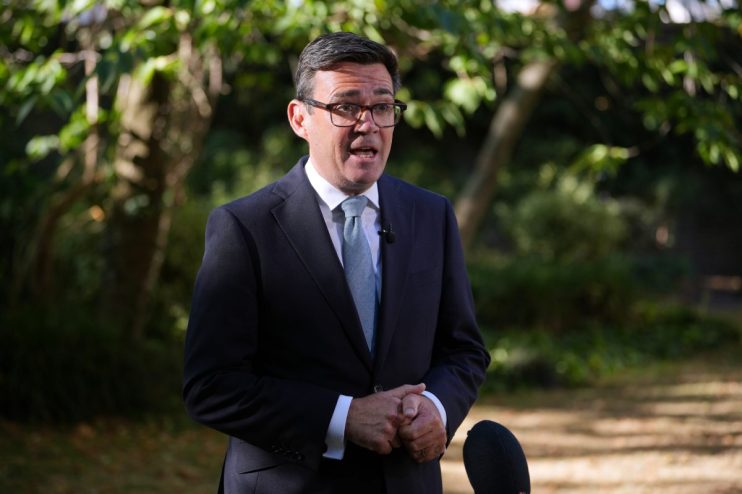
Britain’s latest crop of high-growth tech companies have raised £3.4bn between them and employ more than 6,000 people, as Andy Burnham faces pressure to get more British capital behind home-grown firms.
Tech Nation on Wednesday unveiled the 50 companies in its Future Fifty 2026 cohort, spanning AI, fintech, health, defence and energy.
Together, the companies have raised more than twice the £1.4bn secured by the 25 firms selected for last year’s programme.
The figures come as Burnham’s government prepares a £1bn UK Scale-up Fund designed to channel money from some of Britain’s biggest pension schemes into growing technology, life sciences and other sectors.
Nest, Railpen, Border to Coast and Local Pensions Partnership Investments are among the pension funds set to back the vehicle, alongside the British Business Bank and the Treasury’s Office for Investment.
Burnham’s team also hosted entrepreneurs at Downing Street this week, where it promised to put government “firmly on the side of the people who take risks, start companies, create jobs and bring new ideas to life”.
But the latest Future Fifty cohort also highlights the scale of the funding task facing ministers, with a number of its biggest companies already backed by major overseas investors.
British scale-ups have long turned to deeper pools of US and international capital to finance expansion, while the proportion of UK shares owned by domestic pension funds has fallen from around half three decades ago to less than five per cent.
Successive governments have tried to reverse the trend, including through agreements encouraging pension schemes to put more money into private companies and UK equities.
Burnham has gone further by backing the new £1bn scale-up vehicle, which he has said will help “reindustrialise Britain and create the jobs of the future”.
AI firms dominate latest UK scale-up cohort
AI is among the most heavily represented industries in this year’s Future Fifty, alongside health and biotech and fintech.
Among the largest fundraisers is CuspAI, a Cambridge-based company using artificial intelligence to discover new materials for semiconductors, energy and climate technologies.
Despite only launching in 2024, CuspAI has raised more than $650m (£480m). Its backers include US chip giant Nvidia, Samsung Ventures, Temasek, Bezos Expeditions and the UK Sovereign AI Venture Fund.
London-based Encord has raised £80m to build data infrastructure for physical AI, while defence technology company Adarga has secured £76m.
Fyxer, an AI assistant that drafts emails and takes meeting notes, has raised £43m and counts Salesforce boss Marc Benioff and Softbank’s former operations chief Marcelo Claure among its investors.
Meanwhile Prolific, which supplies human data for AI training, research and safety testing, has raised £26m and employs more than 250 people.
Companies selected for the Future Fifty must be headquartered in the UK and meet criteria including having raised Series B funding or generating at least £5m in annual revenue or 50 per cent year-on-year growth.
The programme has previously included Revolut, Monzo, Darktrace, Deliveroo, Skyscanner and autonomous driving company Wayve.
Future Fifty alumni have collectively raised more than £28bn, while Tech Nation said it has supported 30 per cent of Britain’s tech unicorns since 2014 and 40 per cent of its decacorns.
Last year’s cohort included AI voice startup Elevenlabs, whose valuation jumped from $3.3bn in January 2025 to $11bn in February this year. It was reportedly in talks over a secondary deal at a $22bn valuation by July.
AI meeting assistant Granola, another member of the 2025 cohort, reached a $1.5bn valuation this year after growing sixfold in less than 12 months.
Carolyn Dawson, chief executive of Founders Forum Group, said the calibre of British companies reaching Series B and beyond was continuing to rise.
“To date, Tech Nation has supported 35 per cent of the UK’s unicorns and 40 per cent of decacorns, with our alumni collectively raising more than £28bn and counting”, she said.