Fielden: Crafting a modern whisky brand

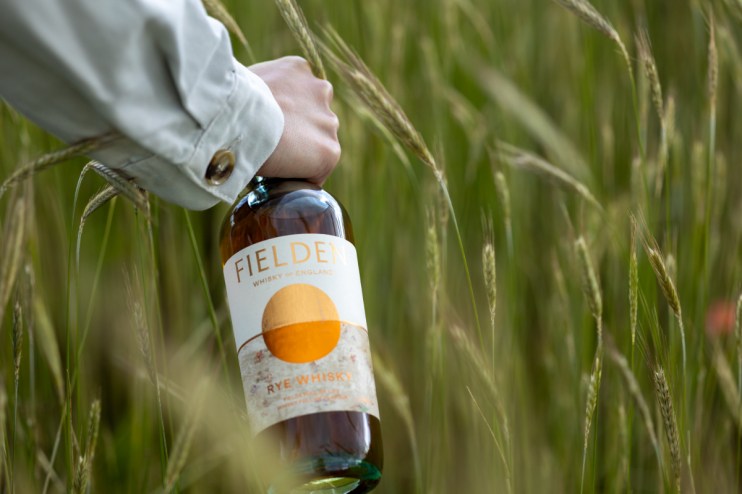
This month’s issue of Whisky Business, City AM’s monthly look at the world of whisky, takes a look at a new English whisky brand, Fielden
Spend five minutes online looking for confirming evidence, and you’ll find plenty of commentary arguing that consumers the world over are drinking and spending less on alcohol. However, the underlying, real-world data show that’s not really what’s happening at all. What consumers want from drink brands has shifted dramatically over the past five years and some producers have been slow to catch up.
Consumers want choice and they’re increasingly looking for products that offer convenience and meaning. Ready-to-drink cocktails and celebrity-backed brands that resonate with consumers are still recording huge growth, as flavoured spirits and Instagram-worthy cocktails grab a big share of spend from traditional brands.
These trends are particularly interesting to observe in the world of whisky. Whereas Scotch producers have to conform to strict rules as to what they can and can’t do to the spirit, other so-called New World producers have more flexibility to adapt to consumers’ changing tastes.
Fielden: Brand ethos
Consumers today care more about history, sustainability and ethos than they did in the past. According to Deloitte’s 2023 Sustainable Consumer research, half of UK consumers claimed they’d stopped purchasing certain brands because of sustainability concerns.
However, PwC’s Voice of the Consumer Survey 2024 found consumers are only willing to pay 9.7 per cent more, on average, for sustainably produced or sourced goods.
Price, sustainability and taste are all important, and so is where the product is marketed. PwC’s 2024 survey found that 46 per cent of consumers purchased products directly through social media, up from 21 per cent in 2019.
Another survey found as many as 86 per cent of consumers bought products based on what they saw on social media.
As a result, we’re seeing more brands building a model focused on the visual aspect of social media, touting sustainability coupled with affordability and attractive imagery. One of these is Fielden, the English whisky brand formerly known as the Oxford Artisan Distillery.
Rocky start
The Oxford Artisan Distillery began life in the early 2020s, riding the wave of English whisky distilleries that emerged during the Coronavirus pandemic. Its focus on ‘biodiverse’ heritage-grain rye whisky production attracted the attention of Distill Ventures, which was backed by FTSE 100 drinks giant Diageo. Following the investment, the brand was renamed Fielden in 2024, but in early 2025, Diageo pulled out of Distill as part of its ongoing restructuring, leaving Fielden and a clutch of other brands in the lurch.
Fielden was then acquired by brand development agency GHF, which works with innovative whisky producer Nc’nean among others.
GHF faces an uphill battle. There are now 69 English whisky distilleries laying down spirit, around a third of which are too young to even sell spirit. Even the oldest, The English Distillery, only reached 20 years of age this year.
While the market has grown at a compound annual growth rate of 24 per cent since 2019, it’s crowded and competition is growing. English spirits have to stand against a growing field of so-called new world producers from countries such as Germany, Finland and Taiwan.
The British countryside
Fielden is carving out a niche by leaning on the beauty of the British countryside. Its philosophy is based on the notion that flavour starts in the fields, not just in the barrel. Because rye is a hardy, naturally cross-pollinating crop, it requires far less agricultural intervention.
That helps surrounding wildlife and ecosystems to naturally flourish, and this biodiversity, the company claims, helps with flavour by creating a unique mix of carbohydrates and proteins that break down during fermentation.
Rye, by its nature, also tends to be a bit sweeter and works well in cocktails. Fielden has developed most of its range around this market, tapping into the younger generation and, more importantly, the social media world.
This model is partly marketing-driven, partly flavour-focused and partly a side effect of the Fielden business. The company uses a decentralised production model with production taking place at multiple sites.
Malting is done at Warminster Maltings in Wiltshire (England’s oldest traditional floor maltster), distilling takes place at the Adnams Distillery in Suffolk, chosen for its 100 per cent renewable energy credentials and maturation takes place at the Luton Hoo Farm Estate in Bedfordshire, a pioneer of sustainable land conservation.
Fielden is a young brand fighting for share by leaning into changing consumer tastes, sustainability and social media-driven consumption. It’s a brand built for the current market and is an interesting reflection of where the industry is going.