China’s EV brands are all over sport in the west. Why?

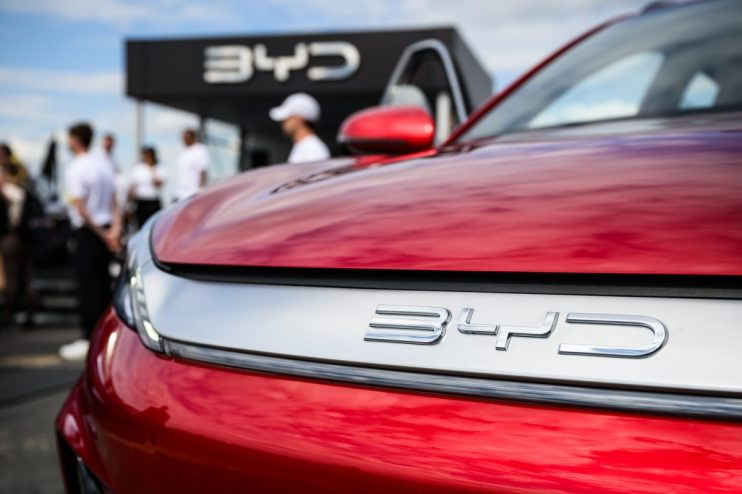
Electric vehicle brands from China are snapping up sport sponsorship opportunities across the west. Matt Hardy asks why.
The automotive sector has long had an association with sports sponsorships: think the century-old deal between Ford and AFL side the Geelong Cats, or Volkswagen’s enduring patronage of Bundesliga side Wolfsburg, originally a works team from its factory. Shell has been in Formula 1 for decades, the sport’s major racing teams are, naturally, car brands and BMW has been a gold partner for 30-plus years.
Just last year Mercedes-Benz signed a 10-year deal with the WTA Tour worth £500m. Why? One source tells City AM it was to corner the Chinese market. But the Far East’s own cars are heading westward. And fast.
“They’re going to be the biggest disruptors in the sponsorship market for the foreseeable future,” MSQ Sport + Entertainment’s Steve Martin says. “It’s not just about the money they’re spending, it’s about the reason why they’re doing it.
“They’re almost going in the opposite direction of what Mercedes was doing previously, going into the Chinese market to legitimise their sort of Western brand.”
China taking advantage
Adds Red Tiger Marketing’s Laurence Miller: “Looking particularly at Europe: the share of Chinese brands vs non-Chinese brands in Europe has seen a sharp uplift in 2026.
“The percentage share of Chinese brands announcing new partnerships in Europe in 2024 was five per cent, compared to 15 per cent in 2026 to date.
“Notably the number of non-Chinese brands announcing new deals in Europe has dramatically dropped, alongside the increase in partnerships by Chinese brands.”
The most high-profile sponsorship in the UK sees electric car maker BYD partner with Manchester City but China-owned MG has a deal with Arsenal and newcomers such as Jaecoo are sponsors of the Investec Champions Cup and other rugby assets.
The domestic Chinese EV market is set to top $500bn in the coming years, with Chinese brands exporting around 1m units per year generating a market share of around 10 per cent.
“In some ways we’re seeing the automotive battle for western consumers being played out through sport,” Professor Rob Wilson tells City AM. “For years we’ve seen established European and North American manufacturers use sport to build visibility, ironically in China.
“Now these Chinese manufacturers are using the same playbook to accelerate their own growth. Key will be how they aggressively market and activate and, critically, how the traditional manufacturers respond.”
Smart strategy?
Martin adds that it is “a very smart strategy and actually, from a rightsholder’s perspective, it’s brought in a completely new set of brands”, while Miller states that trust, relevancy and consideration are the primary challenges for Chinese brands in Europe.
“What they need is a way to humanise those brands in a trusted environment for Western consumers. Sport provides all three,” he concludes. “This has played out previously in the South Korean automotive sector, with Hyundai and Kia very effectively using sports sponsorship to support their European growth.”
Western sport has long been used to recognisable car brands sponsoring its largest events, alongside the traditional sectors of financial services, watches and apparel. But that’s changing.
The Far East is now wanting something in return for the eyeballs watching snooker in Shanghai or tennis in Wuhan. And that is a presence when these events roll into London, New York and Paris.
These brands, like Tesla once was, are relatively unknown to the wider public outside of the EV-using motorist. That is unlikely to be the case going forward.