Capital gains tax raid should have ‘health warning’, Labour warned
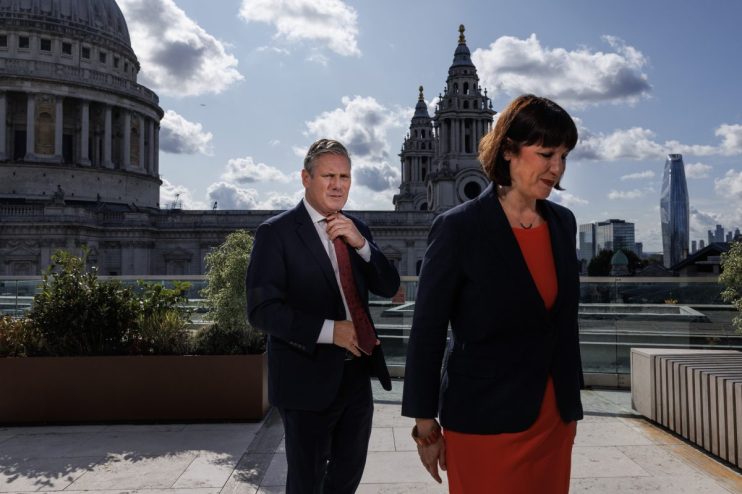
Labour risks stunting growth and discouraging investment if it pursues further capital gains hikes, tax advisers have warned, as reforms proposed by top think tanks were pushed back on by industry figures.
Rachel Reeves and Keir Starmer have talked up the prospects of attracting investment in the UK and making the wider tax system fairer amid calls from leftwing Labour members to introduce a wealth tax.
Wealth managers and think tanks have cautioned that capital gains tax (CGT) rises are likely to backfire as assets may be held on for longer, leaving receipts in a more precarious position in the short term and clogging up transactions made between investors.
Capital gains taxes are a form of a wealth tax as they are charged on the profits made when assets including businesses and second homes are sold, and so an increased top rate worth around 24 per cent could deter individuals from selling assets, according to experts at RSM and Quilter.
Top Westminster think tanks including the Institute for Fiscal Studies (IFS), the Institute for Government and the left-leaning Resolution Foundation have urged the government to re-design capital gains tax rates to align them with income taxes.
Economists at the IFS believe that “substantially higher capital gain tax rates” could be introduced at the same time as reforms to the tax base are made, including “more generous” deductions for investment costs at the time of purchase and ensuring no tax is paid on returns made via gains made through interest rates.
Taxing capital gains at the same rate as income would constitute a “back door wealth tax”, said Chris Etherington, a private client partner at wealth advisor RSM.
Etherington warned that major changes to capital gains taxes could push business owners to move abroad more quickly and lead to a drop in receipts, with the Office for Budget Responsibility (OBR) likelier to warn Reeves against relying on central forecasts.
“Any additional capital gains tax receipts will probably come with a health warning that they may not actually reflect the reality in due course,” Etherington said.
“You can quite easily end up shooting yourself in the foot financially because you may think that increasing rates means revenues will go up. Actually, quite often, the opposite can be true.”
Economists go to war on capital gains taxes
In last year’s Autumn Budget, Chancellor Rachel Reeves hiked the lower rate of tax from 10 per cent to 18 per cent, and the higher rate from 20 per cent to 24 per cent, in a bid to boost government coffers.
Right-leaning economists at the Institute of Economic Affairs pointed out that – despite higher tax rates – overall receipts from capital gains taxes dropped by 18 per cent in July compared to the previous year.
Other analysts have suggested the figure was lower due to lags in HMRC reporting and market jumps on a month-to-month basis.
Tom Clougherty, executive director of the IEA, said capital gains taxes have “strong behavioural effects” which mean the Treasury should approach the levy with caution.
“It affects people’s decisions on whether to buy, sell, hold assets in a way that departs from what’s economically rational,” Clougherty said.
“When it’s an investment made from income that’s already been taxed from earnings, you’re creating double taxation and a bias in the tax system against saving and investment.
“That’s bad for capital accumulation, and that’s bad for growth, and that’s the last thing that we need at the moment.”
The Adam Smith Institute warned that the UK was already on the “wrong side of the Laffer Curve”, the principle which suggests that higher tax rates might lead to lower receipts due to impacts on growth and wealth creation in the economy.
Researchers at the Institute said a phased abolition of capital gains taxes would bring higher revenues in the long term for the government.
Arthur Laffer, the former Ronald Reagan adviser who drew up theory on government taxation, has held discussions with shadow Chancellor Mel Stride and been interviewed by Reform’s Nigel Farage in recent weeks, pointing to his impact on UK policymaking.