
Business leaders debate the future of the Capital at the Central London Alliance Summit
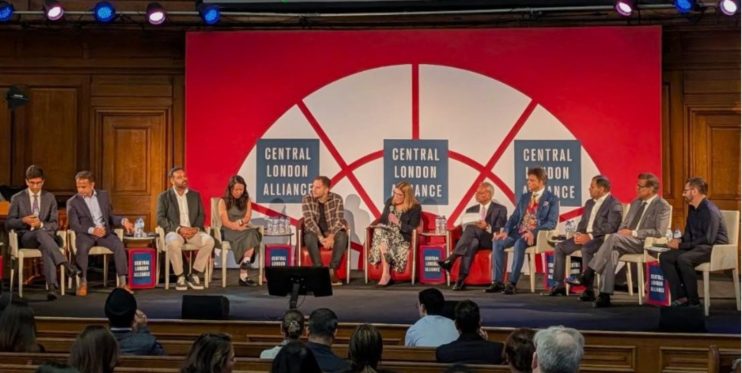
On Wednesday, October 14, 2026, the Central London Alliance hosted its annual Business Summit at the Emmanuel Centre in Westminster, just moments from the seat of Government.
Bringing together 45 exceptional guest speakers and panellists, the Summit debated a wide range of pressing issues that are currently impacting London’s business community and are predicted to do so in the future.
The programme was varied: from the proposed ‘bed tax’ keeping hoteliers up at night, to the threat of a prolonged downturn in business for sectors that have long been the beating heart of the London economy, and to the impact of new technology on employment and London’s future prospects.
The audience could not doubt the purpose of the day’s proceedings; the message was direct: for London to thrive, the headline needs to read ‘leadership’, ‘stability’, ‘predictability’, ‘resilience’ and ‘opportunity’.
Opening the debate, Tony Matharu, Chairman of Central London Alliance (CLA), called for a serious and immediate rethink of how the capital’s future is shaped, and sought individual and collective action from policymakers, leaders, investors, workers, visitors and other stakeholders to support and enhance London’s position as a world leading city – protecting it from threats, speculation and actions which might damage its future prospects.
“The capital is suffering from anxiety and uncertainty; that’s not good for business. It’s not good for the way in which we make decisions about our lives, including allocating resources and investment. Headlines that highlight rent increases, chronic under investment, road closures, planning restraints, unreliable transport, regulatory and tax burdens, declining public sector productivity combined with escalating costs, reduced employment (including as a result of new technologies), disincentives to invest, devolved powers and diversion away from London and attacks on property and wealth – they may explain what’s holding back London from being the best city in the world in which to live, work, invest, visit and study.”
“With the dawn of yet another new age at No.10, it’s almost inevitable that business leaders question whether their Government gives London enough credit for the role it plays as a powerhouse that provides economic benefit across the UK, funding public services throughout the nation.”
How often have we heard, post-budget, commentators say there “wasn’t much in there for London?”
So, it’s hardly controversial to suggest that London has become an unsung hero of the British economy (sometimes incomprehensibly treated as a villain). Or, less diplomatically, seen as a cash cow whose contribution is too easily and complacently taken for granted.
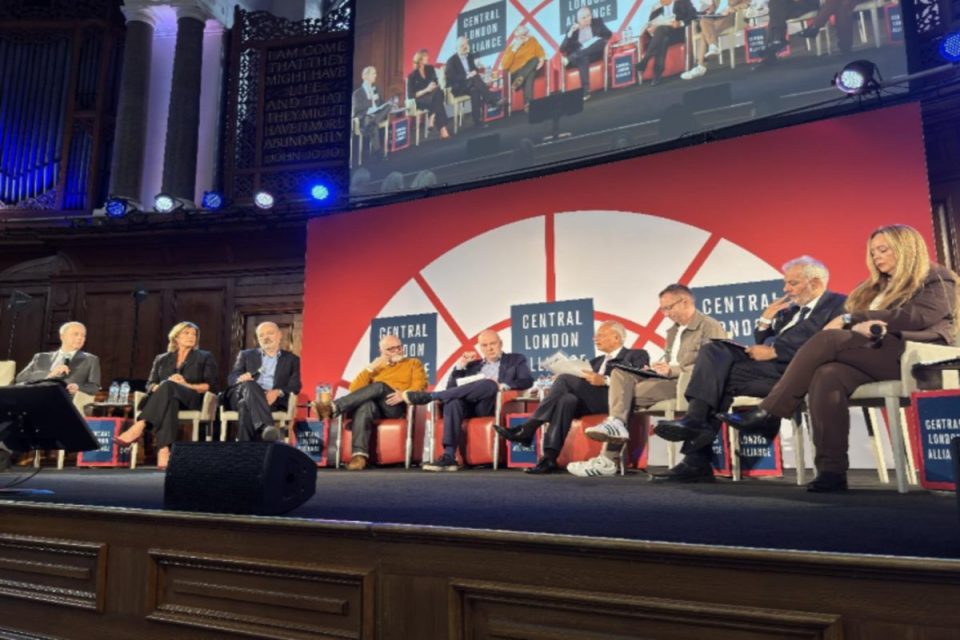
Frustration was palpable in the opening panel discussion: ‘London’s Hospitality: The issues keeping hospitality leaders up at night’. The sting of the Autumn Budget in 2024 still hurts: “I can’t recall a bleaker period”, said journalist Andrew Sangster.
Employers’ National Insurance contributions have had, and continue to have, a debilitating impact on businesses that want to scale up or hire more people, particularly young people, but the maths don’t add up, and London’s hospitality sector is disproportionately affected. As the third-largest employer in the UK, with low barriers to entry and a high pace of career progression, the sector needs support not starvation – with 82% of all hospitality profits heading to the Treasury against a UK sector average of 50%. “There is no more to give”.
The latest blow is the proposed ‘overnight visitor levy’ which is “actually a bed tax that runs the risk of destroying any economic value – policy makers are taking more time thinking about how it’s spent rather than working out why it might be introduced or even how to collect it”, says Sally Beck, Deputy Managing Director of The Landmark Collection, including the Landmark London.
Panellists agreed that the absence of any impact study makes the proposed bed tax unjustifiable in economic terms, regardless of the unarticulated rationale, or lack of it, behind the measure. The perception is that the policy was set up to fail hoteliers and their customers and rushed through because it lacks commercial justification, as a proper economic impact study would show. The question of why it is needed at this, or any time, simply reflects the claims of Pat McFadden in leaked private WhatsApp messages “Every meeting I have is: ‘Who can we tax in order to pay benefits to others?’ They’re asking the wrong questions.” In the case of the proposed bed tax, no questions appear to have been asked. The London issue is not overtourism and the answer is not a further hotel tax to deter visitors. So why is it being considered at all? Then there’s the issue of where the proposed bed tax will actually go. Cedric Horgnies, Commercial Vice President of YTL Hotels, said: “there’s been no ring fence announcement that revenue will be reinvested to promote the sector”.
The Mayor of London, Sir Sadiq Khan, has stated that he wants the bed tax ‘sooner rather than later’. He tries to justify the bed tax by claiming it may partly stimulate demand for the sector. This bizarre logic defies comprehension to hotel owners and operators alike. “One can’t stimulate demand by imposing a tax and increased costs to both providers and consumers. How would that stimulate demand?” continued Horgnies.
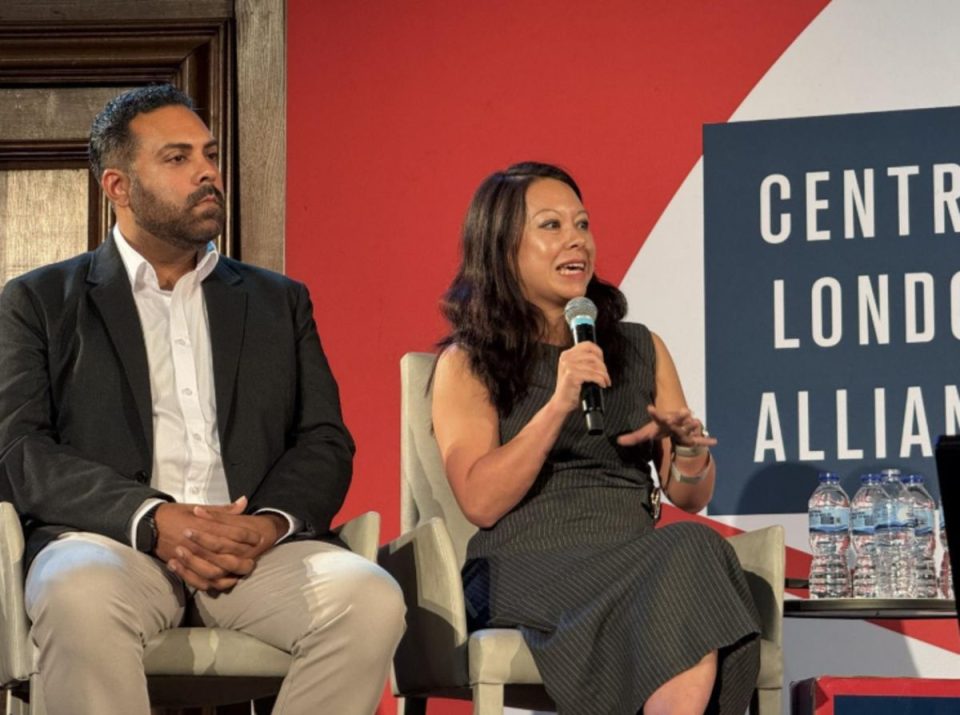
The next discussion offered a glimpse of a potential solution to elevate London’s growth potential: ‘AI, Media and the Creative Sector – Opportunity or threat to London’s economy.’ Liz Giles, former journalist and Government communications specialist, opened the debate with the question: “how do we make the most of the evolving media market in London?” Than Catachanas, Collaboration and Acquisition Director at JCDecaux UK, said the “opportunity for innovation was huge, particularly in London, with so many world-class brands”. As Lee Russel, CEO of Minimal Viable Launch, put it – you now have “the creative power of Disney Pixar in your pocket”, opening up possibilities that would have required substantial resources and specialist expertise. But Russel warned that business owners must stay in the loop “you can’t just sprinkle a little AI on top of what you already do in the hope that it’s better, faster, cheaper – you’re going to be found out very quickly”.
If the real opportunity lies in reimagining the customer experience rather than simply using technology to cut costs, London has the opportunity and the local talent. At least for now. The question is: where are the incentives to invest, to scale up, to take risks and take on new employees – to take advantage?
The next session, ‘Retail, Entertainment and Events: Irreparably Damaged or Repaired and Renewed?‘, brought that thinking sharply into focus. For London’s retail and leisure operators, the challenge is no longer simply getting people through the door, but giving them a compelling reason to stay, spend and return. As one panellist observed, Gen Z and Gen Alpha might not have the budget for Fendi, but they can afford a matcha latte, take a selfie in the store and post it on Instagram. It’s a telling illustration of how a brand’s experience can be as influential as the purchase itself. And the incentives to generate new experiences and invest in new forms of entertainment and events require stimulus.
But every silver lining has an inevitable cloud, and it’s no secret that the Mayor of London’s ambition to create a city that never sleeps hasn’t quite materialised. The capital’s much-vaunted night-time economy continues to face challenges, including an old adversary: licensing restrictions.
Gareth Hughes, a Partner at Keystone Law, knows only too well the frustrations of clients caught between planning and licensing authorities that don’t always appear to be working in harmony. “There’s an irony here. While the growth agenda is supposedly in full swing, businesses looking to invest, innovate and expand can find themselves constrained by the very regulatory framework that should be helping them to prosper.”
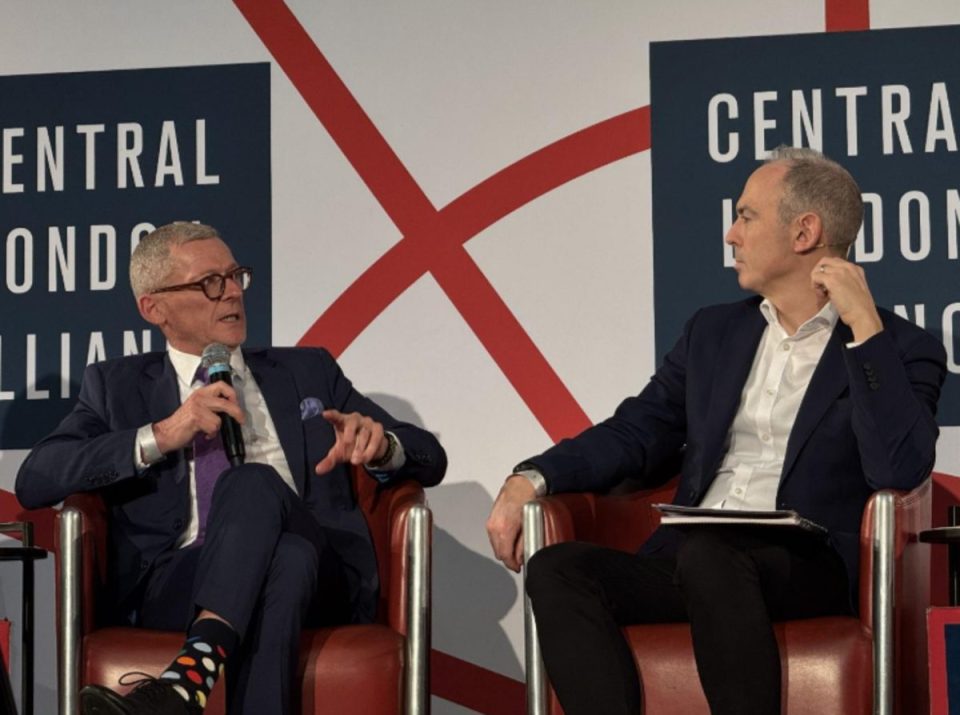
The bitter pill was served over lunch, as the conversation turned to ‘Doing Business in London: Tax, Regulations, Finance, Diversions and (Dis)Incentives’. For James Quarmby, Partner at Stephenson Harwood, the 2024 Autumn Budget was nothing short of a “car crash“.
Rising employers’ National Insurance contributions, minimum wage increases and new and proposed employment reforms have left businesses counting the cost. Food and beverage operators are already shedding staff, he warned, while the prospect of taking on younger workers is becoming increasingly difficult to justify. And there’s no easy U-turn here – what Government in their right mind would campaign to cut the minimum wage once imposed?
Unnecessary complexity, obstructive box-ticking exercises, delays – each creates uncertainty, a lack of predictable outcomes and cost, which can make planning and investment an unviable risk.
Khalid Talukdar, co-founder of DKK Partners, offered a pretty unflattering international comparison. “Dubai uses English law pretty well but here in UK we have allowed our statutes and laws to be mutated to something we don’t recognise anymore. In Dubai, setting up a business, accessing finance and recruiting staff can be relatively straightforward. In London, you practically need to be Dora the Explorer to find your way through the bureaucracy.”
And then there’s the question of fairness. We know London isn’t short on entrepreneurial ambition, but if the ambition is really to encourage businesses to invest, recruit, and grow, then we need legislation without an obstacle course, with incentives, not obstructions imposed
through increased regulation, delays, and business taxes.
So how does London turn ambition into actual economic growth? Does it all come back to bricks and mortar? Not without another line of red tape, it seems. During ‘Planning for Growth: The Future for London’s Property and Development Sector‘, Nia Fraser, Partner at Newmark Planning and Development, highlighted how even the marathon of securing planning committee approval doesn’t mean a developer can get on with the job. Negotiations over Section 106 agreements can drag on for another year or two before work can begin. “Planning permission, it seems, is less a green light than an invitation to join another queue”. Described by Gareth Hughes as ‘state sponsored bribery’ he suggests that planning permission might depend on the cash a developer might be prepared to pay, rather than the economic and other values a new development might create.
Hughes argued that Westminster’s licensing rules are holding back hospitality in the West End. “You have got to encourage people to come in, and at the moment the policy is very restrictive,” he said. He pointed to the cumulative impact policy for Soho, which starts from the position that no new licences will be granted and that existing venues seeking extra hours or capacity will be refused.
So, if London’s businesses are struggling to get things moving, who’s making enough noise on their behalf? That was the question for panellists on: ‘London’s Voice: Who Speaks for London? Is Londonism an irrelevance in a devolved UK?’ There’s certainly no shortage of capable and resilient London media voices, from City AM and the Standard to LBC and BBC London albeit each facing cost and budget challenges. But is anyone really cutting through where it matters – in the corridors of Whitehall? CLA Chairman, Tony Matharu, was asked whether the idea of a dedicated Secretary of State for London should be reintroduced. “Scotland and Wales have their own voices at the Cabinet table, so why shouldn’t the capital?” It’s a pointed question. With the media, local councils and business organisations whose purpose should be to represent their business members, precisely who is making the case for London? The assessment may well be that we need leaders with the gravitas and influence to turn opportunity into tangible actions and positive outcomes. Meetings with Government officials and photographs for social media at party conferences are all well and good, but what positive impacts are there for London as a result?
Tony Matharu asked who will speak up for London now. “Our difficulty, when we are talking about voice, is that our leaders in the Cabinet, and those who should be representing London’s business interests either don’t understand business, particularly privately owned business, or that understanding is limited. Either way, London’s business voice is absent or muted: ‘Economic illiteracy’ is being priced by the market, with a high price for Government gilts. Whatever messages are being heard, or not with the absence of any voice, the vacuum of silence from our leaders has not had a positive impact.” The markets doubt the balance between public spending and revenue-raising is right, noting that Government stock in Greece is now seen as a better investment than in London. With elected politicians failing to speak out, the media constrained by commercial pressures, and the elected and non-elected heads of some London institutions and organisations actively suppressing views, he asked: “Who is going to speak up for London and what it needs?”
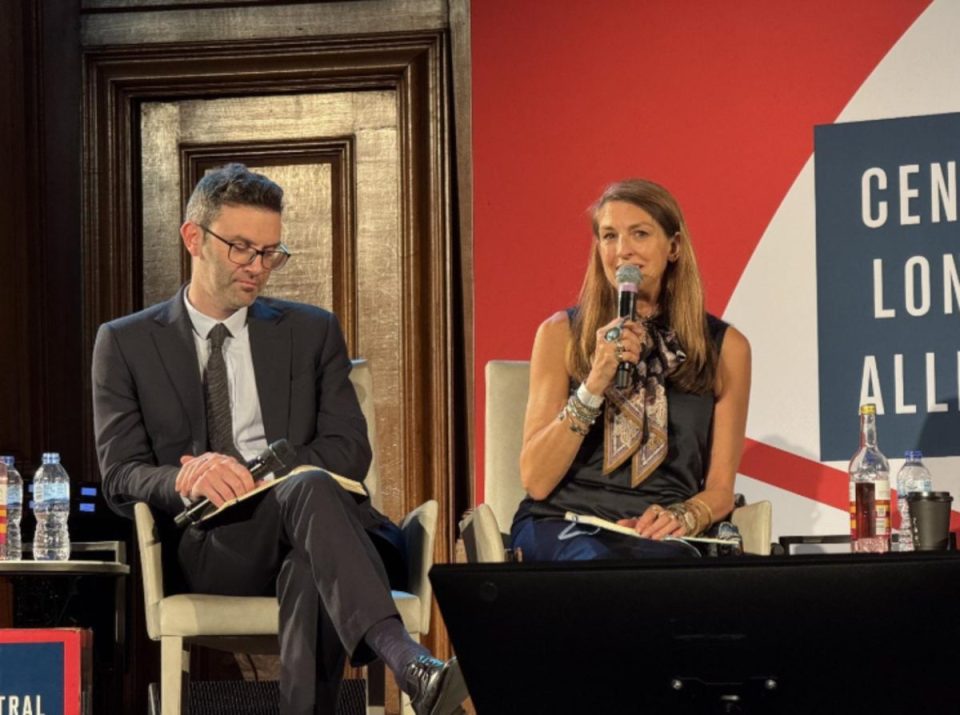
And what about London as a destination? The capital may still have pulling power, but attracting people and investment, and encouraging them to come and stay, remains a challenge. Capital and talent are leaving. In the concluding session, ‘Destination London: Shaping the future of the capital’, Jessica Berk Ross, Managing Partner at FINN Partners, argued that changing perceptions, better leadership and enhanced branding are key. By creating a multidimensional approach that connects visitors with the experiences they’re looking for, London could make much more of its extraordinary and world leading mix of culture, hospitality, retail and entertainment. London’s offer is insufficiently well articulated and its representation is too fragmented to achieve the outcomes it needs.
London is, after all, unique in being able to offer an astonishing array of heritage, culture and hospitality in one place. The challenge isn’t simply giving people a reason to come. It’s making sure London expresses and delivers on its promise once they are persuaded.
Keep an eye out for Central London Alliance’s in-depth articles and further insights from each panel discussion.