Business Leaders and Experts Urge for Smarter Planning in London

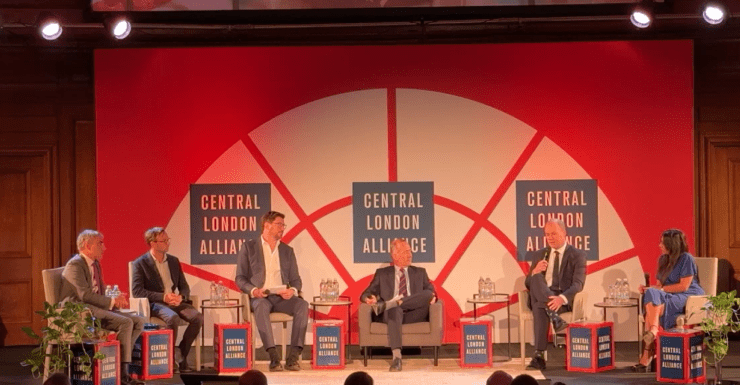
London, 7 November 2025 – Business leaders, policymakers, and industry experts gathered last month at the Emmanuel Centre, Westminster “London – Opportunities and Obstacles for Growth,” organised by the Central London Alliance CIC. The event explored the challenges and opportunities shaping London’s economic future featuring six panel discussions delving into the key features of the capital’s growth, including finance, infrastructure, hospitality, entrepreneurship, and retail.
The Property, Planning and Infrastructure panel examined the challenges within London’s planning ecosystem and identified practical pathways to unlock sustainable growth. Bringing together leading voices from planning, development, design, and local governance, the discussion featured Andrew Hilston, Managing director of The Ardent Companies; Annabel Singh, Engagement Manager at the City of London Corporation; Alexander Jan, Non-Executive chair of Hatton Garden Business Improvement Districts; Michael Forward, Associate Principal and Architect at Populous; and Nick Delaney, partner at Daniel Watney LLP. The panel was moderated by George Sell, the Editor-in-Chief of International Hospitality Media.
The panel began with a focus on ways to improve London’s planning system. Nick Delaney, drawing from his experience as a planning consultant, highlighted timing as one of the most significant day-to-day pressures within the system. He explained that development viability remains tight while the demand for swift planning approvals continues to grow. Timely decisions, he noted, are essential to delivering economic returns and meeting community needs for housing, employment, and infrastructure.
Nick also stressed limited resourcing as a major challenge emphasising that “Resourcing is just as important as policy”.
Despite the government’s pledge to recruit 300 new planning officers, he argued that this is far from sufficient. He suggested that the £8 billion in unspent funds collected through Community Infrastructure Levy (C.I.L) and Section 106 regimes could be more effectively utilised to support under-resourced planning departments, which he believes should be recognised as an integral part of the national infrastructure. He also called for the need for the planning sector to adopt more technology to streamline administrative processes, and for the public and private sectors to work more closely together on training, education, and providing career experience to help retain talent.
Annabel Singh joined the discussion by highlighting the City of London Corporation’s success in maintaining investor confidence through policy stability and a strong long-term strategy. “A lot of places are not getting much commercial investment — but the City of London is,” she said, referencing the City Plan 2040. She added, “We believe in growth — if we build it, people will come,” noting that 96% of planning applications were approved last year, reflecting a clear commitment to proactive growth.
Andrew Hilston addressed the critical shortage of affordable housing in London from an investor and developer perspective. He called for greater political attention to be directed toward housing delivery, describing the housing gap as a critical challenge for London’s economy. “Some housing is better than no housing,” Andrew said, suggesting that affordable housing targets may need to reform or even abolish. He also highlighted the barriers developers face, including years of limited growth and a 15% rise in building costs, which continue to constrain delivery and deter investment.
Joining the discussion, Michael Forward, an architect and expert in stadium and arena design, noted that clients and investors increasingly seek projects that give back to their communities. He explained that investors now want new developments to serve as “anchors” within their neighbourhoods – spaces that attract people and support local life. Michael emphasised that collaboration and mutual understanding between planners, designers, and investors are essential to improving London’s planning system and delivering projects that genuinely benefit the wider community.
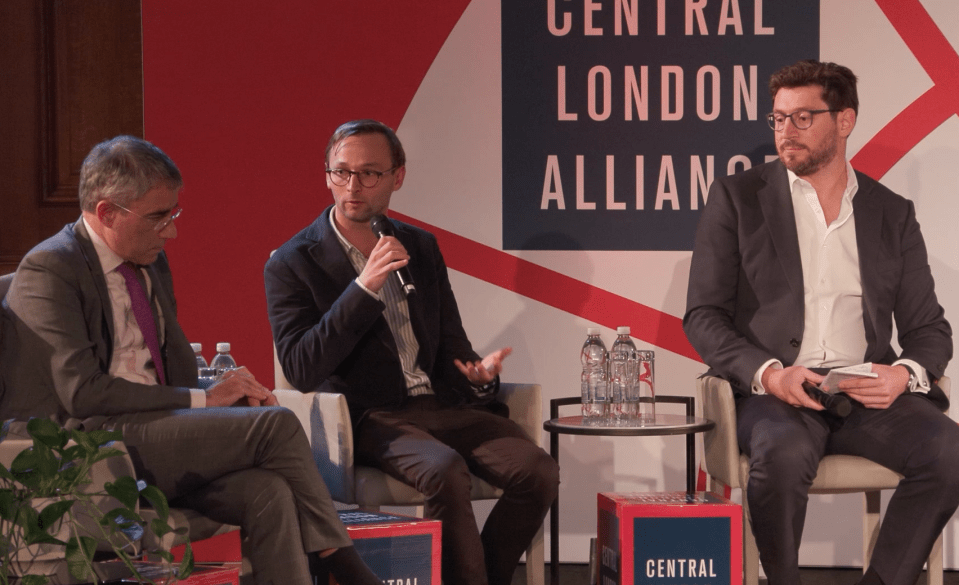
Alexander Jan urged policymakers to strengthen recognition of Central London’s economic importance and to restore financial incentives for local authorities. Highlighting Central London’s contribution of approximately around 11 to 12% of total UK output, underlining its crucial role in driving national economic growth. Alexander proposed expanding the London Plan’s definition of “international centres” and reconnecting business rates not just from retail, but also from hotels, healthcare, and culture to support local development. He also noted that London must continue to represent itself on the international stage as a gateway for investment, urging strategic allocation of funding.
The panellists also pinpointed the challenges and delays arising from the Building Safety Act’s implementation, which has driven up build costs and deterred investors. They agreed that housing delivery delays are a growing concern, and that securing the right level of funding and resources for planning departments is essential to keep London’s development pipeline moving.
Stability and consistency across the capital were emphasised. The panellists added that Developers and investors are primarily seeking a predictable environment yet inconsistent planning rules between boroughs can create uncertainty and undermine investor confidence. Despite concerns over lengthy approvals, Annabel Singh cited examples where early collaboration, pre-application engagement, and close communication with planners had successfully accelerated project delivery, providing practical guidance for navigating bureaucratic hurdles.
The panel concluded by reaffirming the importance of more efficient planning processes, better resource allocation, and long-term solutions to address London’s housing challenges. While acknowledging the system’s current constraints, the panellists collectively agreed that strengthening the link between planning, growth, and funding, alongside investing in technology for a more effective planning system, will be crucial to driving prosperity and ensuring a sustainable future for the capital.