Burnham to meet Trump amid Iran war’s inflation spike

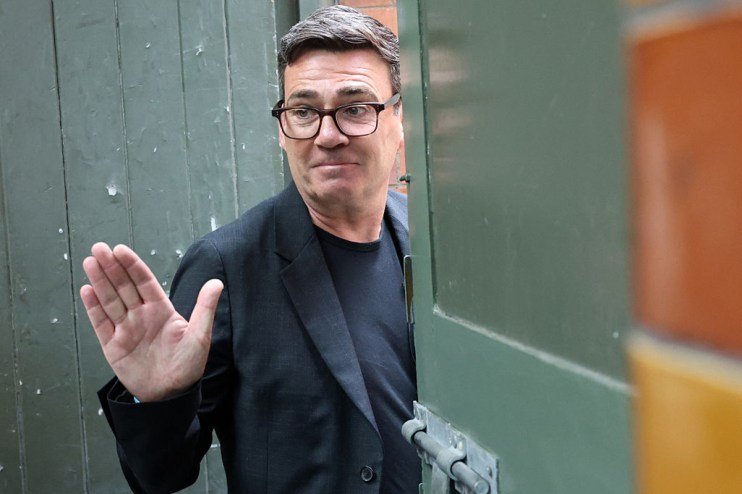
Andy Burnham is set to meet President Donald Trump face-to-face for the first time against the backdrop of the Iran war pushing inflation up to above four per cent within months.
On his trip to the United Nations General Assembly in New York, Burnham will meet Trump and several other world leaders.
Burnham’s meeting with Trump will come as the Prime Minister is expected to ask the US president to take new steps to defend Ukraine and bring conflicts in the Middle East to an end.
Traders are on high alert amid escalating tensions between Russia and Eastern European countries, as well as the continuation of conflicts spreading around the Middle East.
Burnham is also expected to be accompanied by the AI minister Kanishka Narayan amid a string of warnings by top tech bosses that the technology could present an existential threat to humanity.
Refineries in Moscow were attacked by long-range Ukrainian missiles over the weekend, with Trump claiming Russia had “lost control” of its diesel industry after the strikes.
The energy supply hit from Russia’s full-scale invasion of Ukraine in 2022 led to a surge in European gas prices, taking inflation in the UK to a peak of 11 per cent as governments scrambled to buy fuels from elsewhere.
Trump’s strikes on Iran in late February raised fresh fears that British households and businesses could suffer from a price surge due to the breakdown in trade flows across the Gulf region, which is critical for more than a fifth of global oil and gas supplies.
Burnham’s meeting ‘could remove uncertainty’
XTB research director Kathleen Brooks said the drone attack in Moscow would add to the range of geopolitical problems “stacking up” and pushing energy prices higher.
The US and Iran are meanwhile at an impasse to end conflicts across the Middle East. Iran’s president Masoud Pezeshkian is set to attend the UN summit as reports have suggested that Trump could meet him.
Former Prime Minister Sir Keir Starmer chose not to join Israel and the US in offensive strikes on Iran and affiliated militias, although he said diplomacy was the best route to lowering energy costs.
The continuation of the war led the Bank of England’s Monetary Policy Committee to revise up its inflation forecast to “above” four per cent. A peak in inflation could come early in 2027 unless hostilities in the Gulf region end and normal trade flows resume. Governor Andrew Bailey wrote to Healey to warn that there was “limited capacity” for “alternative export routes” to the Strait of Hormuz, where shipping has been restricted.
Minutes from the Bank’s meeting last week suggested that policymakers were ready to hike interest rates in order to squash inflationary pressures building in the UK economy.
The Iran war’s impact presents Burnham and Chancellor John Healey a headache just over five weeks from the Budget. Higher inflation and borrowing costs could limit the spending options available to the government and add to strains facing both households and businesses across the country.
Angeline Ong, senior technical analyst at investing platform IG, said the meeting would be an “early test” of whether Burnham can maintain the UK’s close relations with Trump despite potential disagreements over areas such as Labour’s North Sea oil policy and Ireland.
“For markets, the significance is that foreign policy and the domestic economy are becoming increasingly intertwined,” Ong said.
“With the Budget only weeks away, any sign of renewed friction on trade or tariffs could add to the pressure on sterling and gilts, while a more conciliatory tone could remove at least one source of uncertainty for UK assets.”