The Greenland question has been settled – now what?

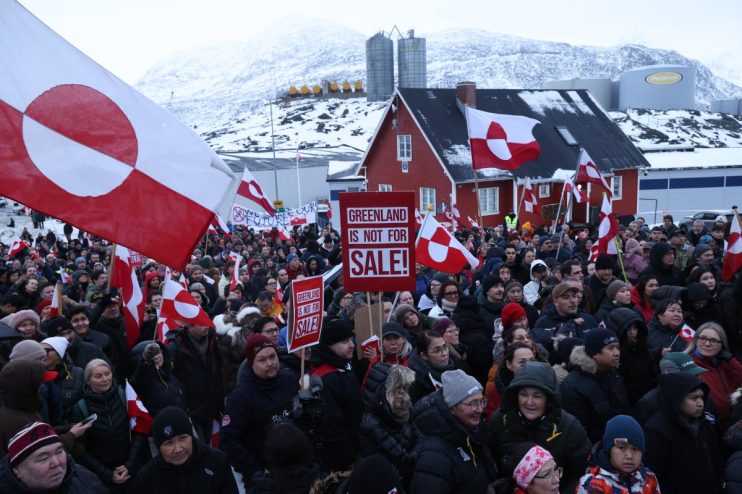
Now the Greenland deal has landed, it is worth taking stock of how we got here and what Burnham should aim for next, writes Michael Martins in today’s Notebook
How should Burnham approach Trump this week?
Most good deals in diplomacy leave everyone involved a little annoyed, but tentatively asking “what’s next?”. So, while the official text of the new Greenland-Denmark-US agreement has not yet been published, this sense of eagerness to do more is precisely the spirit PM Burnham should bring to his first face-to-face meeting with President Trump in New York later today.
Earlier this year, City AM was one of the few outlets in the world to correctly call that Trump would not invade Greenland. Now that the deal has landed, it is worth taking stock of how we got here and what Burnham should aim for next.
First, everyone needs to come away with a win. Trump badly needed a face-saving foreign policy success ahead of November’s midterms, amidst his continuing humiliation in the Strait of Hormuz and the pain American voters are feeling at the pump. The Danes, and NATO more generally, now have a bit of surety that the US will not actually annex Greenland.
Second, our European allies have learned to capitalise when Trump’s attention is elsewhere. The deal is proof that private negotiation with officials works far better than trying to negotiate with Trump on Truth Social, where he has every incentive to double down rather than compromise.
So, what should Burnham take away from this episode as he sits down with the President?
Expect Trump to raise a cocktail of grievances such as lacklustre UK support when the US first struck Iran, Washington’s cooling commitment to British sovereignty over the Falklands and London’s recent criticism of the Israeli government. Burnham’s best move is not to push back publicly (UK elections are years off when that would help his polling) but to steer the conversation toward common ground, chiefly reopening North Sea oil and gas extraction, which dovetails neatly with Trump’s push for more global energy production. In other words, dress up something Burnham planned to do anyway as a win for Trump.
And, of course, come prepared for Trump to ask for another state visit.
The right to our voices
A recent campaign called Save Our Voices Now has alleged that some technology platforms can use users’ voice without their consent. This has sparked outrage in the voice acting community, but for a government obsessed with hitting the Ban Button for every one of life’s minor trade-offs, there could be a pro-growth avenue here. I don’t usually support bans, but we should at least have a legal right to our own voices. Perhaps the lucky few with radio-friendly voices should be able to license their voices to big AI to collect royalties?
In defence of the ‘dim youth’
The Economist recently argued teenagers are getting dimmer, which many pointed to as justification for whichever bogeyman is to blame for sky-high youth unemployment. Sadly, having looked at the OECD’s PISA test questions, which form the base of The Economist’s claim, it’s clear that many of the questions are exactly the kind of tasks adults routinely outsource to AI. We cannot simultaneously mock teenagers for being technologically fluent on Tiktok, shame them for not learning anachronistic skills with pen and paper, and then complain that graduates arrive at work unprepared for it.
Uber drivers should be fined for cancelling rides
On a recent attempt to get from north to south London, three Uber drivers accepted and then cancelled my ride. By the time I got into one, I could’ve been halfway to my destination by Tube. Ask any Uber driver and they’ll tell you that City Hall’s war on the car has made their lives dramatically worse and poorer, but I do think that there must be a baseline level of commitment from drivers that accept a ride, if only to maintain confidence in the platform.
What I’ve been reading: Hemingway at D-Day
Reading Hemingway’s account of nearly landing on Omaha Beach, D-Day’s deadliest beach, made me rethink my understanding of the battle, which was admittedly overly coloured by the opening scene of Saving Private Ryan. His dispatch left me convinced that the dominant feeling that day, after sheer terror, must have been confusion.
Hemingway describes his landing craft attempting to land several times, only to be called back out to sea each time for being at the wrong landing slot. Reading it, I imagined the men on Hemingway’s boat sitting under Damocles’ sword while their driver tried to park an oversized, badly-steered van in a lot with no marked lines and booming artillery fire overhead. It left me feeling slightly claustrophobic and panicked. It should be required reading in history classes.
Michael Martins is a partner at Overton Advisory and a former staffer at the US embassy