Bayer Leverkusen and RB Leipzig face ownership shake-up after 50+1 ruling

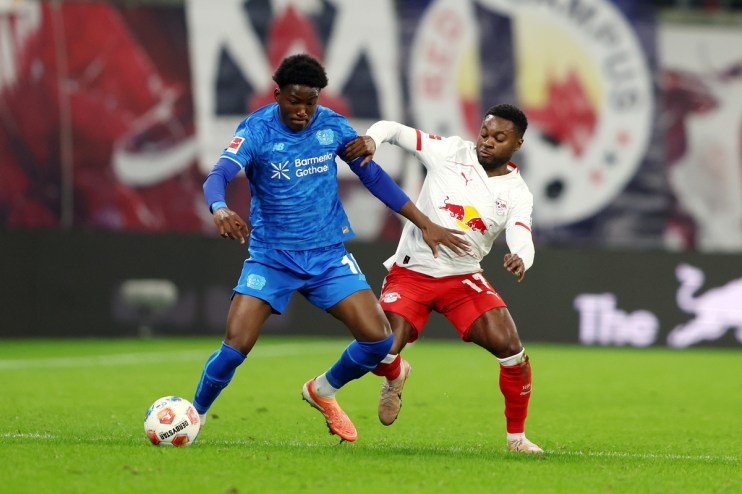
Bundesliga giants Bayer Leverkusen, RB Leipzig and Wolfsburg face ownership overhauls after Germany’s competition watchdog ruled they are non-compliant with the country’s 50+1 rule.
The rule mandates that all football clubs must be majority controlled by members but Leverkusen, Leipzig and Wolfsburg have historically benefited from loopholes.
In its final decision on a long-running challenge to the rule, the German Federal Cartel Office endorsed the 50+1 structure but insisted all clubs must be treated equally.
“The prerequisite is that it is applied consistently and without distinctions – unless there is an objective justification for such distinctions,” it said on Wednesday.
“Therefore, following the conclusion of its proceedings, the office sees reason to provide the German Football League (DFL) with guidance on how to apply the rule in the most legally sound manner possible.”
Leverkusen and Wolfsburg – the only two teams aside from Bayern Munich and Borussia Dortmund to win the Bundesliga since 2008 – have enjoyed relief from 50+1 since it was introduced in 1998 due to their history as works teams set up and funded by the pharmaceutical company Bayer and Volkswagen respectively.
Red Bull-owned Leipzig, meanwhile, have no such relief but have got around the rule by limiting the club’s membership to a handful of members, most of whom are associated with the energy drinks giant. Second-tier side Hannover also complies with 50+1 on paper but not in practice.
Why Germany has upheld 50+1 rule
The 50+1 rule has prevented German clubs from being acquired by major investors, many from the US, who have hoovered up teams across Europe, particularly in England, Italy and France.
While it is technically anti-competitive, the German Federal Cartel Office said that the end – ensuring clubs remained in the hands of supporters – justified the means.
“Taking into account the case law of the European Court of Justice (ECJ) on sports antitrust law, the office has definitively concluded that it has no fundamental objections to the 50+1 rule,” it added.
“While the rule does restrict economic competition for investment in professional football, the objective of club identity and member participation is suitable to justify an exception to antitrust prohibitions.”