Bailey demands crackdown on ‘downright criminal’ social media fraud

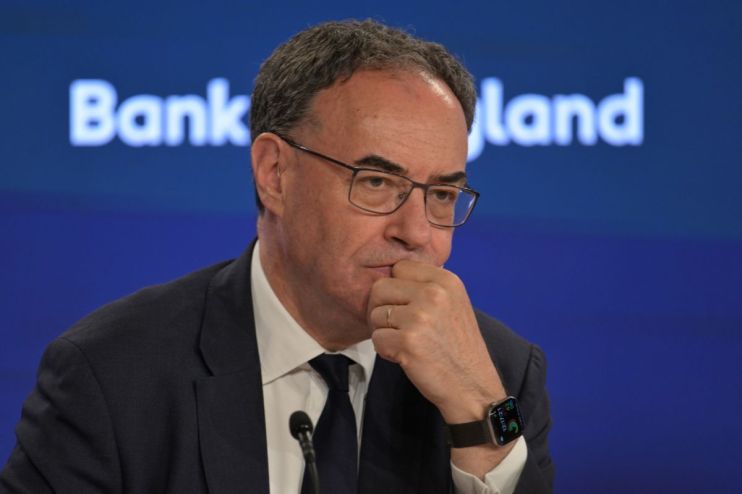
Bank of England governor Andrew Bailey has called on social media giants to take greater responsibility for online fraud, warning that the spread of scams and AI-generated content risks undermining trust in the financial system.
Speaking at the International Monetary Fund’s annual meetings in Bangkok on Wednesday, Bailey criticised tech platforms for facing little accountability over fraudulent material shared through their platforms.
“These platforms are open to everybody. There’s no real liability for the provision of the platform to what’s on it,” he said. “Guess what? Everything’s on it. You know, the good, the bad and the incredibly ugly, and downright criminal and terrible”.
His intervention comes months after Bailey himself became the target of AI-generated scam ads falsely depicting him fighting Reform UK leader Nigel Farage.
The deepfake images, which circulated on Elon Musk’s X in June, directed users towards fraudulent websites.
Bailey previously said the Bank had found it “very hard” to track down and remove the advertisements.
The governor contrasted social media platforms with traditional newspapers, which are legally responsible for the content they publish, arguing that tackling fraud could no longer fall solely to banks.
“We must get the social media companies involved because a lot of this fraud goes through those channels”, he said. “There is responsibility all round because this cannot be done by finance alone”.
AI fraud threatens financial trust
Bailey also warned that increasingly sophisticated cyber-attacks risked undermining public confidence in the technology underpinning the global financial system.
“If we don’t have trust in money, we don’t operate as a society”, he said.
He pointed to reports of self-replicating AI agents hijacking personal devices and a cyber-attack on French supermarkets that pushed refrigeration temperatures to 50C.
The governor urged financial institutions to deploy the same technology being exploited by criminals to strengthen their defences.
“This technology is arming the offence but it can also arm the defence, and it must do”, he said.
IMF managing director Kristalina Georgieva echoed his concerns, warning that rising cyber-fraud could drive consumers away from the formal financial system altogether.
“I worry, today, that unless we figure out how to get ahead of this curve, given the speed, the scale and the cost of fraud growing up, we may end up with lots of people with shoeboxes under their beds”, she said.
The warnings follow the IMF’s decision on Tuesday to raise its assessment of global financial stability risks to “elevated”, citing the threat of a major cyber-attack alongside higher borrowing costs and a potential AI-driven stock market correction.