UK economy to suffer second-highest inflation in G7

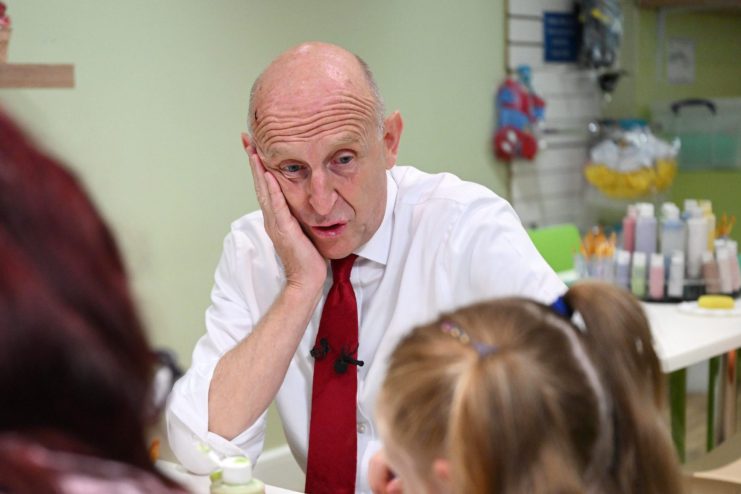
The UK economy will suffer the second highest inflation of any G7 country over the next two years, the International Monetary Fund has warned, putting Chancellor John Healey’s efforts to ease the cost of living at risk.
In its latest report published today, the global finance body has said that inflation will remain above the Bank of England’s target two per cent rate for the seventh year running.
The fund’s officials said inflation would average at 3.3 per cent in 2026 and 2.8 per cent in 2027, remaining above almost all the world’s dominant economies.
Only the US will suffer from a higher rate of inflation this year while Germany will top the list of G7 countries next year.
Inflation in the UK was higher than all G7 members in 2025, underpinning policymakers’ battles with maintaining price stability. Interest rates are also forecast to remain higher for longer.
In more encouraging news for Healey, economists at the financial authority predicted the UK would have a higher growth rate than several of its European peers.
The IMF said that UK GDP growth would be the joint-second highest this year at a rate of 1.3 per cent before slowing to 1.2 per cent growth in 2027. Growth in the UK will be higher in both years than any country barring the US. Germany’s GDP is also expected to expand by 1.3 per cent this year.
While the growth forecast for 2026 was revised up by 0.3 percentage points compared to the last report in July, the estimate for 2027 was downgraded from 1.3 per cent.
On a per capita basis, the UK will still trail the likes of Italy, Canada and the US this year.
Inflation challenge to governments
Top officials from central banks and governments, including the Bank of England’s Andrew Bailey and Healey, are gathering in Thailand for a series of IMF meetings.
The world economic outlook report said that AI and related infrastructure was driving demand across the world while conflicts in Europe and the Middle East had hit supply of critical goods such as oil and gas.
While the global economy has managed to survive the impacts of recent economic shocks, there were “limits” to resilience given an AI investment boom could lead to higher prices and governments had less wriggle room to respond to shocks given high debt levels.
The IMF based its forecasts on the assumption that trading across the Strait of Hormuz would resume in March 2027 while changes in technology would moderate next year.
The report warned that growth would slow next year due to the impact of high energy prices and interest rates, with monetary policy in the UK set to be tighter than in other major economies.
The world economy is expected to grow by 3.1 per cent this year and 3.4 per cent in 2027.
Economists urged Healey and his peers to use any windfall revenues from growth and lower energy prices to reduce borrowing. The report said extra government spending to support households or businesses “should be used sparingly” and not “complicate the task of monetary policy”.
Bailey last week warned that the government had to remain vigilant and not leave the central bank to deal with risks to inflation and market stability.