Savings from triple lock pension reform to take over a decade
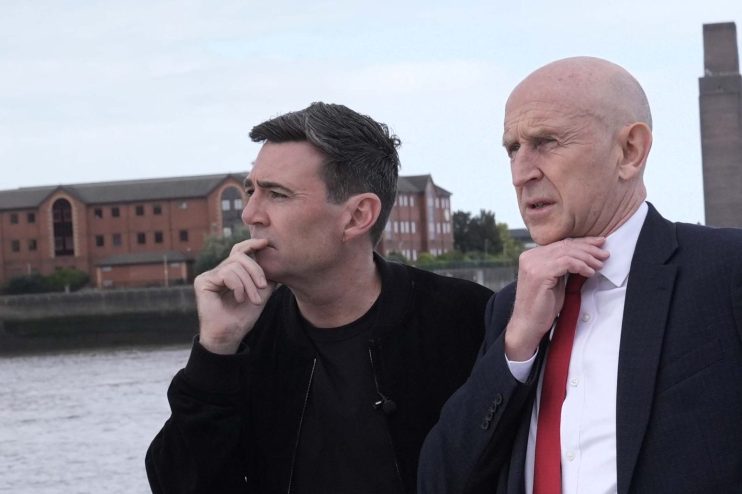
Planned reforms to the triple lock on pensions will need 14 years before delivering savings worth more than £10bn, new government analysis has shown, as the Prime Minister admitted there was a “shortfall” in plans to fund a new National Care Service.
At his flagship Labour conference speech on Tuesday, Andy Burnham announced that he would change the triple lock pension to link it to just inflation or 2.5 per cent, while ensuring it rose in line with workers’ earnings over the long term.
The current system ensures the state pension rises by whichever is highest out of inflation, wage growth or 2.5 per cent.
New analysis published by the Department for Work and Pensions has shown that, in cash terms, the government will save £15bn a year by 2040. When changes in cash values are accounted for due to inflation, the savings will only come to about £11bn.
Separately, Institute for Fiscal Studies director Helen Miller said it was “uncertain” whether savings could be delivered at all.
Lack of clarity on taxes amid triple lock pension ‘shortfall’
The bold new Labour pledge, which would only be implemented if Burnham remains in power after the next election, was announced as part of a “good deal” to fund a new publicly-funded social care service.
But in interviews on Wednesday, the Prime Minister admitted there was a “shortfall” in funding for social care, opening up the risk of further tax hikes being announced to boost health and care spending.
“The decision on the triple lock, the adjustment — and it is an adjustment, it’s not getting rid of the whole concept of the triple lock — this releases this much. The NHS truly will be able to make savings… from a better social care system,” he told Times Radio.
“And then if there’s a shortfall, well, we’d have to be honest about that shortfall and say where that money is coming [from].”
A universal social care service in England would cost an additional £18bn a year by 2035, according to a report by the Health Foundation in early 2024.
Burnham’s admission that reforms to the triple lock will not entirely fund a new social care service could re-ignite rumours that the Prime Minister will review other taxes.
Economists have warned that Burnham will have to consider raising personal taxes such as inheritance tax (IHT) and income tax to fill the £7bn gap.
Jonathan Cribb, deputy director of the Institute for Fiscal Studies, said: “Cancelling an unfunded increase does not free up funds to pay for a new government commitment.
“Therefore tax rises or other spending cuts will be needed to pay for social care.”
Andrew Wishart, senior UK economist at Berenberg, said that the “prime minister implicitly acknowledged that this can’t be achieved” while meeting the manifesto pledge “not to raise personal tax rates”.
Wishart added that if Burnham does look for potential hikes to raise additional revenue it likely he will “have to tax middle earners or raise VAT” rather than pile a greater tax burden on the affluent.
“High earners are paying a large share of tax…really if you want to have a larger government and a larger state, then to pay for that you basically have to start levying more tax on those in the middle of the income distribution as well as the top” Wishart said.
But wealth managers and advisers are fearful of further potential rises to inheritance tax to fund the system.
One fund manager noted that while the cut to the state pension is unlikely to affect wealthy clients who have considerable private pensions, they will be concerned of a lift in the IHT rate, as many are already preparing for more assets to be pulled into the tax’s scope from April 2027.