UK house prices fall at fastest rate since May as mortgage rates weigh on demand

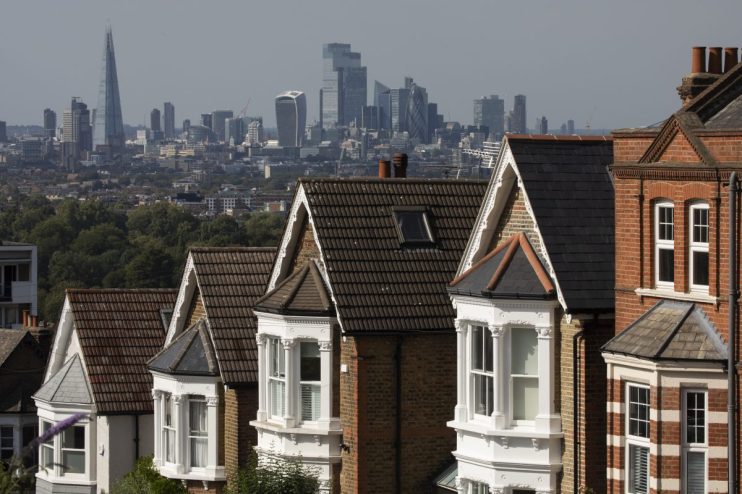
UK house prices fell at their fastest pace since May as expensive mortgages and uncertainty ahead of the Autumn Budget fuelled caution among buyers.
Prices fell 0.2 per cent during September, faster than economists had expected and reversing August’s 0.2 per cent increase, according to data from Nationwide. The average UK home was valued at £274,251 in September.
Prices were 0.8 per cent higher in September than a year earlier, half the 1.6 per cent year-on-year rise recorded in August, according to Nationwide.
The figures add to signs of a sluggish property market ahead of John Healey’s first Budget on 28 October, when further measures affecting the housing market are expected.
Separate HMRC figures published on Thursday showed home sales also fell in August, down one per cent on July and two per cent from a year earlier.
Robert Gardner, Nationwide’s chief economist, said: “Market activity and house prices have remained subdued in recent months, in part reflecting the uncertain economic backdrop”.
Higher energy prices have fuelled inflation concerns and expectations that interest rates could rise, putting further pressure on mortgage costs.
Gardner said higher borrowing costs had partly offset an improvement in affordability as wages continued to rise faster than house prices.
But he said there were “encouraging signs” that higher energy prices were not feeding through to underlying price pressures.
“Underlying affordability is improving, as house price growth has been well below earnings growth for some time”, Gardner said.
He added that activity could regain momentum if the energy shock fades, confidence returns and market interest rates fall.
The property industry is now looking to the Budget for further clarity. The government has already confirmed Healey will set out details of its new Your First Home scheme, which will offer government-backed equity loans to some first-time buyers purchasing new-build homes.
North pulls further ahead
The national slowdown masked a sharp divide across Britain, with northern regions continuing to outperform the South.
Northern Ireland remained the strongest-performing part of the UK in the third quarter, with prices up 5.9 per cent from a year earlier, although that slowed from 8.6 per cent in the previous quarter.
The North West led England with a 3.9 per cent rise, while prices increased 3.3 per cent in both Scotland and the North.
Southern England went in the opposite direction, with prices falling 0.1 per cent overall.
London was the only southern region to record an annual rise, although prices edged up just 0.4 per cent compared with 1.6 per cent in the previous quarter.
Eight of Nationwide’s 13 regions recorded annual rises of less than one per cent, while four posted outright falls.
There was also a growing gap between different types of homes. Terraced houses performed best, with prices up 1.8 per cent from a year earlier, while flats were virtually unchanged.
Since the start of 2020, the price of a typical flat has risen 14 per cent, less than half the 31 per cent increase recorded for semi-detached homes.
Nationwide said the gap partly reflected London’s weaker performance, where flats make up a much larger proportion of the housing market.