Andrew Bailey sends warning as officials say interest rate hikes ‘increasingly likely’

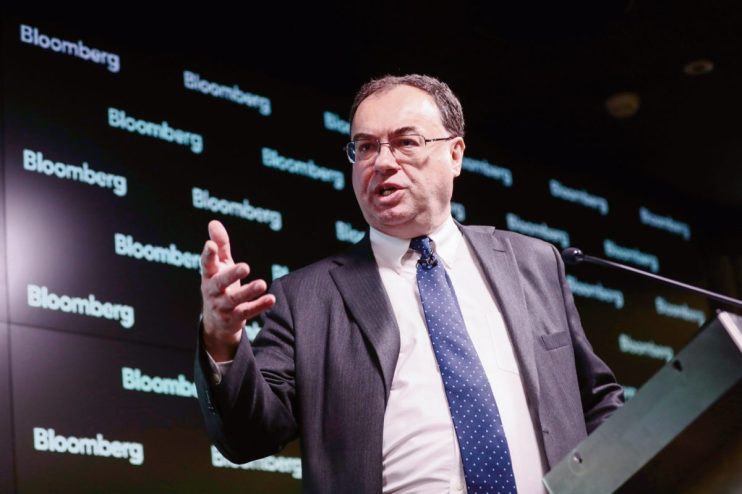
Bank of England governor Andrew Bailey has said that it will become “harder” to leave interest rates on hold if energy prices remain higher for longer.
At an event in Oxford on Friday, the Bank of England chief indicated that interest rates would have to be raised from 3.75 per cent if oil and gas prices stayed at high levels.
“There is no question we are seeing the direct effects of the energy shock, but we are currently seeing subdued pass-through, but it is very early days.
“The longer we go on with high energy prices, the harder it gets.
“We haven’t increased bank rates but it’s going to get harder to maintain that stance as energy prices remain higher.”
His comments come a day after another Bank of England policymaker suggested that an interest rate hike looked “increasingly likely” if energy prices remain higher for longer. Some officials have struck a cautious tone on whether UK inflation would spiral over the next year.
Speaking at a conference in Warsaw on Thursday, deputy governor Clare Lombardelli teased interest rate hikes as she said higher energy prices made it “increasingly likely” that monetary policy would need to be tightened.
The Bank of England was a lone wolf in deciding to keep interest rates on hold while the Federal Reserve and European Central Bank decided to raise rates.
Inflation edged up to 3.1 per cent in the year to August. The Bank’s Monetary Policy Committee believes price growth could top four per cent in the early months of 2027.
The MPC voted 6-3 in favour of leaving rates on hold. Lombardelli backed the consensus vote while Huw Pill, Megan Greene and Catherine Mann demanded a hike.
Lombardelli, who is seen as a hawkish member of the nine-member committtee yet decided to vote to keep interest rates at 3.75 per cent, said it was “too soon to tell” whether a spike in energy costs due to the Iran war had become embedded in the UK economy and wage settlements. Bailey is seen as a swing voter.
However, Lombardelli said there was a “greater” risk that it could push prices higher in the coming months.
“Policy is increasingly likely to need to tighten if elevated energy prices persist, absent clear evidence of disinflation or weaker activity,” she said.
“But this is by no means suggesting that monetary policy should respond mechanically to movements in energy prices.”
The deputy governor added that the energy price trajectory was heading towards an “adverse scenario” outlined by the central bank’s forecasters, although it was less clear whether firms would respond by raising prices. Lombardelli held that the rise in energy prices was “positively related” to those second-round effects, the term for where shocks can lead to wages and prices spiralling.
‘Increasingly appropriate’
Sarah Breeden, who is also on the MPC, spoke at a separate gathering in London on Thursday, where she said it was “increasingly appropriate” to respond to inflation risks in the UK economy.
The Bank deputy governor said the “balance of risks had shifted” and said the MPC could not wait for “conclusive evidence” to take action.
“As risks crystallise, it’s increasingly appropriate for Bank Rate to respond,” she said.
“Every single member of the policy committee I think will have a different point at which they will flip, three have kind of decided already they’ve seen enough evidence.”
Another Bank official prefers to wait on interest rate hike
Rate-setter Swati Dhingra said that the Bank would still have to wait to see further evidence on whether inflation could jump higher than expected.
Dhingra suggested that upcoming winter months would be key for showing whether the Bank would have to hike interest rates.
“I think the timing issue here is that we’re going to know over the winter energy prices what happens there, we’re going to know much more about pay settlements and where they end up at.”
She also said “financial tightening is already under way” while the current evidence on inflation showed “very, very specific increases in consumer prices”.
“We’re not seeing the kind of broad based spread that you saw very quickly, or fairly quickly, happen during the 2022 war.”
The OECD suggested on Wednesday that the Bank would not need to raise interest rates in order to keep higher inflation at bay.