Which is the smelliest Tube line?

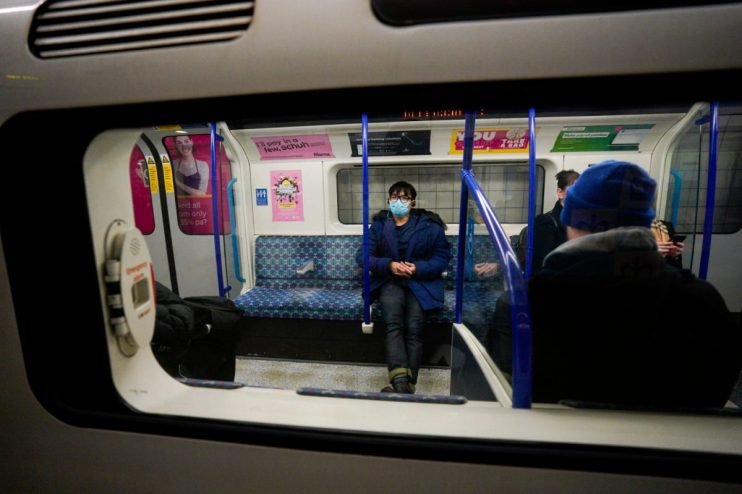
Nobody would say that the Tube is the most fresh or fragrant part of London’s transport network. But which line stinks more than the others? James Ford finally has the answer.
Good news, fellow Londoners. At long last I can answer one of the great unanswered questions of London life. Not “which is superior: north or south of the river?” Not “which is the better London anthem: Going Underground or London Calling?” Not even the great, intractable choice of most iconic London food: “pie and mash or fish and chips?” It is much, much more important than that:” which Tube line smells the worst?”
Every Londoner has their own opinion. But, where previously a lively debate could be had, I can now bring the cold, hard finality of science. Fussy, a leading natural deodorant brand (as seen on Dragon’s Den), has crunched the numbers and, crucially, sniffed the air: the Hammersmith and City Line is officially the smelliest Tube line. Apparently, according to Fussy’s olfactometer (a specialised scientific device used to measure and deliver precise concentrations of odours), the line’s smell can be described as “sour, rancid, fatty, stale”. By contrast, the most fragrant, pleasant smelling Tube line is the Metropolitan Line, with a “fresh and fruity” odour.
Of course, like all good science, answering this question invariably raises a lot of other, additional questions. How come the best and worst smelling Tube lines both have air conditioning? How much of the various smell of each line is about the trains and how much is about the passengers? Why is the least hygienic Tube line (the Piccadilly Line according to a report in 2024) only the eighth smelliest? And, perhaps most importantly, why do the Northern Line, Piccadilly Line and the Waterloo & City Line all officially smell of cabbage?
An olfactory history of the Tube
Of course, it didn’t have to be this way. Way, way back in April 2001 – before London Underground even became part of Transport for London – there was a trial to attempt to make the Tube smell better. The platforms at three stations (Euston, St James’s Park and Piccadilly Circus) were doused with perfume. The experiment was not a success and was quickly stopped. Passengers complained that the new odour made them feel ill. Others described the new fragrance as “medicinal” and “slightly naff suburban”.
Perhaps London Underground’s mistake was in its choice of scent. The signature fragrance used was called Madeleine – after a Metro station in Paris’s 8th Arrondissement no less – and had been developed specifically to make the Paris Metro smell better during its own olfactory experiments in 1998. It was described as having “a fresh, watery floral bouquet of rose and jasmine, combined with citrus top notes, tiny touches of fruit and herbs, giving way to woody accents and a hint of sweetness in the base”. Given the well-known aversion of the French to soap, this fragrance was probably too strong (and certainly too French).
We might speculate that the London Underground would have fared better if it developed its own indigenous scent for use in our fair metropolis. It too could be named after a Tube station: ‘Essence of Embankment’ or ‘Poplar Pong’ perhaps.
If we cannot invent a signature scent for London then we could always use an existing fragrance. Floris is a London brand and its No.89 aftershave was the choice of Ian Fleming. I think a mix of orange, bergamot, lavender and neroli sounds nice (and not at all “slightly naff suburban”) and, if it is good enough for the creator of James Bond, it should be good enough for the southbound platform of the Victoria Line at Green Park. Or maybe, to save a few quid, they could just spray platforms with Lynx Africa so that the Tube could smell like every horny teenage boy at a school disco. (It’s not ideal, but is a slight improvement on “sour, rancid, fatty, stale.”)
Midway through a record-breaking heatwave it is probably inevitable that we notice how the Tube smells even more than we usually do. Confined spaces and sweaty bodies are never a good combination. Maybe, as we enter autumn, we will stop smelling the Tube’s summer stink and we can get back to being irritated by the more familiar sights (graffiti, discarded copies of Metro, moquette seats) and sounds (bare beating, being told to ‘Mind the Gap’, squealing brakes) of the Tube. But, now we know which lines smell the worst and what they all smell of, chances are we can never unknow this. Can anybody else smell cabbage?