Huge £45m bill for Peckham Rye station upgrade branded ‘scandalous’

The huge £45m bill to give Peckham Rye station step-free access – which is backed by a top Cabinet minister – involves forcing builders to use handheld tools to carve bricks and demolishing an art centre in order to complete the works, City AM has found.
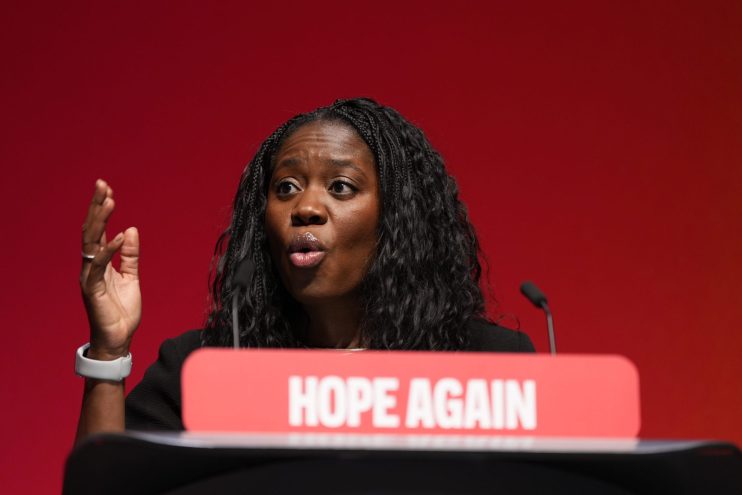
On Tuesday, energy secretary Miatta Fahnbulleh launched a petition to secure £45m in funding for her constituency’s main rail station. Fahnbulleh deleted a post on X announcing her campaign after backlash.
The development has been left on ice after the government pulled funding last year even as a planning application was granted by Southwark Council in late 2023.
But the huge £45m bill has led to an outcry among campaigners and policy researchers, who said the bill was a “sad example” of the country’s struggle to build infrastructure.
Masses of paperwork, handheld tools and green roofing
Network Rail’s application for new lifts at Peckham Rye involved the exchange of hundreds of documents over the course of nearly 18 months, starting in early 2022.
Documents reveal that the costs have been pushed up by the need to demolish a nearby art gallery in order to build lifts to a narrow platform.
The new three-storey building for the lifts will also have rooms for accommodating station staff and space for machinery. Cranes will surround the area in order to develop the station while construction managers believe a total of around 17,000 vehicle trips will have to take place to get the complex project done, publications reveal.
Planning records also show that builders will have to use “handheld tools” to carve through brick walls at Peckham Rye station, a Grade II-listed building that was completed in 1865.
The careful work will involve “manual” cuttings in order to ensure the original building is preserved. Planners have also set conditions for a “high quality finish” that requires patterned bricks, which also makes the development more expensive than if standard materials were used.
London’s green space regulations also require builders to include a “biodiversity roof” featuring hundreds of square feet of greenery and solar panels.
During the planning process, a simulation software by Bentley Systems was also used to model fire evacuations, leading to the requirement of new bridges and exit routes at the station.
Peckham case is ‘sad example’ for UK building
The massive £45m bill makes the new lifts more expensive than a new public park in Manchester, or Chelsea FC star Cole Palmer.
Lawrence Newport, who leads the campaign group Looking for Growth, said the multi-million pound bill was a “sad example of how the country is constantly held back by sky-high infrastructure costs”.
“We need to prioritise people, not planners – and get this done, and we should do it for much less than £45m,” Newport said.
The Centre for British Progress’ David Lawrence said it was “scandalous” that Britons had to overspend on projects that under-deliver.
“The only people who benefit from this system are rent-seeking sectors, like consultants and lawyers employed to ensure compliance with complex regulations, and a handful of procurement providers,” Lawrence said. “Meanwhile it’s ordinary people, like taxpayers and Miatta’s constituents, who lose out.”
A Network Rail spokesperson said: “As well as providing step-free access to and between all platforms, our Peckham Rye station upgrade would also deliver a new station entrance, significant improvements to passenger circulation to reduce congestion, enhanced facilities, new toilets, better integration with local public realm, and other wider station improvements.
“The proposals have been carefully developed to deliver these benefits while meeting the requirements of a busy operational railway and protecting the station’s Grade II listed heritage.”
Southwark Council and Fahnbulleh were approached for comment.
Last year, Transport for London indicated that the costs for adding step-free access to different Northern line stations would cost far more than £45m.
Making Stockwell tube station step-free could cost up to £253m, a freedom of information response showed. New access projects at Kennington, Tooting Broadway and Colliers Wood could also cost more than £100m.