100 candles in the wind: Celebrating Marilyn Monroe’s centenary

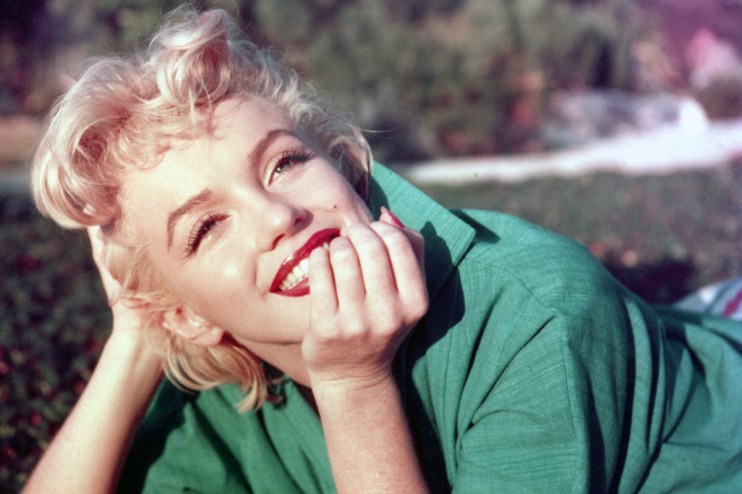
This week marked the 100th anniversary of Marilyn Monroe’s birth. It seems both absurd – she was younger than national treasure Sir David Attenborough – yet also somehow reasonable: she is now a figure from the past, barely even brushed by the outstretched fingertips of memory.
Marilyn’s status as an icon is assured, hard-wired into our collective consciousness. When Joyce Carol Oates wrote a very thinly veiled roman à clef based on her life, readers knew exactly where they stood: the novel is entitled simply Blonde, and while the name “Marilyn Monroe” is never used the inspiration is taken for granted.
Her lasting image is intensely physical: the platinum blonde hair, the hourglass figure, the overt yet superficially innocent sexuality of her movements – she was dubbed “the girl with the horizontal walk” after the lingering, lascivious, uninterrupted shot of her walking away from the camera in Niagara. (Much has been written inaccurately about her physique, some claiming she was what would now be “plus-size”; she was more like a modern size 6 when she sang “Happy Birthday Mr President” to John F. Kennedy in 1962.)
This indelible, eternal status came through major roles in only 11 films over eight years, from Niagara in 1953 to The Misfits (1961); Something’s Got To Give remained unfinished at her death. If there is a single image which defines her, it comes in The Seven Year Itch, when the skirt of her white dress blows up as she walks over a subway grate.
Marilyn Monroe was a figure of her times
It was a mark of her era – she was a figure of the 1950s, not the 1960s – that Marilyn’s appearance is her primary legacy. She had no illusions, and played up to the stereotype, posing like a pin-up in publicity shots and exaggerating her breathy, innocent voice. There is also ghoulish fascination with her famously troubled private life: a hardscrabble childhood, turbulent marriages and drug dependency which would end her life when she was only 36.
Yet Marilyn was so much more – and so much more interesting – than that. However the critics sought to judge her, she was a superb actress with immaculate comic timing. She had studied method acting at the Actors Studio under Lee and Paula Strasberg and produced a nuanced blend of comedy and tragedy as Chérie in Bus Stop (1956). As Bosley Crowther of The New York Times put it: “Get set for a rattling surprise. Marilyn Monroe has finally proved herself an actress.”
The Prince and the Showgirl was made in disastrous circumstances. Sir Laurence Olivier, directing and producing as well as playing the lead, hated Marilyn. Her drug use was escalating, making her unreliable, and some believe she suffered a miscarriage during production. Somehow, though, she wasn’t overshadowed by the already-legendary Olivier, turning in a fine performance.
Her best work must surely be as singer Sugar Kane in Some Like It Hot in 1958. Ceding not an inch to male co-stars Jack Lemmon or Tony Curtis, she gave a pitch-perfect comic performance that hit every beat. She was at loggerheads with director, producer and screenwriter Billy Wilder, but even he later conceded: “Anyone can remember lines, but it takes a real artist to come on the set and not know her lines and yet give the performance she did!”
Was Marilyn Monroe an actress… or something else?
There was a ferocious honesty and vulnerability to Marilyn’s acting which made it exceptional. Writing years later, Truman Capote quoted her acting teacher Constance Collier: “I don’t think she’s an actress at all, not in any traditional sense. What she has – this presence, this luminosity, this flickering intelligence – could never surface on the stage. It’s so fragile and subtle, it can only be caught by the camera. It’s like a hummingbird in flight: only a camera can freeze the poetry of it.”
The persona of the “dumb blonde” was hugely wide of the mark too. Her formal education was patchy – she had left high school to marry – but she had a voraciously curious mind. A determined autodidact, she read Flaubert, Yeats, Joyce, Freud, Lawrence, Mann, Hemingway, Faulkner, Whitman and Steinbeck, and quoted Milton and Goethe in interviews and correspondence.
When she married playwright Arthur Miller in 1956, Variety could not resist the headline “Egghead Weds Hourglass”, but that ignored the earnest commitment with which she had studied Hebrew texts to convert to Judaism. She also learned some Yiddish, and once said of Miller – this feels true – that “he wouldn’t have married me if I had been nothing but a dumb blonde”.
The legacy
Marilyn Monroe could be fragile; she was wary and she knew life was hard. She once wrote to her psychiatrist, “I know I will never be happy but I know I can be gay!”, which, in some ways, is an impossibly sad thing to say. Despite the thousand conspiracy theories, she likely took her own life on 4 August 1962 with an overdose of barbiturates. But to remember her for the sadness, the tragedy, the lurid private life is, I think, to do her a disservice.
We should remember Marilyn not for how she died but for how she lived, and how she lived at her best. Despite what Tolstoy wrote, her unhappiness could have happened – did happen, does happen – to millions of people. What was unique was her spirit: insecure, uncertain but ravenous for knowledge, able to project a delicate tremor of emotion that was utterly unforced, naturally funny and authentically vulnerable. That is something the world sees rarely, and that should be her legacy.
• Eliot Wilson is a writer and historian; Senior Fellow for National Security, Coalition for Global Prosperity; Contributing Editor, Defence on the Brink