IMF slaps UK with biggest growth downgrade of any G7 country

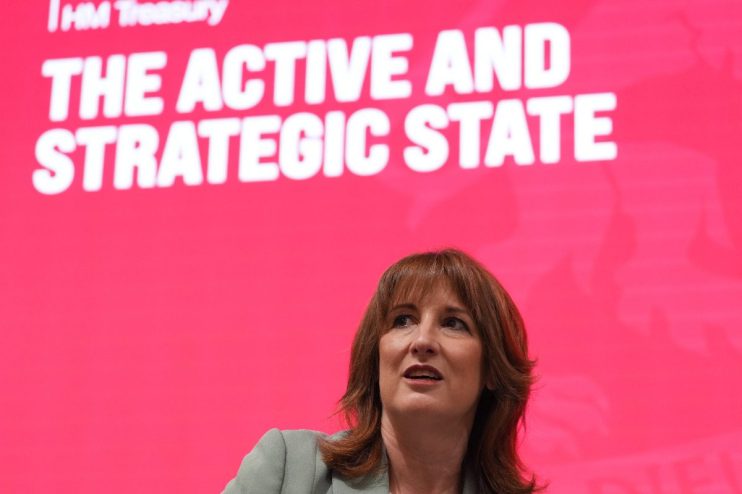
The UK economy has suffered the biggest growth forecast downgrade of any country in the G7 in the International Monetary Fund’s spring economic outlook report, dealing a blow to Chancellor Rachel Reeves as she struggles to overcome setbacks sparked by the Iran war.
Growth this year was revised down by 0.5 percentage points as trade disruption due to the Iran war has left the UK economy exposed.
All other G7 countries, plus the likes of Russia, Spain, South Africa and Nigeria, were predicted to suffer less damaging hits to growth over 2026.
Inflation in the UK will also be the joint-highest in the G7 this year along with the US.
The IMF had previously predicted the UK economy to grow 1.3 per cent in 2026, a slower pace than last year, but it now pencilled in a rise in GDP of just 0.8 per cent.
On a per head basis, the UK was bottom in the ranking of G7 nations.
IMF researchers suggested the lower growth rate in the UK was as a direct result of the President Trump and Prime Minister Netanyahu’s war with Iran, and a slower pace of interest rate cuts.
GDP growth for the UK economy was also estimated to be 1.3 per cent next year, a 0.2 percentage point downgrade on a previous forecast from earlier this year.
The downgrades will intensify scrutiny on Reeves’ fiscal plans as she battles against calls to boost defence spending, protect the welfare budget and avoid rattling bond markets with looser borrowing rules.
The Euro area trailed other countries and regions by growth rates. Germany was predicted to grow 0.8 per cent while Italy was forecast to grow 0.5 per cent.
The forecasts depend on the assumption that the war turns out to be short-lived. In a dragged-out conflict in the Middle East, gas prices could triple and oil prices double from where they were before the war.
Reeves responds to forecasts
As she landed in Washington on Tuesday, Reeves demanded that other countries “follow my plan” to reduce costs for households and businesses.
She urged international partners to “supercharge” energy security by doubling down on renewable energy projects and to take “co-ordinated economic action” on mitigating risks to global markets.
But the UK was also predicted to suffer from among the highest inflation rates across advanced economies.
UK inflation is expected to be 3.2 per cent. The US economy was also expected to suffer from inflation of 3.2 per cent while other G7 countries were set to have lower price growth levels this year.
IMF economists suggested that inflation could top four per cent this year before falling back to two per cent at the end of 2027.
Responding to the forecast downgrades, Reeves said: “The war in Iran is not our war, but it will come at a cost to the UK. These are not costs I wanted, but they are costs we will have to respond to.
“I have vowed that my economic approach to this crisis will be both responsive to a changing world and responsible in the national interest, keeping inflation and interest rates in check to protect households and businesses.
“We entered this conflict in a stronger position because of the choices this government took to build economic stability, but there is more to do. That is why we are strengthening Britain’s energy security, backing British industry and protecting households, to build a Britain that is stronger, more resilient, and prepared for the future.”
‘No one to blame but herself’
Shadow chancellor Sir Mel Stride said Reeves had “no one to blame but herself” for the downgrade.
“The Chancellor hiked national insurance in her first budget, doubling inflation and sending unemployment soaring,” Stride said.
“She is driving the hospitality industry out of business with business rates increases, and planning the first hike in fuel duty in 15 years. Her ‘plan’ to keep costs down has left us with the highest inflation in the G7, with businesses closing and the cost of living skyrocketing.
“The Conservatives urge international partners to see Rachel Reeves as a cautionary tale of what happens when a politician has no clue what they’re doing and chooses to hammer business relentlessly.”
The findings will add to pressure on the Labour government’s approach to dealing with the latest economic shock, with the Paris-based OECD drawing up a similar set of forecasts by suggesting the UK economy would have the second lowest rate of growth in the G7 and second highest level of inflation.
Governments were urged to rebuild fiscal buffers, which in the UK could come in the form of further tax hikes or unexpected spending cuts.
The energy transition to renewables was also described as a “medium-term” policy, even as the government has made the “sprint” to net zero essential to their response to the energy price shock caused by the war.