Ministers must ‘trade more’ in face of Iran war

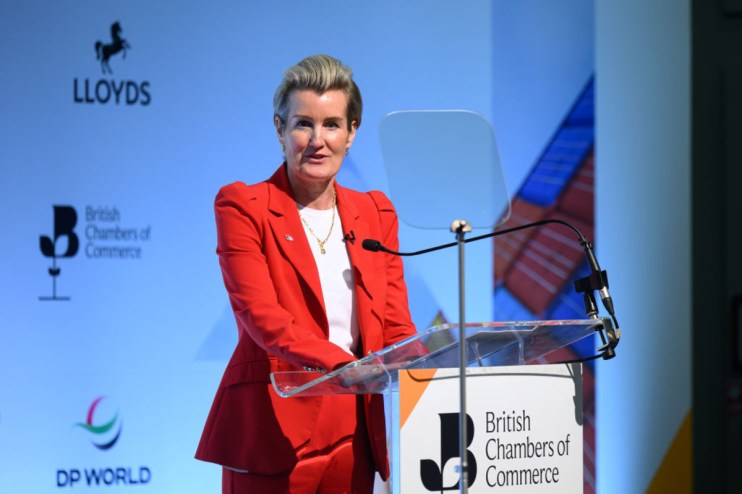
The government must keep the option of an energy bailout for businesses on the table if oil prices continue to spike, the British Chambers of Commerce boss will say in a speech urging ministers to “trade more, not less” in the face of the Iran war.
Shevaun Haviland will warn of the “profound” impact that the Middle East conflict will have on British firms, with trade routes “severely disrupted” and business owners facing a fresh round of escalating costs.
“My message to government in these turbulent times is simple,” the industry chief is expected to say. “Continue to keep calm heads. Keep talking to business and be prepared to act.”
The Iran war’s effect on energy prices has sparked a fresh wave of unrest among industry chiefs and businesses, with the government’s ambitious approach to net zero coming under increasing scrutiny. Unlike households, firms do not benefit from the government’s energy price cap, which sets customer bills every three months to avoid sudden price rises in an energy shock.
The multi-billion-pound cost of footing the construction of the Sizewell C nuclear plant is also due to hit businesses’ bills imminently, leading a wave of industry bodies to call for all policy costs to be stripped off firms’ bills until the crisis has subsided.
The British Chambers of Commerce’s Haviland is expected to join the calls made by her peers, saying that “ministers need to keep every option on the table” if a settlement between Iran and the US is not reached to re-open the vital shipping route out of the Persian Gulf.
UK firms are subject to some of the highest energy bills in the developed world, with much of the cash channeled towards subsidies and policy commitments rather than the cost of the energy generation itself.
Trade barriers ‘damaging’ amid Iran war
The industry chief will also use her address to warn against the rise of protectionism, after Donald Trump’s ‘Liberation Day’ in 2025 set off a wave of retaliatory tariffs that have made trade more costly for firms across the globe even before the Iran war.
The European Union and the UK have both sought to innoculate their strategically important industries from foreign trade, with the European Commission recently proposing a ‘Buy EU’ policy bolster their low-carbon industries.
And as part of its own eagerly awaited steel strategy published last week, the UK government confirmed plans reduce quota levels for steel imports, beyond which all further trade will be subject to a 50 per cent tariff.
Haviland is expected to praise the “real strides” British ministers have made securing trade deals with the likes of India, the EU and the US in the past year. But she will also launch a stinging rebuke of higher trade barriers being put up simultaneously, branding them “hugely damaging” and “bad for businesses” and consumers.
She will add: “In a more uncertain world the answer is not to retreat. It is to reach out, build more connections, open more doors and trade more, not less.”