Hands off our spuds: How Americans ‘discovered’ jacket potatoes

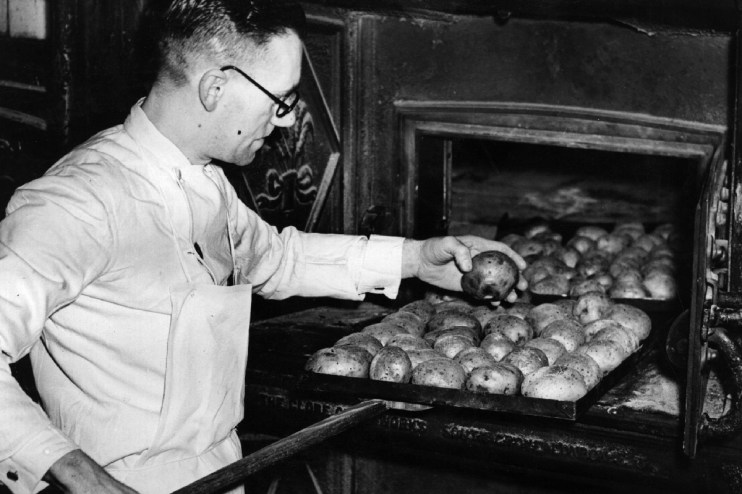
The New York Times has found about the jacket potato, a British staple the world isn’t ready for, says Steve Dinneen
Sometimes in this tightly interconnected world of ours, it takes a New York Times headline to remind us that stark cultural differences still exist. “The British Have Finally Learned to Love Peanut Butter”, the paper of record declared in 2024, writing that “the land of Marmite and jam is finally embracing America’s favorite [sic] spread”. A story back in 2018, titled “Beyond Porridge and Boiled Mutton”, marked Britain’s progress into culinary modernity, listing a handful of restaurants that were indeed offering dishes that were neither porridge nor boiled mutton.
Few New York Times headlines have hit quite as hard, however, as their latest bemused examination of British dietary habits: “What Are Jacket Potatoes? And Why Are the British Waiting Hours For Them?” The story describes – for Americans unaware you’re allowed to pop a potato into an oven – a “lumpen, old-fashioned and outwardly unexciting dish”.
It pricked the ears of the New York Times thanks to queues of between “two and six hours” at Preston food van Spud Bros, which has since launched in Soho. The viral sensation that is the baked potato is, of course, nothing new. In 2024 City AM The Magazine wrote about the viral success of Spudman, a Tamworth-based jacket potato seller with more than four million followers on Tiktok. Fronted by Ben Newman, a larger than life character who sports a pink mo-hawk, Spudman’s most popular post – preparing a cheesy baked potato for the last customer of the day – has been watched more than 115m times.
This, admittedly, is pretty wild. As a kid who grew up in 1980s Manchester, jacket potatoes were a staple, as much a part of life as Sunday roasts or shepherd’s pie. At the school canteen, a jacket potato was the safe bet: it’s almost impossible to mess up a potato topped with beans and grated cheese (the same cannot be said of burgers or macaroni or unidentified brown stew). And given the perfect story of rising prices and dwindling disposable incomes, it’s really no wonder we’re flocking back to the humble, nostalgic spud.
Can Americans really have missed out on this most basic of foods? “We have something called a baked potato but it’s pretty one-dimensional, usually topped with butter or sour cream,” says California-born, Michelin starred chef Victor Garvey. “ There’s no real tradition of ‘choose your toppings from a bunch of options.’”
Jacket potatoes: ‘Like discovering El Dorado’
I can only imagine how it must have felt to see a proper British jacket potato for the first time, like an explorer cresting a hill to discover the lost city of El Dorado. “I gotta be honest,” says Garvey, “the first time I saw a jacket potato it was with tuna and sweetcorn and I almost threw up in my mouth. As a rule, canned tuna should never go on something hot. But then I saw one with beans and cheese and it made a bit more sense.”
British chef Paul Ainsworth is, predictably, a little more effusive. “Baked potatoes are one of my favourite things to eat. I rub them with extra virgin olive oil, season liberally with Cornish sea salt, wrap them, then cook on my Kamado Joe barbecues till the skin is dark and the potato is waxy and full of flavour. My whole family love them smothered in Rodda’s salted Cornish butter, piled with leftover bolognese or chilli, and topped with Cheddar cheese. The ultimate comfort food.”
Sound advice: just don’t tell any Americans: they’re not ready for it.