UK recession is ‘real possibility’ as Reeves meets City analysts

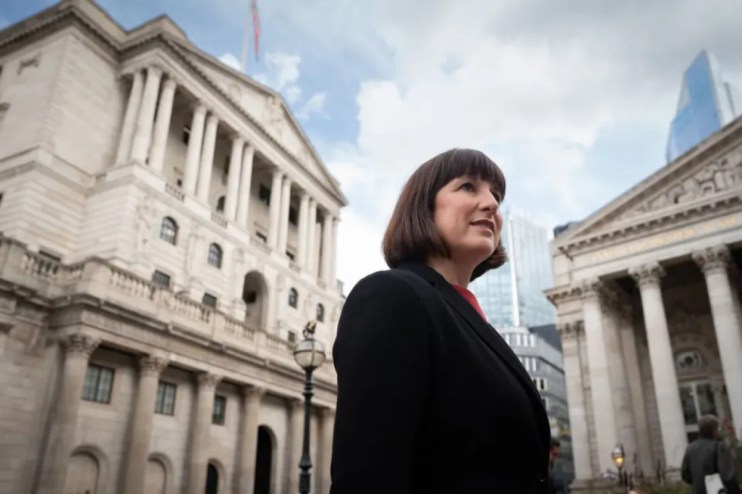
The UK economy faces a “real possibility” of falling into a recession, a City economist has warned, as Chancellor Rachel Reeves and pensions minister Torsten Bell met with gilt analysts to discuss the shock from the war in the Middle East.
The Chancellor invited top economists from firms key to the gilt markets to the Treasury on Monday, with markets bracing for the rollout of a wider energy support package for British households.
A government statement said Reeves and Bell were in “listening mode” in the showdown meeting at the Treasury with analysts from Santander, Barclays, HSBC, JP Morgan, RBC Europe and several other financial giants.
Reeves told investors that she maintained an “unwavering commitment to the fiscal rules”.
She is now tasked with providing MPs with some further guidance on the government’s plans to support households across the country.
While a statement in the House of Commons in the afternoon is unlikely to give a full update on the government’s proposals, it is expected to lay the groundwork for the government’s willingness to spend billions of pounds on subsidising energy bills.
Gilt yields, which affect government borrowing costs, edged higher on Tuesday morning to as high as 4.9 per cent after having nosedived on Monday after President Trump’s announced his decision to pause strikes in Iran.
Israel’s Benjamin Netanyahu has vowed to fight on and continue attacks in Lebanon against the militant group Hezbollah, as well as against Iran.
Recession is ‘real possibility’
Leading economists are now raising the alarm bell on the risks posed for the UK economy given the war is set to drag on and damage to key energy infrastructure has left energy supplies under threat.
Panmure Liberum’s Simon French warned that a recession was a “real possibility” as the country was more exposed to headwinds than it was in 2022 after Russia’s full-scale invasion of Ukraine.
French said that the UK economy’s resilience had relied on high net migration, loose fiscal and monetary policy and “unique circumstances” after the pandemic that allowed demand to rebound.
“This set-up is no longer the backdrop as the spectre of a new energy price shock looms large,” French said.
“The UK household sector is insulated, for now until July, from the most direct impacts on domestic energy bills – but this is a ticking clock for as long as spot energy prices remain elevated.”
By his assumptions, the UK economy is set to grow by just 0.6 per cent in 2026, a downgrade from a previous forecast of 1.5 per cent.
Reeves hints at new energy measures
French follows economists at KPMG and Oxford Economics in halving growth estimates for the year, which could leave public finances in a more vulnerable position.
At the Spring Statement, the Office for Budget Responsibility upgraded Reeves’ headroom up to £23.6bn after it collected market data in January that suggested borrowing costs would be lower than previously thought.
Those market movements have been cancelled out since the war began earlier this month while the Bank of England warned inflation would not fall in the coming months.
Reeves said there was “scope” for a wider energy support package because fiscal rules depended on three-year forecast windows rather than immediate fixes.
But ministers have veered away from suggestions that the government was preparing to unveil a £40bn package, as the previous Conservative government drew up after the gas prices spiked in 2022.
Sir Keir Starmer said on Monday that he was “acutely aware” of the state of public finances in a hint that the government would seek to create a more “targeted” scheme.