Uber slams £340m London cabbie case as ‘completely unfounded’

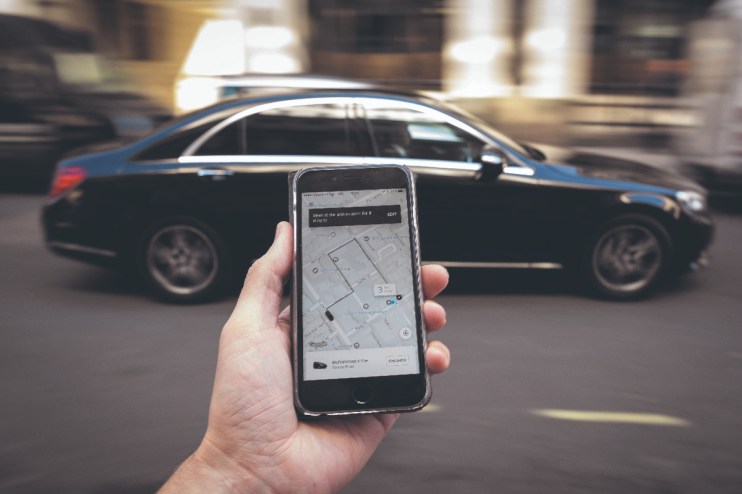
Uber slammed a court case brought against it by thousands of black cab drivers as “completely unfounded” on Monday as the £340m lawsuit headed to trial.
The preliminary hearing, which took place at the High Court, marks the first major test in one of the UK’s biggest competition and damages claims, brought by the 13,000 strong group of black cab drivers alongside claims linked to two former private hire operators, Kabbee and Iride.
Together they are seeking roughly £340m, alleging Uber obtained and operated under its Transport for London (TfL) licence unlawfully between 2012 and March 2018, costing licensed taxi drivers millions in lost earnings.
An Uber spokesperson told City AM: “These old claims are completely unfounded. Uber operates lawfully in London, is fully licensed by TfL, and is proud to serve millions of passengers and drivers across the capital.”
Rather than examining the substance of those allegations, this week’s hearing will determine whether the claims are out of time altogether.
Uber argues the proceedings, issued in 2024, fall well outside the six-year limitation period and should be dismissed before the court ever considers the underlying allegations.
In skeleton arguments filed ahead of the hearing, Uber said the claimants are “plainly unable to discharge the burden of proof” required under section 32 of the Limitation Act 1980 and that “all the claims in this action are time barred and therefore must be dismissed”.
The company says the black cab drivers had ample opportunity years earlier to investigate and bring proceedings.
Its legal team argued that by December 2017, drivers had already been put “on notice of a need to investigate” after TfL published a detailed decision refusing to renew Uber London’s licence, setting out allegations that closely mirror those now relied upon in the claim.
According to Uber, the claimants have since abandoned their original argument that they only discovered the alleged wrongdoing after Uber’s 2018 licensing appeal.
Instead, the company says they have introduced “a new case” on the eve of trial which is “fatally undermined” by contemporaneous documents showing their own solicitors, Mishcon de Reya, were already investigating a potential class action months before the June 2018 licensing hearing.
Uber’s lawyers point to internal communications showing litigation funder Harbour approached Mishcon in late 2017, black cab drivers were contacted in early 2018, and financial information was being collected from thousands of drivers before the licensing appeal had even taken place.
A battle over time
The principal claim centres on allegations that Uber’s original operating model breached London’s private hire licensing regime and that the company misrepresented aspects of its technology and booking system to regulators.
For the purposes of this preliminary trial, however, the court has been directed to assume those allegations are true and instead focus solely on whether the claimants could, exercising reasonable diligence, have brought their case sooner.
Uber argues extensive public material existed years before proceedings were issued, including regulatory investigations, High Court litigation, employment tribunal evidence, parliamentary scrutiny and repeated campaigns by black cab trade bodies challenging the legality of its operating model.
The defendants say black cab representatives had long maintained Uber had been operating unlawfully.
According to the skeleton argument, the Licensed Taxi Drivers’ Association’s position had always been that Uber’s entire operational method in London does not comply with the legislation”.
If Uber succeeds on the limitation issue, the entire £340m claim will be dismissed without the court considering whether the underlying allegations have merit.
But if the drivers overcome that hurdle, the litigation will proceed to examine whether Uber’s conduct between 2012 and 2018 was unlawful and whether London’s cabbies are entitled to damages running into hundreds of millions of pounds.