Two party politics is over in Britain

Meaningful support is now spread across multiple different parties, but Westminster still acts like there’s a government and an opposition, says Louise Thompson
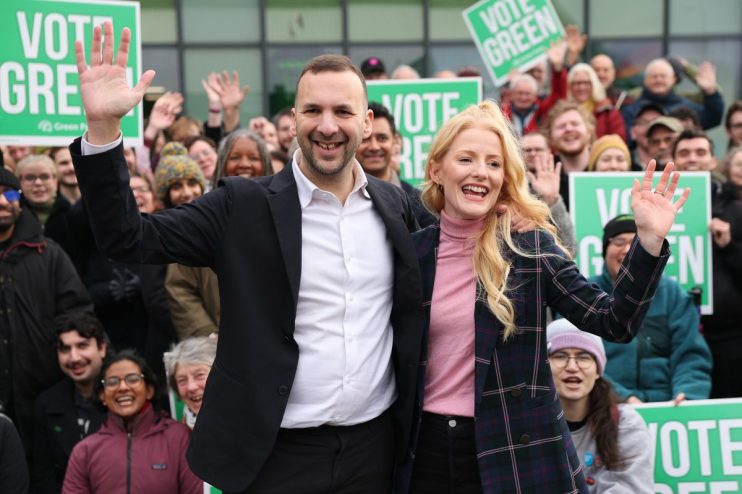
The Green Party’s victory in the Gorton and Denton by-election is a watershed moment. Hannah Spencer secured the party’s first-ever parliamentary by-election win in what had been Labour’s sixth most secure seat. Only a year ago, Labour held the constituency with more than half the vote and a majority of more than 13,000. This time, Spencer won 14,980 votes and a majority of 4,402, pushing Labour into third place behind Reform UK.
This wasn’t a marginal seat slipping away, it was one of Labour’s safest strongholds. This result is a clear indicator that voters are stepping outside the Labour–Conservative dominance and the assumption that power simply alternates between these parties is starting to resemble an old wives’ tale.
Smaller parties are no longer confined to protest or symbolism. They have become credible destinations for voters who feel unrepresented. The Green win shows that this change is tangible – it is unfolding in seats that once appeared untouchable.
Yet voter behaviour has evolved faster than the institutions that convert votes into influence.
Westminster continues to operate on the logic of government versus official opposition. Prime Minister’s Questions is structured around that contest, with Opposition Days also dominated by the largest parties. With speaking time, visibility and procedural leverage also distributed according to rules built for a two-party system, it’s clear that Parliament still assumes one party governs while another waits in the wings.
That structure suited an era of stable majority governments but it’s less compatible with a House of Commons where meaningful support is spread across several parties. The result is a widening gap between electoral momentum and parliamentary power. A party may win votes, seats and headlines, yet struggle to shape debate or influence legislation.
The Greens face this reality, and, on the opposite end of the political spectrum, so do Reform UK. Reform has cultivated a loyal voter base and commands attention in national headlines, yet it too lacks consistent airtime and guaranteed influence in Parliament.
For the Greens, that tension will be felt more now. While this by-election result has strengthened their mandate and underlined their emergence as a genuine challenger to Labour on the left, parliamentary procedure doesn’t automatically adjust to reflect that momentum.
Institutional lag
Smaller parties remain reliant on the discretion of the Speaker for high-profile exposure and formal recognition and institutional resources are weighted toward a single Official Opposition. Even where committees operate proportionally, the broader narrative architecture of Parliament continues to over privilege the largest blocs.
This institutional lag has consequences. When representation in the electorate diversifies but representation in parliamentary procedure remains narrow, a gap opens between public behaviour and political authority.
Over time, that gap will fuel frustration. If parties can secure substantial support yet remain structurally constrained in how they participate in scrutiny and agenda-setting, the perception grows that the system is slow to respond to democratic change. That isn’t simply a partisan complaint, it’s a constitutional tension.
The significance of the Gorton and Denton result therefore extends beyond the Greens themselves. It sharpens a broader question about whether Britain’s political infrastructure is equipped for the era it’s entering. If fragmentation accelerates through the local elections in May and towards the next general election, pressure will increase to reconsider how parliamentary time is allocated and how smaller parties are integrated into the Commons’ most visible forums.
With voters more comfortable with a more fragmented political landscape, the challenge now lies with Westminster. Parliament will eventually need to adapt its procedures to reflect this multi-party reality.
Otherwise, Westminster will remain anchored to a political model that voters have already abandoned.
Louise Thompson is a senior lecturer in politics at University of Manchester