The huge costs facing Andy Burnham – and the financial tightrope he must walk

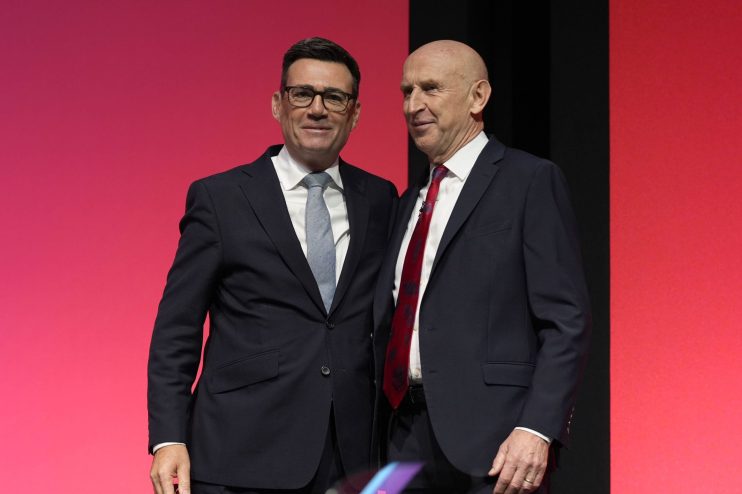
Andy Burnham said he didn’t set out to deliver a “tub-thumping conference speech” but it was packed with huge pledges to take control over utilities and expand the state. Maurício Alencar considers just how costly his promises are in the long term – and in the next month.
Andy Burnham had all the goodies for Labour Party activists on Tuesday.
Greater public control of utilities, possible renationalisation of water companies, a new free-at-the-point-of-use care service, a globalist approach to AI, councils gaining powers to seize “unused” homes, cheap loans for first-time house buyers, closer ties to the EU, and “parity” between technical and academic education. The hall lapped it up.
Sir Keir Starmer’s successor has taken the party back to its roots and re-established its values. A radical long-term vision for the country has been laid out, and Burnham is unapologetic about what his ideas stand for.
“You may disagree with some or all of what I have said today. But I have given you what you often say is missing from politics: ideas and a clear direction for the country we all love.”
The Prime Minister was speaking to both Labour activists and voters watching from home. But lurking in the background are those with more than just a “vested interest” in the country’s policies: investors, bankers, pension fund managers, chief executives, business owners and, yes, bond traders. These parties were barely addressed as the Prime Minister looked to avoid discussion of the economic impact of the Iran war, higher military spending, turmoil across global bond markets and AI stocks.
For one, few of Burnham’s new ideas would be implemented before a General Election. Before the party’s conference began on Sunday, Burnham was determined to “knock dead” rumours that he was preparing to call a snap vote within the next two years. These radical reforms may not come until after 2029, if you take him at his word.
City veterans will be sceptical of his promise to stay where he is until at least 2029. He would not be the first Prime Minister to go back on a promise not to call an election. In several public statements, he has at least sent signals that an election could come sooner than 2029.
Even assuming Burnham clings on to Number 10’s keys for another full term, it is still unclear just how he plans to govern the country for the next three years. It now falls on the markets to judge how both short-term and long-term economic costs stack up to box Burnham in.
The Prime Minister has a run of significant dates where he will have to make crucial decisions over the next nine months. Each event in the calendar will test Burnham’s ability to keep spirits high and voters on his side.
| Event | Date | Risk |
| Budget | 28 October | Upsetting markets, Labour MPs or businesses with spending cuts or new taxes amid a difficult economic outlook. |
| Devolution white paper | 28 October | Measure of how far Burnham is willing to go in devolving powers over taxes, spending and borrowing to metro mayors. |
| Alan Milburn review on youth unemployment and Neets (young people out of employment, education and training) | November | Requests for new funding to help young people into employment or lack of clarity on savings to be made on the welfare budget. |
| Sir Stephen Timms review on personal independence payments (disability benefits) | November | No mandate to reduce welfare spending in review despite intense pressure from opposition parties for savings on disability payments, putting Labour’s positioning on fiscal policy under further scrutiny. |
| UK-EU summit | Late November | Determining whether Burnham is prepared to cross “red lines” in the manifesto and propose rejoining the customs union, single market or entire political bloc as a member in negotiations with European leaders. |
| 10-year plan | Late November/December | Setting out a vision that jars with Labour’s current manifesto and intensifies speculation of an election. Could also put party officials at odds with one another over radical and ambitious proposals. |
| G20 presidency begins | January 2027 | Persuading other countries to adopt a “global code” on AI. Navigating diplomatic incidents with the likes of President Trump, President Putin and possibly a new French president after elections in April. G20 summit takes place on 27 and 28 November in Manchester. |
| Spring Statement/Budget | March/April 2027 | Revisions of economic forecasts and potential need for new policy announcements by the Chancellor after price spikes in the New Year. |
| Local elections | May 2027 | First test on the horizon of Burnham’s electoral popularity at the ballot box. |
| Spending Review | June 2027 | Pressure to raise defence spending to three per cent of GDP by 2030 and 3.5 per cent by 20235 |
The point will be pressed into Westminster for the next five weeks: Burnham and Chancellor John Healey have very little leeway in the public finances at this year’s budget.
Fears over inflation and the sustainability of the UK’s public finances have pushed up government borrowing costs to multi-decade highs. While Healey is expected to agree to shrink his fiscal headroom at the Budget, the move could further expose the UK economy to global shocks.
Just ask the Bank of England’s deputy governor Sarah Breeden about what those shocks could look like. Perhaps a breakdown in private credit markets, putting some of Britain’s largest businesses at threat of collapsing. Or Healey could face the huge economic fallout from AI stocks tumbling, global bond yields spiralling, a longer war in the Middle East stifling global trade, or extreme weather and new conflicts leading to critical supply shortages.
Burnham and Healey’s Budget dilemma
The Chancellor emphasised that he did not have the money available to splash on the public sector that New Labour enjoyed in the 1990s, and pressures on public finances are reflected by the dwindling size of his headroom. The Resolution Foundation, a left-leaning think tank, said the surplus available to Healey would be more than halved to about £10bn, compared to the £23.6bn level recorded in the spring, mostly due to higher borrowing costs.
As City AM analysis showed, an “ambitious” Whitehall savings programme already launched by Rachel Reeves leaves Healey with little option to reduce spending. Healey could choose to say that day-to-day spending in 2030 would be unchanged in real terms, although that would save just about £1.8bn.
However, Healey held that he was keen to offer businesses and households “breathing space” amid higher cost burdens. In an interview with ITV, he suggested he would extend a freeze on fuel duty beyond April 2027 in a bid to respond to soaring pump prices, costing the government hundreds of millions of pounds once again. The Office for Budget Responsibility has calculated that freezes in fuel duty rates have cost the government around £120bn in revenue between 2011 and 2027.
Questions therefore naturally follow as to how much more revenue the Chancellor could raise in tax changes without hurting growth and pinching people’s pockets.
He will also have to leave himself enough funding in government projections in order to boost defence expenditure to three per cent of GDP by 2030, a rise of just under £11bn a year. Not doing so would leave him prone to political backlash as he set himself this target when he resigned from Starmer’s government in protest at its lack of ambition.
Beyond the damage of higher bond yields, the assortment of costs facing the Chancellor could amount to tens of billions of pounds a year in the next four years.
The huge costs of a public control agenda
If Labour remain in power beyond the next election, those pressures only intensify. An estimate by the Health Foundation has suggested that the cost of a universal, free-at-the-point-of-use social care service comes to £18bn a year by 2035. Burnham admitted there was a “shortfall” in plans to fund a new National Care Service as reforms to the triple lock pension were insufficient. Government analysis has shown that a change on the uprating system to the state pension would save £15bn by 2040.
Questions over the cost of “public control” to the state will hang over top Labour ministers. Now that Burnham has signalled his intention to at least allow the government to nationalise water companies, any minister following through with action could leave the Treasury taking up an enormous bill. Previous reports suggest that taking over the beleaguered and indebted Thames Water would cost the government £4bn over 18 months.
The Prime Minister may follow the Liberal Democrats’ Sir Ed Davey in arguing that rejoining the EU’s single market and customs union would boost growth and ultimately provide the government a windfall worth more than £17bn a year, yet those projected gains are heavily disputed by several economists an the political row would be enormous.
He may also say that more demand for housing will keep long-term growth hopes alive despite very reasonable doubts over government plans to build 1.5m homes by 2030. There were about 36,000 housing starts in the second quarter of this year, about half the average level needed in each three-month period to ensure the target is met.
AI to the rescue?
Perhaps much of the government’s economic hopes hinge on the widespread adoption of AI throughout both the public and private sector, and on its success in making workers produce more each hour. Cabinet minister Kanishka Narayan said the technology could help reduce government borrowing by £50bn by 2031 during a fringe event in Liverpool.
At the same time, the Office for Budget Responsibility has both warned there was no certainty that the technology would deliver the swings in growth imagined by officials crossing their fingers while, in the summer, it also said that the UK’s tax base was at risk if AI dents the labour market.
It’s not an easy time to be Burnham, or Healey.
The Prime Minister said he is willing to pay a “political price” for introducing controversial reforms across every part of the UK economy. Many of those may only come in the next decade. As the Labour leader warned, the Budget ahead will be “challenging”. It may be hard for him to admit that his own career and legacy is at risk, but it will be harder still if households and businesses pay the economic price of his decisions.