Burnham sets out his socialist stall and business barely gets a mention

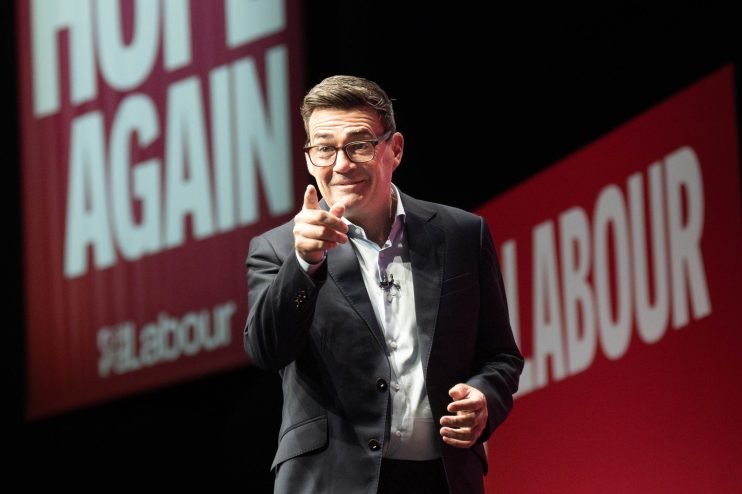
We were told to expect a speech that would leave no room for doubt about what Andy Burnham believes in, and we got one. There might not be much detail yet about how the Burnham Revolution will unfold but there is no ambiguity, either.
The Prime Minister painted a vision of what this country could be like ten years from now, and it’s one dramatically to the left of where we are today politically, economically and culturally. This was socialism in plain sight.
Burnham’s mantra is “public control” of housing, transport, energy, water and social care. This is presented as a liberating mix of political devolution, civic engagement and democratic accountability. But let’s not beat around the bush; public control means state control and all the new layers of officialdom, bureaucracy, agencies, public sector job creation and higher taxes that come with it.
A lot of people seem to have been impressed by the PM’s speech, but I’m afraid I’m not among them. I can appreciate the appeal of a political leader who believes in things and is prepared to make the argument, and I can understand that if I were a member of what he calls “the Labour family” I would be delighted by his agenda, but (aside from the rousing attack on the forces of Celtic nationalism and the moving tribute to his late father) the speech left me cold.
Very little on the challenges we face now
Firstly, there were only two mentions of business: once when he pointed out that businesses use water just like the rest of us, and again when he talked about his “theory of growth.” Burnham has a theory of growth in the way I have a theory on quantum computing. I can offer up a paragraph on the topic but don’t expect me to build a machine. His view is that if utilities are under public control and Westminster devolves power then “we optimise the conditions for businesses to grow.” That’s it.
I then searched his speech for the word “wealth” (as in, creation) and it appears once in reference to the wealth that the dastardly private sector has hoarded and again in the context of “rebuilding our common wealth.” By this, he means houses and buses. Even the big announcement – on reforming the triple lock – was undermined by the fact that he spent the savings several times over (and then again some more) by dusting off Jeremy Corbyn’s plans for a National Care Service.
Burnham recognised that his grand plans will need to be put before the people in a general election, but that isn’t expected for another three years. What will he do in the meantime? Of the pressing concerns we face today he said very little. Welfare will be reformed, but not cut. Defence was mentioned only once. Our national debt and widening deficit were treated as mere irritants, too trifling for this man of destiny and his big ideas.
Responding to the speech, the CBI diplomatically suggested that Burnham’s vision was ‘painted in primary colours’ – and it seems to me that the main one was red.