The decline of Harvey Nichols is a tale of London’s decline too

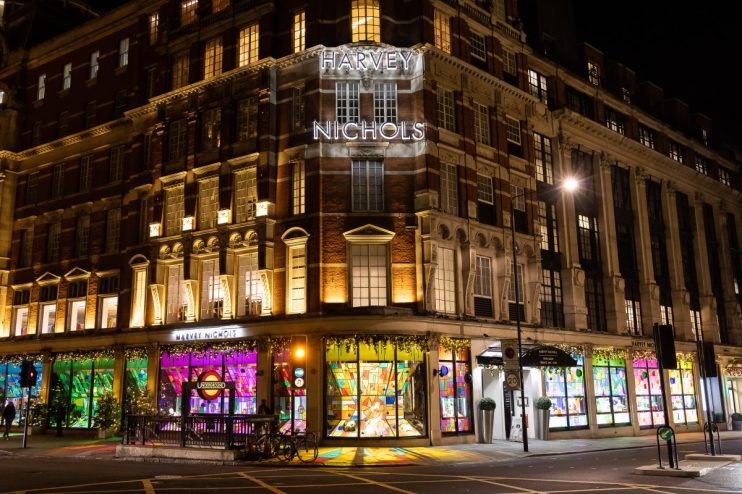
The decline and fall of Harvey Nichols is not just another business story. It is a warning about the crisis engulfing London’s high streets, argues Alex Challoner
Last week, a London icon fell. Harvey Nichols, the Knightsbridge luxury store, was sold to Mike Ashley’s Frasers Group. Sure, the brand and store may live on. But it will never be the same again.
This is more than just a footnote in the business press. The hurried sale of Harvey Nichols tells us something more profound about London in microcosm. In fact, it tells us three different, negative things about the state of the capital after a decade of Sadiq Khan’s misrule.
The fall of Knightsbridge
Firstly, it a story of how far Knightsbridge has fallen. The affluent neighbourhood has become increasingly dogged by street crime targeting the rich and wealthy. A customer was stabbed in Harrods – the other great icon of London retail – in an apparent watch robbery in 2023, another man was fatally stabbed outside the luxury Park Tower Hotel in 2025 and, earlier this year, a machete-wielding gang robbed a Rolex store in the area. The robberies have got so bad that Harrods has given in to customer demands to offer unmarked shopping bags so its shoppers are not robbed upon leaving. Worse still, fear of crime has even forced Tom Cruise to move out of the area.
Secondly, it is a story about the plight of London’s high streets. Rising business rates, growing employment costs and a lack of consumer confidence are all contributing to a bleak scene for retail in the capital just as they are for retailers across the country. Franco Manca and Russell & Bromley have announced store closures across London, and banks like Natwest, Halifax and Lloyds Banking group have all shut branches in the capital.
The Mayor of London’s signature policy intervention when it comes to London’s ailing retail sector has been to pedestrianise Oxford Street. But, just as traffic and congestion were never Oxford Street’s biggest problem, nor is Oxford Street the be all and end all of retail in London. Pedestrianising Oxford Street will not make tills ring any louder on your local high street, it will not make sky-high business rates any more affordable, and, clearly, it will not save iconic luxury brands like Harvey Nicks from going under.
London’s wealth exodus
Thirdly, this is a story about the exodus of the wealthy from the capital. Ultra-high net worth individuals are fleeing London in droves. Around 16,500 millionaires are estimated to have left the UK last year. Tax changes, such as reforms to non-dom status, are clearly taking their toll. And these are the customers that Harvey Nichols relied upon. A report by Henley & Partners in 2025 found that the UK was no longer ranked as one of the world’s top five wealthiest cities. London and Moscow are the only two cities in the top 50 that have recorded negative growth over the past decade, with their millionaire populations declining by 12 per cent and 25 per cent, respectively. London does not really want to be grouped with Moscow on any economic indicator, least of all this one.
Crime, high business rates and excessive taxation are all driving people and retailers to leave London. Bad public policy is creating a perfect storm that is eroding our retail sector, destroying our high streets and costing people their jobs. But our political leaders aren’t doing enough to stop it. A limited tax cut for pubs and some tinkering with planning regulations for betting shops and vape stores is not sufficient. Harvey Nichols may yet prove to be just the tip of the iceberg.
Alex Challoner is director at London Vision Network and a former prospective London Mayoral candidate